

Weather can smash through your plans in seconds and leave your home or car in ruins. In South Africa, repairs from weather disasters can cost families over R50,000 on average per incident. Most people assume their insurance will sort everything out if storms hit. The shock comes when you learn that plenty of policies actually exclude flood and certain storm damages entirely.
Table of Contents
- Understanding Cover For Weather Damage
- How Home Insurance Handles Weather Risks
- Car And Vehicle Insurance For Weather Events
- Tips To Enhance Your Weather Damage Protection
Quick Summary
| Takeaway | Explanation |
|---|---|
| Understand your policy’s coverage limits | Different policies cover various weather events; know what is included and what is not. |
| Consider additional coverage for flood risks | Many standard policies exclude flood damage, necessitating separate flood insurance for adequate protection. |
| Regularly maintain your home and vehicle | Proactive upkeep like roof repairs and tree trimming can significantly reduce risk of weather damage. |
| Consult insurance professionals for tailored solutions | Professional advice can help ensure comprehensive coverage that fits specific weather-related risks. |
| Keep records of weather damage claims | Documenting incidents aids in smooth claims processing and ensures compliance with policy requirements. |
Understanding Cover for Weather Damage
Weather damage can strike unexpectedly, causing significant financial strain for homeowners and car owners. Understanding the nuances of insurance coverage for weather-related incidents is crucial for protecting your valuable assets. Learn more about comprehensive insurance protection.
Types of Weather Damage Coverage
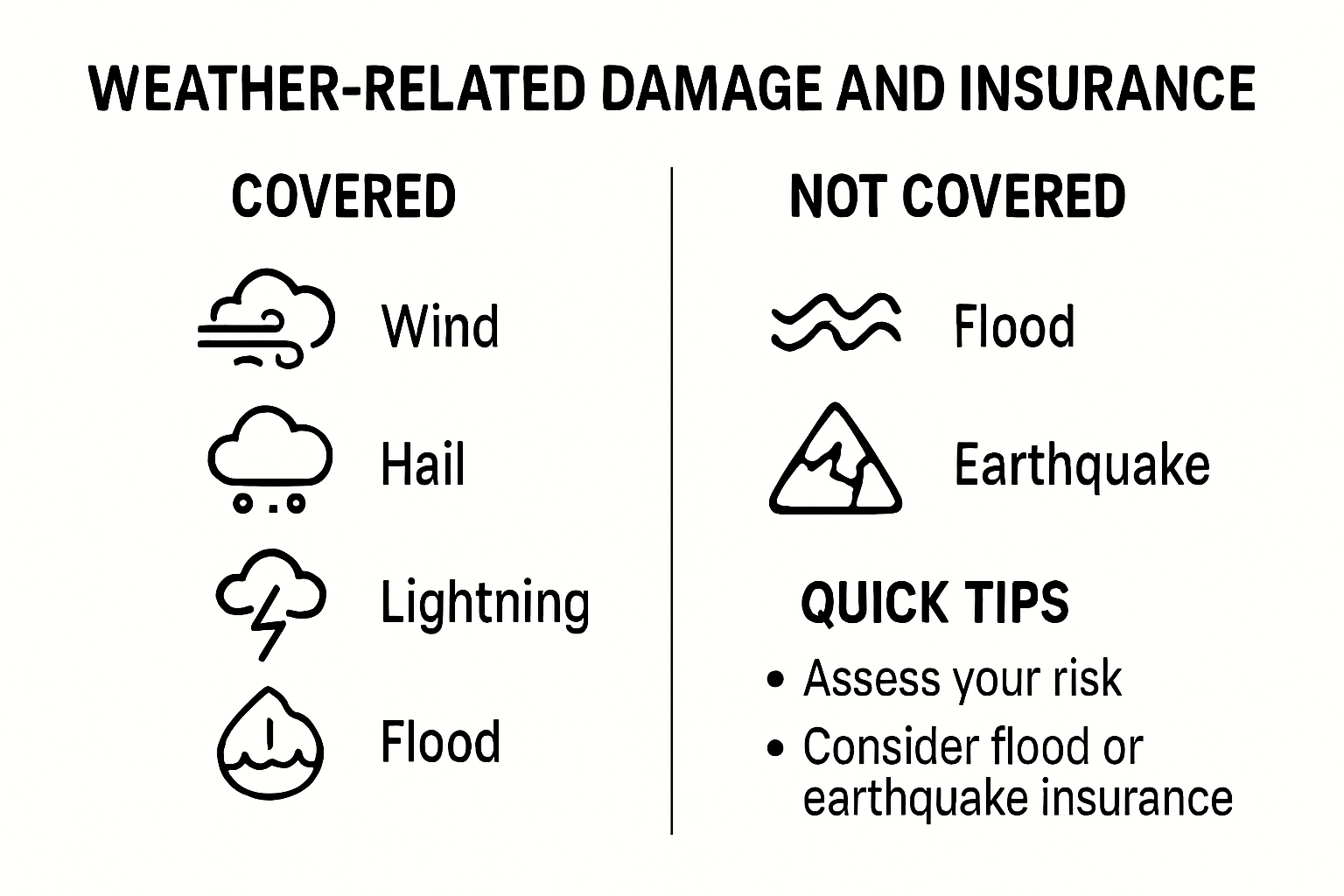
Insurance policies typically address various weather-related risks differently. According to the Insurance Information Institute, standard policies often provide coverage for specific weather events while excluding others. Wind, hail, and lightning damage are generally covered under most home and auto insurance policies. However, homeowners should carefully review their specific policy details to understand the extent of protection.
Below is a summary table comparing common weather damage events and whether they are typically covered under standard South African home and vehicle insurance policies, as outlined in the article.
| Weather Event | Home Insurance Coverage | Vehicle Insurance Coverage |
|---|---|---|
| Wind Damage | Usually Covered | Usually Covered |
| Hail Impact | Usually Covered | Covered (Comprehensive) |
| Lightning Strikes | Usually Covered | Sometimes Covered |
| Water Damage (Storm) | Sometimes Covered | Sometimes Covered |
| Flood Damage | Not Covered (Needs separate policy) | Covered (Comprehensive, sometimes with conditions) |
| Earthquake | Not Covered (Needs add-on) | Not Applicable |
Key Weather Damage Coverage Considerations:
- Wind Damage: Most policies cover damage caused by strong winds, including roof damage and fallen trees.
- Hail Impact: Comprehensive car insurance typically protects against hail-related vehicle damage.
- Water Damage: Some policies cover water damage from burst pipes or storm-related incidents, but flooding often requires separate coverage.
Limitations and Exclusions
Insurance coverage for weather damage is not absolute. Certain extreme weather events may fall outside standard policy protections. Flood damage, for instance, typically requires a separate flood insurance policy. Homeowners in areas prone to severe weather should consider additional coverage options to ensure comprehensive protection.
Car owners should pay special attention to their comprehensive coverage. While most policies cover weather-related vehicle damage, there are important nuances to understand. Some insurers may have specific conditions or deductibles for weather-related claims.
Protecting Your Assets Proactively
Beyond insurance, property owners can take preventative measures to minimize weather damage risks. This includes regular maintenance, such as trimming trees near structures, ensuring proper roof maintenance, and installing protective measures like storm shutters.
Here is a checklist table outlining key proactive measures homeowners and vehicle owners can take to reduce risk of weather-related damage, as discussed in the article.
| Task / Measure | Home | Vehicle |
|---|---|---|
| Trim trees near structure/car | ✅ | ✅ |
| Maintain/repair roof | ✅ | |
| Install storm shutters | ✅ | |
| Seal windows/doors | ✅ | |
| Park under cover/carport | ✅ | |
| Use car cover in bad weather | ✅ | |
| Inspect windshield wipers | ✅ | |
| Keep emergency kit handy | ✅ |
When selecting insurance coverage, carefully evaluate your specific risks. Consider factors like local climate patterns, historical weather events, and the unique vulnerabilities of your home and vehicle. Consulting with an insurance professional can help you develop a tailored protection strategy that addresses your specific needs and potential weather-related risks.
Remember, the right insurance coverage can provide peace of mind and financial protection against the unpredictable nature of weather-related damage. Take the time to understand your policy, ask questions, and ensure you have comprehensive protection for your most valuable assets.
How Home Insurance Handles Weather Risks
Home insurance provides critical protection against various weather-related risks that can potentially cause substantial damage to your property. Understanding how these policies work is essential for homeowners seeking comprehensive protection. Learn about comprehensive property protection strategies.
Covered Weather Events
According to the National Association of Insurance Commissioners, standard home insurance policies typically cover a range of weather-related perils. These generally include damage from wind, hail, lightning, and fire. For instance, if a severe windstorm damages your roof or lightning strikes your home, your standard policy would likely provide coverage.
Key Covered Weather Risks:
- Wind Damage: Protection against storm-related structural damage
- Hail Impact: Coverage for roof and exterior home damages
- Lightning Strikes: Compensation for electrical and structural damage caused by lightning
Exclusions and Additional Coverage
Not all weather events are automatically covered under standard home insurance policies. The Insurance Information Institute highlights that certain natural disasters require separate or additional insurance. Flooding and earthquake damage, for example, are typically excluded from standard policies and necessitate specialized coverage.
Homeowners in regions prone to specific weather risks should carefully evaluate their insurance needs. This might involve purchasing additional flood insurance or comprehensive natural disaster coverage. Understanding the limitations of your current policy helps prevent unexpected financial burdens during weather-related emergencies.
Protecting Your Home Proactively
Beyond insurance, homeowners can take preventative measures to mitigate weather-related risks. Regular maintenance such as reinforcing roofing, clearing gutters, trimming trees near structures, and installing storm shutters can reduce potential damage. Some insurance providers offer premium discounts for implementing such protective measures.
When selecting home insurance, consider factors like your local climate, historical weather patterns, and the specific vulnerabilities of your property. Consulting with an insurance professional can help you develop a tailored protection strategy that addresses your unique risks and provides comprehensive coverage.
Remember, the right insurance policy does more than just financial protection. It offers peace of mind, knowing that your most valuable asset is safeguarded against the unpredictable forces of nature. Take time to thoroughly understand your policy, ask questions, and ensure you have adequate protection for potential weather-related challenges.
Car and Vehicle Insurance for Weather Events
Vehicle owners face unique challenges when protecting their assets from unpredictable weather events. Comprehensive car insurance plays a critical role in safeguarding your vehicle against various weather-related risks. Explore the nuances of vehicle insurance coverage.
Comprehensive Coverage for Weather Damage
According to the Insurance Information Institute, comprehensive car insurance is specifically designed to protect vehicles against non-collision incidents, including severe weather events. This type of coverage goes beyond standard protection, addressing damages from hail, flooding, wind, and other natural phenomena.
Key Weather-Related Vehicle Protection:
- Hail Damage: Coverage for dents, broken windshields, and exterior damage caused by hailstorms
- Flood Protection: Compensation for water damage to your vehicle’s internal systems
- Wind Damage: Protection against damage from fallen trees or debris during severe storms
Understanding Policy Limitations
While comprehensive coverage offers extensive protection, vehicle owners must carefully understand their policy details. Some insurance plans may have specific conditions or deductibles related to weather-induced damages. Factors such as the severity of the weather event, the age of the vehicle, and the specific circumstances of the damage can impact claim approvals.
Car owners should pay close attention to the specific terms of their comprehensive coverage. Some policies might require additional documentation or have specific reporting windows for weather-related damage claims. Maintaining detailed records of your vehicle’s condition and any weather-related incidents can streamline the claims process.
Proactive Protection Strategies
Beyond insurance, vehicle owners can take preventative measures to minimize weather-related risks. This includes parking in covered areas during severe weather warnings, using car covers, and regularly maintaining your vehicle to ensure it can withstand environmental challenges.
When selecting car insurance, consider factors like your local climate, typical weather patterns, and the specific vulnerabilities of your vehicle. Some insurance providers offer additional protective options or discounts for vehicles equipped with advanced protective features or stored in secure locations.
It is crucial to review and update your vehicle insurance regularly. As weather patterns change and your vehicle ages, your insurance needs may evolve. Consulting with an insurance professional can help you develop a comprehensive protection strategy that addresses the unique weather-related risks in your area.
Remember, the right insurance coverage does more than just financial protection. It provides peace of mind, knowing that your vehicle is safeguarded against the unpredictable forces of nature. Take the time to understand your policy, ask questions, and ensure you have comprehensive protection for your valuable asset.
Tips to Enhance Your Weather Damage Protection
Protecting your home and vehicle from weather-related damage requires a proactive approach that combines strategic maintenance, preventative measures, and comprehensive insurance coverage. Discover smart protection strategies for your assets.
Home Weatherproofing Strategies
According to the Centers for Disease Control and Prevention, homeowners can significantly reduce weather damage risks through strategic maintenance. Critical steps include insulating water lines along exterior walls to prevent freezing, caulking and weather-stripping doors and windows, and ensuring proper wall and attic insulation.
Key Home Protection Techniques:
- Structural Sealing: Prevent wind and water intrusion by properly sealing windows and doors
- Tree Management: Cut away branches that could potentially fall on your home during storms
- Roof Maintenance: Repair leaks and ensure proper sealing around chimneys and vent pipes
Vehicle Protection and Winterization
The National Highway Traffic Safety Administration emphasizes the importance of comprehensive vehicle preparation for challenging weather conditions. Regular maintenance can prevent weather-related damage and ensure your vehicle remains operational during extreme conditions.
Vehicle owners should focus on critical maintenance aspects such as:
- Checking tire pressure regularly
- Ensuring all lights are fully functional
- Inspecting and replacing windshield wipers as needed
- Maintaining proper coolant and fluid levels
- Carrying an emergency kit with essential items like blankets, ice scrapers, and jumper cables
Comprehensive Preparedness Approach
The National Association of Home Builders recommends a holistic approach to weather damage protection. This includes installing storm shutters, considering steel entry doors for enhanced durability, and maintaining clean gutters and downspouts to prevent water accumulation.
Beyond physical preparations, financial protection is equally crucial. This means regularly reviewing and updating your insurance policies, understanding your coverage limits, and exploring additional protective add-ons that can provide comprehensive protection against various weather scenarios.
Remember that weather damage protection is an ongoing process. Climate patterns change, and your protection strategies should evolve accordingly. Regularly consult with insurance professionals, stay informed about local weather trends, and be proactive in maintaining and protecting your valuable assets.
Ultimately, the goal is not just to react to weather damage but to prevent it whenever possible. By combining thorough maintenance, strategic insurance coverage, and a proactive mindset, you can significantly reduce the financial and emotional stress associated with unexpected weather-related incidents.

Frequently Asked Questions
What types of weather damage are typically covered by home insurance?
Most home insurance policies in South Africa cover weather-related damages caused by wind, hail, and lightning. However, flooding often requires a separate flood insurance policy.
How can I protect my home and car from weather-related damage?
Implementing proactive measures such as regular maintenance, tree trimming, roof repairs, and using storm shutters can significantly reduce the risk of weather damage to your home and car.
What should I know about comprehensive vehicle insurance for weather damage?
Comprehensive vehicle insurance protects against damages from non-collision incidents, including weather events like hail and flooding. It’s essential to review your policy for any specific conditions or deductibles related to weather damage claims.
Are there exclusions I should be aware of in my insurance policies?
Yes, many home and vehicle insurance policies have exclusions for natural disasters such as flooding and earthquakes. It is important to understand the limitations of your coverage and consider additional insurance for specific risks.
Secure Your Home and Car Against Storm Surprises
Weather damage can leave South Africans with big repair bills and overwhelming stress. You have read how typical insurance policies might let you down by excluding crucial threats like flooding or by limiting cover for burst pipes and hailstones. It is not just about fixing the damage. It is about knowing you will not face devastating financial setbacks when nature strikes. If you are serious about protecting your home or car and want an insurance partner that understands these South African risks, you need solutions tailored for real-life weather events.
Take action before the next storm hits. Upgrade your peace of mind with insurance products designed to handle disasters just like those discussed in this article. Visit King Price Insurance to explore practical tips and powerful cover for your home insurance and vehicle insurance. Do not wait for weather surprises to catch you off guard. Click through now to review your options and protect what matters most, today.
Recommended
- Insurance Add-Ons Explained: Car and Home Essentials 2025 – Savvy Insurance
- Understanding Types of Vehicle Insurance in 2025: A Guide for Car Owners – Savvy Insurance
- Top Benefits of Comprehensive Cover for Car and Home Owners 2025 – Savvy Insurance
- Understanding Insurance Coverage Limits for Cars and Homes 2025 – Savvy Insurance