Falling Objects Insurance Cover: Complete Guide South Africa
Every year, thousands of South African homeowners face damage from falling trees, storm debris, or even unexpected aerial incidents. Yet many people only discover too late that their insurance does not cover the full cost. Whether it is a shattered window or a crushed television, the difference between building and contents insurance could decide who pays for the repairs. Knowing how falling objects insurance works helps you avoid costly surprises and keeps your property protected.
Key Takeaways
| Point | Details |
|---|---|
| Falling Objects Insurance | Coverage typically requires separate policies for building and home contents to protect against damages from falling objects. |
| Types of Coverage | Building insurance covers structural damage, while home contents insurance protects personal belongings from various falling object incidents. |
| Claims Process | Documenting damage and understanding policy specifics is crucial for smooth claims processing regarding falling object damages. |
| Exclusions Matter | Many policies exclude wear and tear, gradual damage, and require correct documentation to avoid voiding a claim. |
Table of Contents
- Defining Falling Objects Insurance Cover
- Types of Falling Objects Covered
- How Falling Objects Claims Are Handled
- Exclusions and Limitations in Cover
- Costs, Responsibilities, and Common Mistakes
Defining Falling Objects Insurance Cover
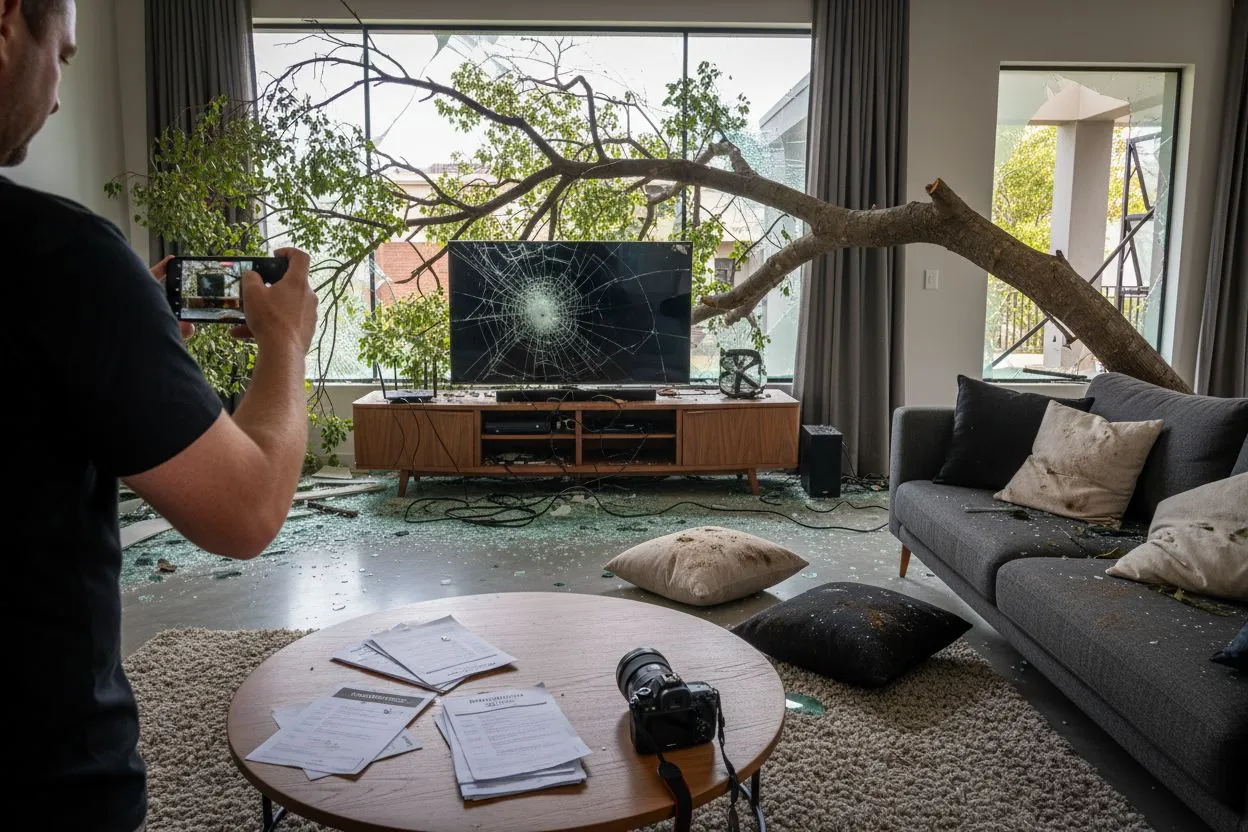
When it comes to protecting your home and belongings, falling objects insurance cover is one of those hidden guardians most South Africans overlook. Imagine a massive storm rolls through your neighbourhood, and suddenly a massive tree branch crashes through your roof or smashes your expensive living room window. Who picks up the tab?
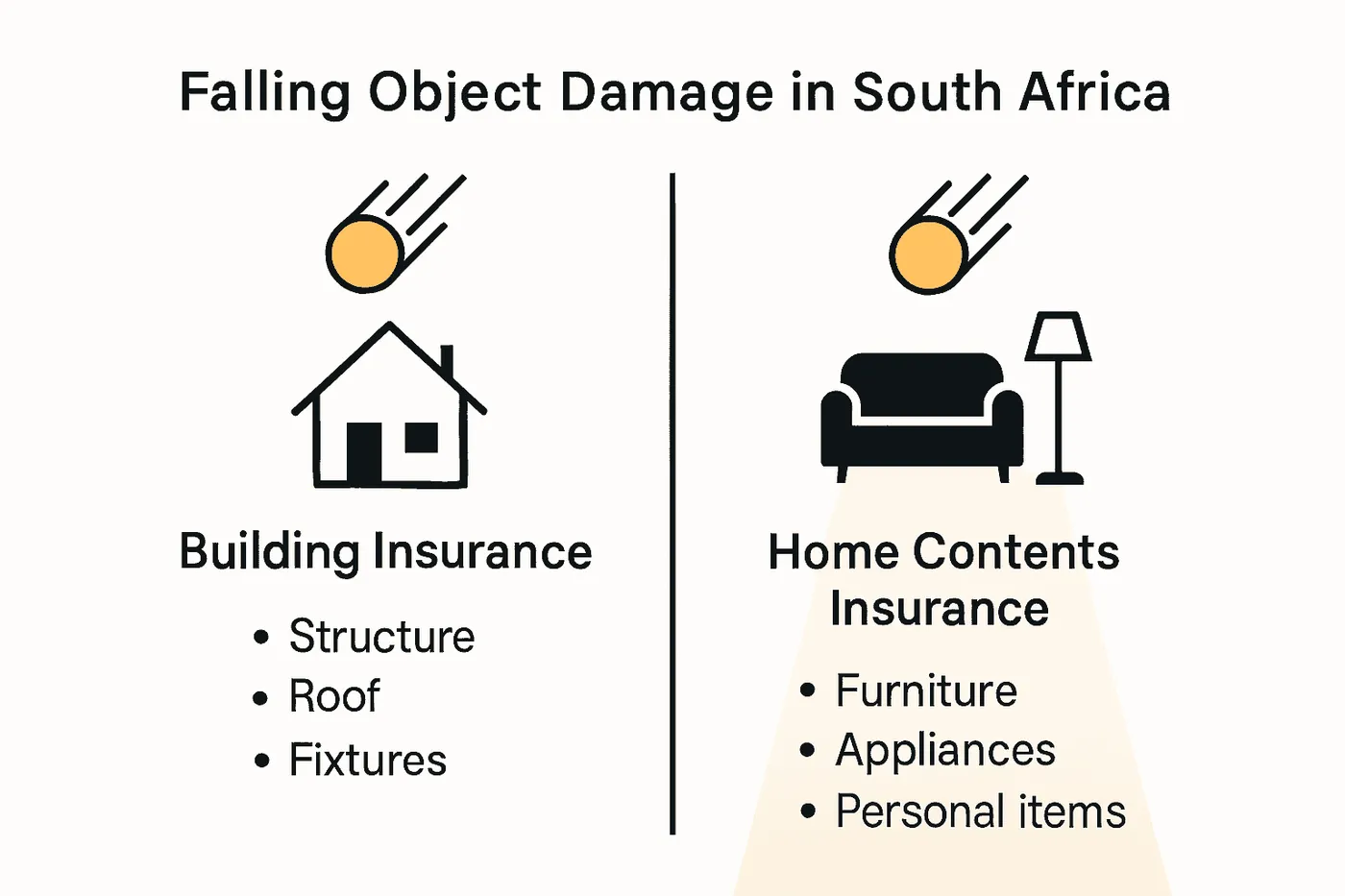
According to Iwyze, building insurance in South Africa typically covers structural damage from falling objects like trees or debris impacting walls and roofs. However, the contents of your home require a separate household insurance policy. This means your building insurance might repair the roof, but won’t replace the flat-screen TV that got crushed.
Home contents insurance provides an additional layer of protection. As RateWeb research indicates, comprehensive policies often include coverage for damage to possessions caused by falling objects like trees or branches. Key aspects of falling objects insurance typically include:
- Damage from natural events like storms or high winds
- Impact from external objects like trees, branches, or debris
- Structural damage to buildings
- Replacement or repair of damaged household contents
Before assuming you’re covered, carefully review your specific insurance policy.
 Not all policies are created equal, and the details matter when you’re facing potential property damage.
Types of Falling Objects Covered
Not all falling objects are created equal when it comes to insurance coverage. Falling object damage can range from dramatic scenarios like a tree crashing through your roof to more subtle incidents involving unexpected aerial impacts. Understanding what’s actually covered could save you serious financial headaches.
According to Iwyze, building insurance in South Africa typically covers several dramatic falling object scenarios, including:
- Impact from vehicles
- Falling trees
- Aircraft incidents
- Storm-related debris affecting building structure
Budget Insurance highlights that home contents insurance extends protection even further. Comprehensive policies might cover damage from:
- Falling trees or branches
- Storm-related incidents
- Burst geysers
- Unexpected explosions
- Power surge damage
While these categories sound straightforward, the devil is in the details. Insurance policies have specific definitions and limitations. A tree branch falling during a massive thunderstorm might be covered, but gradual damage from a slowly decaying tree might not qualify. Always read the fine print and discuss specific scenarios with your insurance provider to understand exact coverage boundaries.
Here’s a comparison of building insurance and home contents insurance for falling object cover:
| Cover Aspect | Building Insurance | Home Contents Insurance |
|---|---|---|
| What it protects | Structure (walls, roof) | Movable possessions inside home |
| Falling objects included | Trees, branches, debris | |
| Vehicles | ||
| Aircraft incidents | Trees, branches | |
| Storm incidents | ||
| Burst geysers | ||
| Explosions | ||
| Power surge damage | ||
| Example of claim | Roof repair after tree fall | TV or furniture replacement |
| Not typically covered | Contents like electronics | Building structure or fixtures |
| Typical exclusions | Wear and tear | |
| Gradual damage | ||
| Neglect | Theft | |
| Items without valuation | ||
| Wear and tear |
How Falling Objects Claims Are Handled
When disaster strikes and a falling object damages your property, navigating the insurance claims process can feel like solving a complex puzzle. Insurance claims for falling objects aren’t as straightforward as you might think - different types of damage require different approaches.
According to Santam, the critical first step is identifying which insurance policy covers the specific damage. This distinction is crucial: building insurance handles structural damage, while contents insurance protects your movable items.
Here’s a typical falling objects claim process:
- Document everything immediately
- Take clear photographs of the damage
- Contact your specific insurance provider
- Provide detailed evidence of the incident
- Wait for claims assessor investigation
Key factors that will impact your claim include:
- Time of incident
- Cause of the falling object
- Extent of damage
- Specific policy terms
- Evidence of sudden vs. gradual damage
Your insurance provider will dispatch a claims assessor to evaluate the damage, determine coverage, and calculate potential compensation.
Pro tip: the more comprehensive your documentation, the smoother your claims process will be. Always keep maintenance records and take timestamped photos to strengthen your claim’s credibility.
Exclusions and Limitations in Cover
Insurance policies are like complex contracts with hidden clauses that can catch you off guard. Not everything that falls will be covered, and understanding these exclusions could save you from unexpected financial heartache.
According to Budget Insurance, building insurance has specific exclusions that might surprise many homeowners. They typically will not cover damage resulting from:
- General wear and tear
- Intentional damage
- Gradual structural deterioration
- Neglected maintenance
More details on understanding insurance coverage limitations can help you navigate these complex scenarios. For home contents insurance, the restrictions get even more nuanced. Budget Insurance notes that policies may exclude:
- Theft of items
- High-value possessions without specific scheduling
- Damage from prolonged wear and tear
- Items without proper valuation certificates
Pro tip: Some insurers require additional documentation like valuation certificates or proof of secure storage for valuable items. Even if a tree falls and damages your possessions, these technicalities could potentially void your claim. Always read the fine print, maintain comprehensive documentation, and discuss specific scenarios with your insurance provider to ensure you’re truly protected.
Costs, Responsibilities, and Common Mistakes
Insurance falling object coverage isn’t just about paying premiums - it’s about understanding the fine print that could make or break your claim. Most South Africans unknowingly walk a financial tightrope when it comes to protecting their property.
According to Santam, one of the most critical responsibilities is correctly distinguishing between building and contents insurance. Many policyholders make a fundamental mistake by assuming one policy covers everything.
Common mistakes that could cost you thousands include:
- Assuming building insurance covers contents
- Failing to get accurate property valuations
- Not updating insurance values annually
- Overlooking specific falling object exclusions
- Neglecting to document valuable possessions
Learn more about insurance tips for protecting your assets, especially when it comes to falling object risks. The financial implications can be significant. A tree falling on your roof could result in thousands of rand in damages, and incorrect insurance could leave you footing the entire bill. Always verify your coverage, understand your policy’s specific terms, and don’t hesitate to ask your insurance provider detailed questions about falling object scenarios.
Secure Your Home Against Unexpected Falling Object Damage
Worried about whether your insurance will truly protect your home and belongings if a branch crashes through your roof or a sudden storm sends debris hurtling into your lounge? South Africans often overlook crucial details in their falling objects insurance cover, only to face costly surprises when claims are denied. Many get caught out by confusing the difference between building insurance for structural damage and home contents insurance for valuables, leaving them exposed when disaster strikes. The stress of paperwork and the risk of unexpected exclusions can cause real frustration and anxiety.
Protect everything you’ve worked hard for by making sure your policy truly covers your needs. Visit Savvy Insurance for tailored advice on building insurance, home insurance, and home contents insurance. Our local experts help you avoid common mistakes like undervaluing your possessions or missing hidden exclusions - so you can relax knowing every angle is covered. Ready to get the right insurance for peace of mind? Start your insurance check or get a quote today and secure your property before storms or falling trees hit.
Frequently Asked Questions
What is falling objects insurance cover?
Falling objects insurance cover provides protection for damage to property caused by falling objects such as trees, branches, or debris. It typically includes coverage under building insurance for structural damage and home contents insurance for damaged movable possessions.
What types of damage are covered by falling objects insurance?
Falling objects insurance covers damage from events like storms, falling trees or branches, and even incidents involving vehicles or aircraft. It protects both the structure of the building and the contents inside the home from such damages.
How do I file a claim for damage caused by falling objects?
To file a claim, first document the damage with clear photographs, then contact your insurance provider to report the incident. Provide detailed evidence of the damage and wait for the claims assessor to evaluate your claim based on your specific policy terms.
What exclusions should I be aware of in falling objects insurance policies?
Exclusions typically include damage from general wear and tear, intentional damage, gradual deterioration, and theft of items. It’s crucial to read the fine print of your policy to understand any specific limitations that may apply.
Recommended
- Uncategorized Archives - Savvy Insurance
- Insurance Helper, Author at Savvy Insurance
- Understanding Types of Property Insurance in South Africa - Savvy Insurance
- Blog - Savvy Insurance
Ready to compare insurance? Get free, no-obligation quotes from South Africa's top insurers in a few minutes and see how much you could save.
Compare insurance quotes →Free · No obligation · POPIA compliant · We never sell your data