How to Spot Insurance Scams: Essential Signs for SA Owners
Over R1 billion in insurance fraud is reported each year in South Africa, and scams are growing more complex every day. Anyone with a phone or email is a potential target, making it vital to know how to spot fake offers before your savings disappear. Read on to discover practical ways to protect yourself, recognize red flags, and keep your personal information safe from relentless fraudsters.
Quick Summary
| Key Point | Explanation |
|---|---|
| 1. Spot red flags in offers | Always question unsolicited insurance deals promising high returns or urgent responses; they’re often scams. |
| 2. Verify company legitimacy | Use the FSCA website to check if an insurance provider is registered before engaging with them. |
| 3. Examine policy documents closely | Scrutinize all insurance documents for details; keep original records to support your claims. |
| 4. Report suspicious activities promptly | Collect evidence and report fraudulent offers through channels like the Insurance Fraudline to help combat scams. |
| 5. Trust your instincts | If an offer feels too good to be true, trust your gut and seriously investigate before proceeding. |
Table of Contents
- Step 1: Identify Suspicious Offers And Deals
- Step 2: Verify The Legitimacy Of Insurance Providers
- Step 3: Recognize Common Scam Tactics And Red Flags
- Step 4: Check Policy Details And Documentation Thoroughly
- Step 5: Report And Confirm Suspicious Activity With Authorities
Step 1: Identify suspicious offers and deals
Spotting insurance scams starts with developing a razor-sharp radar for dodgy deals that sound too good to be true. Your mission: learn how to protect yourself from crafty criminals looking to separate you from your hard-earned cash.
Always start by asking yourself some tough questions about any unsolicited insurance offer. According to research from Sanlam, scammers are getting increasingly sophisticated in their approaches. They’ll use platforms like Telegram to send tempting investment schemes that promise astronomical returns and create artificial urgency.
Watch out for red flags that should make your scam alarm bells ring loud and clear. These include unsolicited messages promising guaranteed high returns, aggressive pressure tactics that demand immediate action, and requests for personal banking information. As research from Hollard highlights, fraudsters often create fake claim processes designed to trick you into revealing sensitive financial details.
Your best defense is skepticism. Never click on links from unknown sources. Instead, independently verify any offer by contacting the insurance company directly through official channels. The Financial Sector Conduct Authority (FSCA) can help you confirm whether an investment or insurance provider is legitimate.
Pro Tip: If an offer sounds too incredible to be real your instincts are probably right. Trust your gut and do your homework before committing.
Remember that legitimate insurers will never ask you to make upfront deposits or share comprehensive banking information through unsecured channels. When in doubt call the company directly using contact details from their official website not from the suspicious message you received.
By staying alert and informed you can outsmart scammers and keep your finances safe. Your next step is learning how to thoroughly verify insurance providers and their credentials.
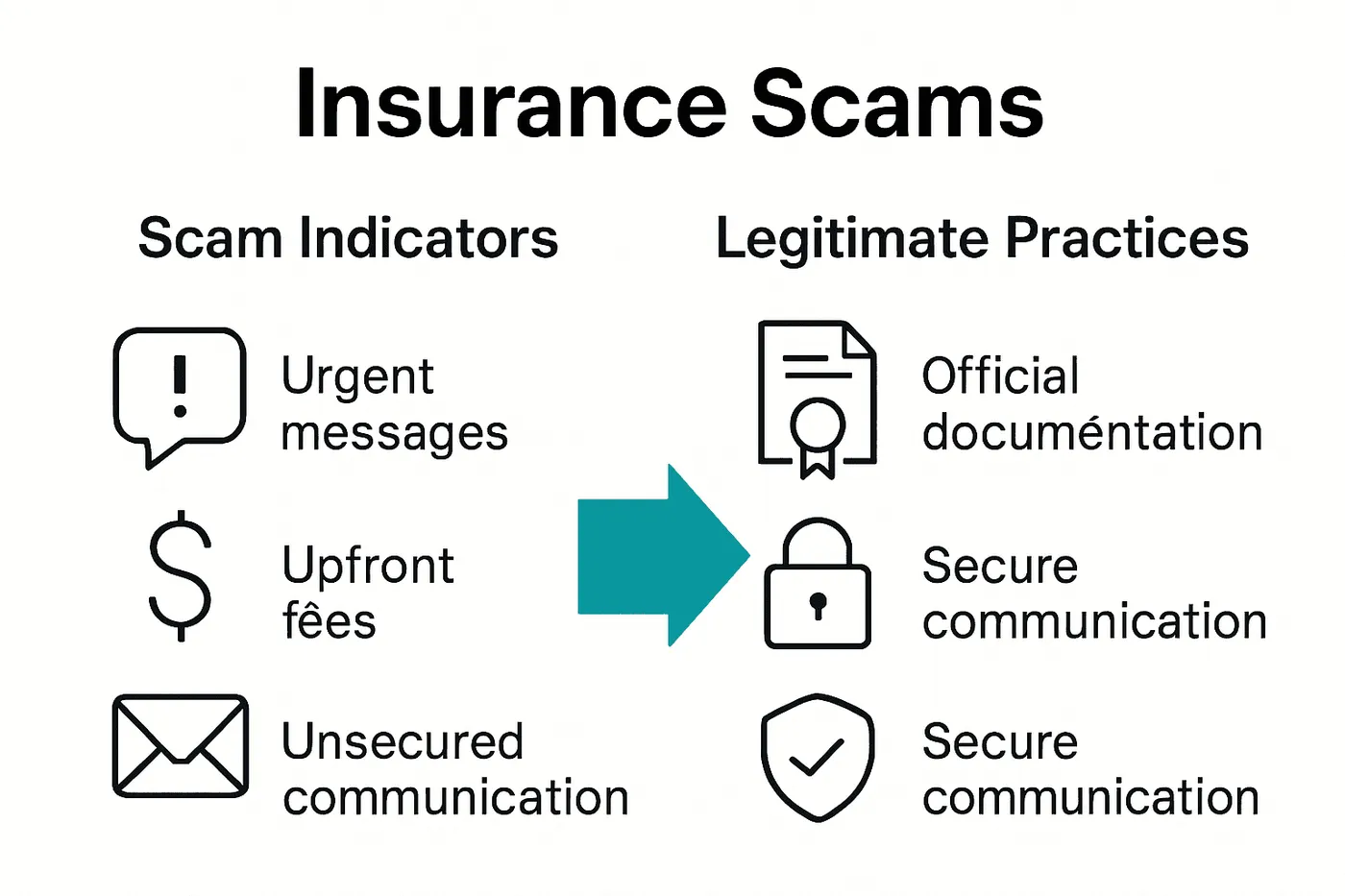
Here’s a comparison of common insurance scam tactics versus legitimate insurer practices:
| Red Flag Tactic | Scam Indicator Example | Legitimate Practice |
|---|---|---|
| Unsolicited Contact | SMS or Telegram offers | Only contact existing clients |
| Pressure to Act Immediately | “Must confirm today” | Offers time to review details |
| Request for Bank Info | Urgent banking info via email | Secure, formal FICA procedures |
| Upfront Payment | Fees before policy issued | Payment after process verified |
| Refusal to Provide Proof | Avoids registration questions | Transparent, official documents |
| Unsecured Communication | Unknown email or public Wi-Fi | Only uses secure channels |
Step 2: Verify the legitimacy of insurance providers
Now that you know how to spot suspicious offers, it is time to become a detective and verify whether an insurance provider is actually legit. Your goal is to protect your money and personal information from potential fraudsters who are getting increasingly sophisticated.
Your first stop is the Financial Sector Conduct Authority (FSCA) website. According to Sanlam’s research, this is the gold standard for checking if an insurance provider is registered and authorized. The FSCA maintains an official list of legitimate financial services providers that you can cross-reference.
Start by gathering the basic information about the insurance company. Their full registered name, registration number, and contact details are critical. Plug these details into the official FSCA registry to confirm their status. Research from the FSCA’s 2024/25 regulatory report indicates a 134% increase in unregistered insurance operations making verification more important than ever.
Dont just stop at the online check. Take an extra step by calling the provider directly using contact information from their official website not the suspicious message you received.
 A legitimate company will happily confirm their registration status and answer your questions transparently.
Pro Tip: Legitimate financial services providers will always follow Financial Intelligence Centre Act (FICA) verification processes and will not pressure you into immediate decisions.
Watch out for warning signs like providers who resist answering direct questions about their registration, refuse to provide official documentation, or create artificial urgency. These are massive red flags that should make you pause and reconsider.
By thoroughly verifying an insurance provider’s credentials you are building a crucial layer of protection around your financial wellbeing. Your next step is understanding how to assess the specific details of their insurance offerings and protection mechanisms.
Step 3: Recognize common scam tactics and red flags
By now you are learning how savvy insurance consumers protect themselves. This section will arm you with knowledge about the sneaky tactics fraudsters use to trick unsuspecting people out of their money.
According to research from Hollard, scammers have developed a shocking array of sophisticated techniques to catch you off guard. They will create elaborate scenarios that seem completely legitimate at first glance. For instance they might pose as insurance agents requesting background check deposits or claim processing fees that sound totally reasonable.
Pressure is their primary weapon. Research highlights that fraudsters use aggressive tactics designed to make you feel like you must act immediately. They create artificial urgency with phrases like “limited time offer” or “must confirm now” which are massive red flags. Learn more about recognizing these warning signs.
Watch out for communication channels that seem suspicious.
Phishing attempts now include deepfake technologies that can make fraudulent interactions appear authentic. Scammers might contact you via social media unsecured public Wi-Fi email or SMS with messages designed to provoke an emotional response or panic.
Pro Tip: If an offer sounds too perfect or creates intense emotional pressure take a step back. Legitimate insurers will never rush you into making decisions.
Remember that professional insurance providers will never ask you to share comprehensive banking details through unsecured channels or request immediate deposits. They understand that trust takes time and will provide clear transparent communication.
Your financial safety depends on staying alert and trusting your instincts. As you become more aware of these tactics you are building an invisible shield against potential fraudsters. Your next step is understanding how to report suspicious activities and protect yourself legally.
Step 4: Check policy details and documentation thoroughly
You are about to become a documentation detective. Your mission is to scrutinize every single line of your insurance policy with the precision of a forensic expert protecting your financial interests.
According to the Insurance Crime Bureau, fraudsters are getting increasingly creative in obtaining policy information. They might impersonate policyholders and trick call centres into revealing sensitive details. This means you need to treat every document and communication with a healthy dose of skepticism.
Start by gathering all your policy documents and reading them like a treasure map. Consult our comprehensive guide on choosing the right insurer to understand what to look for. Research from ASISA reveals that insurance fraud syndicates are now using sophisticated methods including fabricated damage reports and exaggerated claims.
Pay special attention to the fine print. Look for exact details about what is covered and what is not. Modern insurers are using advanced techniques like AI and predictive analytics to verify claims authenticity. This means you need to be equally meticulous about your documentation.
Pro Tip: Always keep original receipts photographs and maintenance records for valuable items. These can be your best defense against potential fraudulent claim challenges.
Be prepared to prove the legitimacy of your claims. For electronics this might mean having IMEI numbers ready. For property claims you might need detailed photographic evidence. The more comprehensive your documentation the harder it becomes for potential fraudsters to manipulate the system.
By becoming a documentation expert you are creating an ironclad shield around your insurance claims. Your next step is learning how to communicate effectively with your insurance provider and protect your interests proactively.
Step 5: Report and confirm suspicious activity with authorities
Congratulations you are now equipped to be a real insurance fraud fighter. Your final mission involves taking action and reporting suspicious activities to protect not just yourself but other potential victims.
The Insurance Fraudline operated by the Insurance Crime Bureau offers an excellent starting point for reporting. According to their research, you have multiple reporting options including full disclosure partial anonymity or complete anonymity. This means you can share information without fear of personal repercussions.
Start by collecting all documentation related to the suspicious activity. Screenshots of messages communication records and any correspondence can serve as crucial evidence. Understand more about documenting potential fraud to ensure your report is comprehensive.
Research from the FSCA shows that they actively collaborate with law enforcement agencies like SAPS Hawks and the National Prosecuting Authority. When you report a suspicious activity you are not just protecting yourself but contributing to a larger effort to combat financial crime.
Pro Tip: Keep your original documents safe. Digital copies are good but having physical evidence can be invaluable during investigations.
Dont limit yourself to one reporting channel. Contact the FSCA directly submit a report through the Insurance Fraudline and if the scam involves potential criminal activity consider reaching out to local law enforcement. The more channels you use the higher the likelihood of stopping these fraudulent operations.
By taking these steps you are becoming an active defender against insurance fraud. Your vigilance can help protect countless other consumers from falling victim to sophisticated scam operations.
Beat Insurance Scams with Real Peace of Mind
Fraudsters are getting smarter each year in South Africa, making it tough for honest people to tell the difference between a scam and a genuine insurance offer. You deserve financial security without the constant fear of falling for fake promises or being pressured into sharing personal details. If the article made you realise just how risky it is to trust an unfamiliar provider, you are not alone. Many South Africans are searching for credible insurance partners who back up their claims with proper registration, transparent documentation and open communication.
Take the guesswork out of your insurance journey. At insurance.kingprice.co.za, you will find expert tips and trustworthy solutions across all the cover you need, from car insurance to home contents protection and more. Why risk your hard-earned money with unverified offers? Choose a provider that champions transparency and security from the first quote. Visit insurance.kingprice.co.za right now and protect yourself with insurance designed to keep South African consumers one step ahead. Secure your peace of mind today.
Frequently Asked Questions
How can I identify suspicious insurance offers?
To identify suspicious insurance offers, look for red flags such as unsolicited messages, promises of guaranteed returns, and urgent deadlines. Always approach unsolicited deals with skepticism and verify their authenticity before proceeding.
What steps should I take to verify an insurance provider’s legitimacy?
Begin by checking the provider’s registration status on an official regulatory site or registry. Collect their full name, registration number, and contact details to ensure you have accurate information for verification.
What common tactics do insurance scammers use?
Insurance scammers often use pressure tactics, such as creating urgency with phrases like “limited time offer,” and request sensitive information via unsecured methods. Be wary of any requests for upfront payments or personal banking details, as legitimate insurers will never operate this way.
How can I protect my personal information from insurance fraud?
Protect your personal information by avoiding sharing sensitive data through unsecured channels or responding to unsolicited messages. Always communicate with your insurance provider through official contact channels and keep your documents secure.
What should I do if I suspect insurance fraud?
If you suspect insurance fraud, collect all relevant documentation such as messages and communications before reporting to the appropriate authorities. Take action immediately; the quicker you report, the more likely you can help prevent further fraudulent activities.
How can I thoroughly check my insurance policy documents?
Scrutinize your insurance policy documents for detailed coverage terms, limits, and exclusions. Take the time to read the fine print carefully and keep original receipts and records to substantiate your claims if needed.
Recommended
- Car Insurance Fraud Risks in 2025: What Car Owners Must Know – Savvy Insurance
- Understanding Insurance Fraud Warning Signs Clearly – Savvy Insurance
- Car Insurance Fraud Risks in 2025: What Car Owners Must Know – Savvy Insurance
- How to Avoid Underinsurance: Tips for SA Car and Home Owners 2025 – Savvy Insurance