


Getting a car loan in South Africa now comes with some serious non-negotiables. You might think the deposits or the paperwork are the biggest hurdles. Actually, it’s the insurance rules that catch most people off guard. Nearly every lender demands comprehensive insurance for a financed car or the deal falls flat. If you pick the wrong policy, it can push your monthly repayments even higher. Here’s what really matters before you sign that loan agreement.
Table of Contents
- Understanding Insurance And Car Loans In South Africa
- Why Lenders Require Insurance For Car Loans
- Types Of Insurance Needed For Financed Cars
- Tips To Save Money On Insurance And Repayments
Quick Summary
| Takeaway | Explanation |
|---|---|
| Comprehensive Insurance is Mandatory | Lenders require comprehensive insurance for financed vehicles to protect their investment, covering risks like accidents and theft. |
| Choose the Right Insurance Valuation | Select between retail and market value coverage based on your vehicle’s age and condition to minimize financial loss. |
| Regular Policy Reviews are Essential | Consumers should review their insurance coverage regularly to ensure it aligns with the vehicle’s value and personal circumstances. |
| Implement Cost-Reduction Strategies | Use tactics like enhanced vehicle security and bundling policies to lower insurance costs effectively. |
| Optimize Loan Repayment Approaches | Make additional payments towards the principal and negotiate interest rates to reduce overall loan expense. |
Understanding Insurance and Car Loans in South Africa
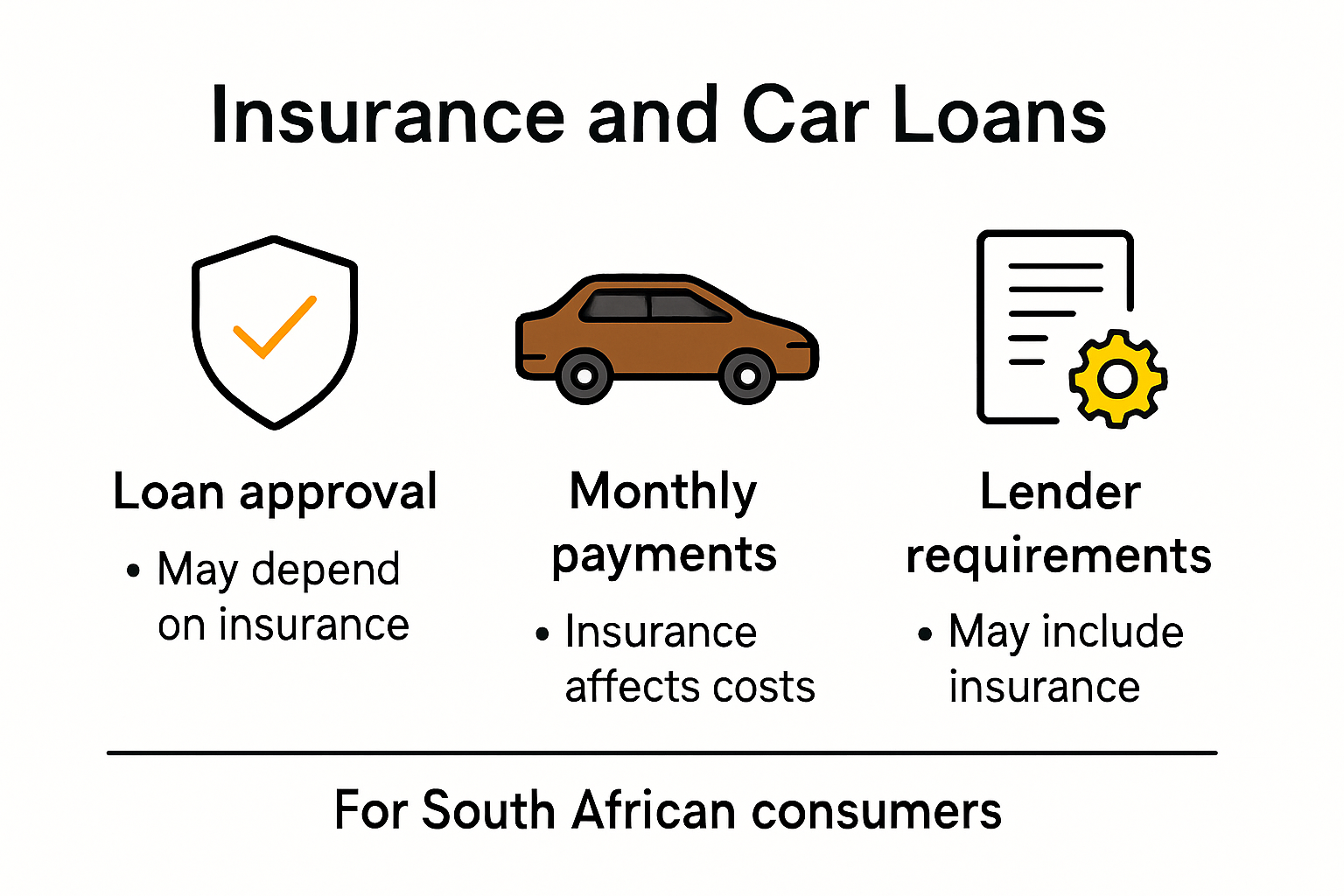
Navigating the complex world of insurance and car loans in South Africa requires strategic financial planning and comprehensive understanding. In 2025, South African consumers face a dynamic landscape where vehicle financing and insurance protection are interconnected critical components of vehicle ownership.
The Crucial Connection Between Car Loans and Insurance
When purchasing a vehicle through financing, insurance is not merely an optional extra but a mandatory requirement from most financial institutions. Banks and lending organizations mandate comprehensive insurance coverage to protect their financial investment. According to Dotsure, financed vehicles typically require comprehensive insurance that covers a wide range of potential risks including accidents, theft, and vandalism.
The insurance choice directly impacts your loan agreement. Lenders want assurance that their asset remains protected throughout the loan term. This means selecting the right insurance isn’t just about personal protection but also satisfying legal and financial contractual obligations. The type of coverage you choose can significantly influence your monthly repayments and overall financial strategy.
Understanding Vehicle Insurance Value Options
South African vehicle owners have multiple insurance valuation methods when financing a car. Buyers can choose between retail value and market value coverage. Research indicates retail value cover is more suitable for newer vehicles, representing the cost of replacing the car with a similar new model. Market value coverage calculates an average between retail and trade value, which might be more appropriate for older or second-hand vehicles.
This nuanced approach to insurance valuation ensures that consumers can select a protection strategy aligned with their specific vehicle’s age, condition, and financial circumstances. The right choice minimizes potential financial losses and provides peace of mind during the loan repayment period.
Financial Considerations and Strategic Planning
Successful vehicle financing in South Africa requires a holistic approach that integrates insurance strategy with loan management. Consumers must consider factors beyond monthly premiums, evaluating deductible amounts, coverage limits, and potential out-of-pocket expenses. Learn more about cost-effective insurance strategies to optimize your financial planning.
Additionally, maintaining a good credit record, understanding the total cost of ownership, and comparing multiple insurance providers can help secure more favorable loan terms and insurance rates. Proactive financial management involves regularly reviewing your insurance coverage as your vehicle ages and your personal circumstances evolve.
By understanding the intricate relationship between car loans and insurance, South African consumers can make informed decisions that protect their financial investments and provide robust protection for their vehicles.
Why Lenders Require Insurance for Car Loans
Lenders in South Africa mandate comprehensive insurance for car loans as a critical risk management strategy that protects both the financial institution and the borrower. This requirement goes beyond simple risk mitigation and represents a sophisticated approach to safeguarding substantial financial investments in vehicle financing.
Financial Protection and Risk Mitigation
Financial institutions require comprehensive insurance as a fundamental protection mechanism. According to Dotsure, comprehensive insurance acts as a critical safety net that shields both lenders and borrowers from potential financial catastrophes. When a financed vehicle is involved in an accident, stolen, or damaged, the insurance coverage ensures that the outstanding loan balance can be settled, preventing significant monetary losses.
This protection is particularly crucial in South Africa’s dynamic economic environment. Vehicles represent substantial financial assets, and without proper insurance, a single unfortunate incident could result in devastating financial consequences. Lenders understand that uninsured vehicles pose an unacceptable risk to their investment, making comprehensive coverage a non-negotiable requirement for loan approval.
Legal and Contractual Obligations
Beyond financial considerations, insurance requirements are deeply embedded in legal and contractual frameworks. When a financial institution provides a car loan, they effectively become part-owners of the vehicle until the loan is fully repaid. South African legal experts emphasize that lenders have a legitimate right to protect their financial interests through mandatory insurance provisions.
These contractual obligations typically specify minimum coverage requirements, including comprehensive insurance that covers theft, accidents, and potential third-party damages. By enforcing these requirements, lenders ensure that their financial exposure is minimized and that borrowers maintain the vehicle in an insurable condition throughout the loan term.
Long-Term Financial Stability
Insurance requirements for car loans contribute to broader financial stability for both lenders and borrowers. Research on vehicle financing reveals that comprehensive insurance helps maintain the vehicle’s value, reduces potential default risks, and provides a structured approach to managing unexpected financial challenges.
For borrowers, this approach offers peace of mind and financial protection. In scenarios involving total vehicle loss or significant damage, insurance ensures that individuals are not left with substantial outstanding loan balances and no means of transportation. Lenders benefit from reduced default risks and a more predictable lending environment.
The requirement for comprehensive insurance represents a sophisticated risk management strategy that balances the interests of financial institutions and vehicle owners. By mandating robust insurance coverage, lenders create a protective ecosystem that supports responsible vehicle ownership and financial planning in South Africa’s complex automotive financing landscape.
Types of Insurance Needed for Financed Cars
Financing a vehicle in South Africa requires a strategic approach to insurance coverage. In 2025, vehicle owners must understand the multiple layers of protection needed to satisfy lender requirements and safeguard their financial investment.

Comprehensive Insurance: The Primary Protection
Comprehensive insurance stands as the cornerstone of protection for financed vehicles. According to Dotsure, this insurance type provides critical protection against a wide range of risks including accidents, theft, vandalism, and other unforeseen events. Lenders universally require this coverage to protect their financial interests throughout the loan term.
The scope of comprehensive insurance typically includes damage repair, total loss replacement, and protection against third-party claims. For financed vehicles, this coverage ensures that the outstanding loan balance can be settled in case of a significant incident, preventing potential financial catastrophe for both the borrower and the lender.
Additional Insurance Layers for Financial Security
Beyond comprehensive coverage, South African car owners should consider supplementary insurance products. Auto Top-up insurance has emerged as a critical additional protection in 2025. This specialized coverage addresses potential credit shortfalls if the vehicle is written off or stolen, providing an extra layer of financial security.
Key additional insurance options include:
- Credit Shortfall Cover: Bridges the gap between the insurance payout and the outstanding loan balance
- Personal Accident Protection: Provides financial support for medical expenses and income protection
- Instalment Protection: Covers loan repayments during unexpected financial hardships
Specialized Insurance Considerations
Financed vehicles require a more nuanced approach to insurance selection. Learn more about specialized vehicle protection to ensure comprehensive coverage that meets both lender requirements and personal financial protection needs.
Factors to consider include the vehicle’s age, value, and specific financing terms. Younger vehicles might require more extensive coverage, while older financed vehicles may need different insurance strategies. Regular policy reviews become crucial as the vehicle depreciates and loan terms progress.
South African car owners must approach insurance as a dynamic financial tool. The right combination of comprehensive and supplementary insurance provides a robust safety net, protecting both the vehicle and the significant financial investment represented by the car loan. By understanding and implementing multi-layered insurance protection, consumers can navigate the complex landscape of vehicle financing with confidence and security.
Tips to Save Money on Insurance and Repayments
Navigating the financial landscape of car loans and insurance requires strategic planning and proactive management. South African consumers can significantly reduce their expenses by implementing smart financial strategies that optimize both insurance costs and loan repayments.
Strategic Insurance Cost Reduction
Reducing insurance expenses begins with understanding your risk profile and taking deliberate steps to minimize potential financial exposure. Research from Fast Company suggests that annually reviewing your car insurance policy can help ensure you’re not overpaying for coverage that no longer matches your vehicle’s value or your personal circumstances.
Key strategies for lowering insurance costs include:
- Enhanced Vehicle Security: Installing tracking devices, immobilizers, and approved alarm systems can significantly reduce your insurance risk profile
- Bundling Insurance Policies: Combining multiple insurance products with a single provider can unlock substantial discounts
- Maintaining a Clean Driving Record: Avoiding traffic violations and accidents helps keep your insurance premiums lower
Optimizing Loan Repayment Strategies
Beyond insurance, smart loan management can help reduce overall financial burden. Discover cost-effective insurance strategies that complement intelligent loan repayment approaches. Consider making additional payments when possible, which can reduce the total interest paid over the loan term.
Additional loan optimization techniques include:
- Negotiating lower interest rates
- Choosing shorter loan terms
- Making extra payments towards the principal balance
Technology and Financial Planning
Modern technology offers innovative ways to manage car loans and insurance more effectively. According to Auto24, increasing your vehicle’s security can dramatically lower insurance premiums. Digital tools and comparison platforms now enable consumers to quickly assess and switch insurance providers, ensuring they always receive competitive rates.
Utilize mobile apps and online platforms that provide real-time tracking of your vehicle’s value, insurance costs, and loan progress. These technologies can help you make informed decisions about refinancing, insurance adjustments, and overall financial planning.
Successful financial management of car loans and insurance requires continuous education, proactive monitoring, and a willingness to adapt to changing market conditions. By implementing these strategies, South African consumers can effectively reduce their financial burden while maintaining comprehensive protection for their valuable asset.
Frequently Asked Questions
What type of insurance is required for a financed car in South Africa?
Most lenders in South Africa require comprehensive insurance for financed vehicles to protect their investment against accidents, theft, and damage.
How can I reduce my car insurance costs?
You can reduce car insurance costs by enhancing vehicle security, bundling policies with the same provider, and maintaining a clean driving record. Regularly reviewing your coverage can also help ensure you are not overpaying.
Why do lenders require insurance for car loans?
Lenders require insurance for car loans to mitigate financial risk. It protects both the lender’s investment and the borrower’s liability in case of theft, accidents, or total loss of the vehicle during the loan term.
What should I consider when selecting the value coverage for my vehicle?
When selecting insurance value coverage, consider your vehicle’s age and condition. You can choose between retail value coverage for newer vehicles and market value coverage for older or second-hand vehicles, ensuring better financial protection.
Ready to Make Car Finance Easy and Worry-Free?
Are you feeling the pressure of mandatory comprehensive cover and the fear that the wrong insurance could spike your monthly repayments? The article highlighted how confusing it can be to choose between retail and market value, and how missing the right insurance could put both your car and your finances at risk. South Africans in 2025 need quick answers and real peace of mind!
Take the stress out of car loans and insurance. Explore the smart tips and practical solutions at Insurance King Price — your go-to for reliable advice on comprehensive car insurance, flexible cover, and ways to save every month. Get more than just information. Take action now to protect your car loan, secure your vehicle, and keep your wallet happy. Visit Insurance King Price to compare the best options for your needs and start your customised quote today!

3 Responses