


Getting your insurance payout in South Africa is not just about filling in a form and waiting. Shockingly, a single missing document can derail up to 30 percent of claims before they even start. Most people think it’s the accident itself that causes the most stress. The real drama kicks in when you see how strict and step-by-step the claims process actually is.
Table of Contents
- How Insurance Claims Work In South Africa
- Steps To File Your Insurance Claim
- What To Expect After You Submit A Claim
- Tips For A Smooth Claim Experience
Quick Summary
| Takeaway | Explanation |
|---|---|
| Immediate Incident Documentation | Report incidents to the South African Police Service within 24 hours and gather photographic evidence and witness information to support your claim. |
| Comprehensive Claim Preparation | Compile all necessary documentation, including incident reports, police reports, proof of ownership, and repair estimates, to substantiate your claim effectively. |
| Proactive Management and Follow-up | Stay in regular contact with your insurer, respond quickly to requests for information, and understand that complex claims may take longer to resolve. |
| Know Your Policy Inside Out | Familiarize yourself with your insurance policy’s coverage details, limits, claim procedures, and exclusions to avoid unexpected issues during the claims process. |
How Insurance Claims Work in South Africa
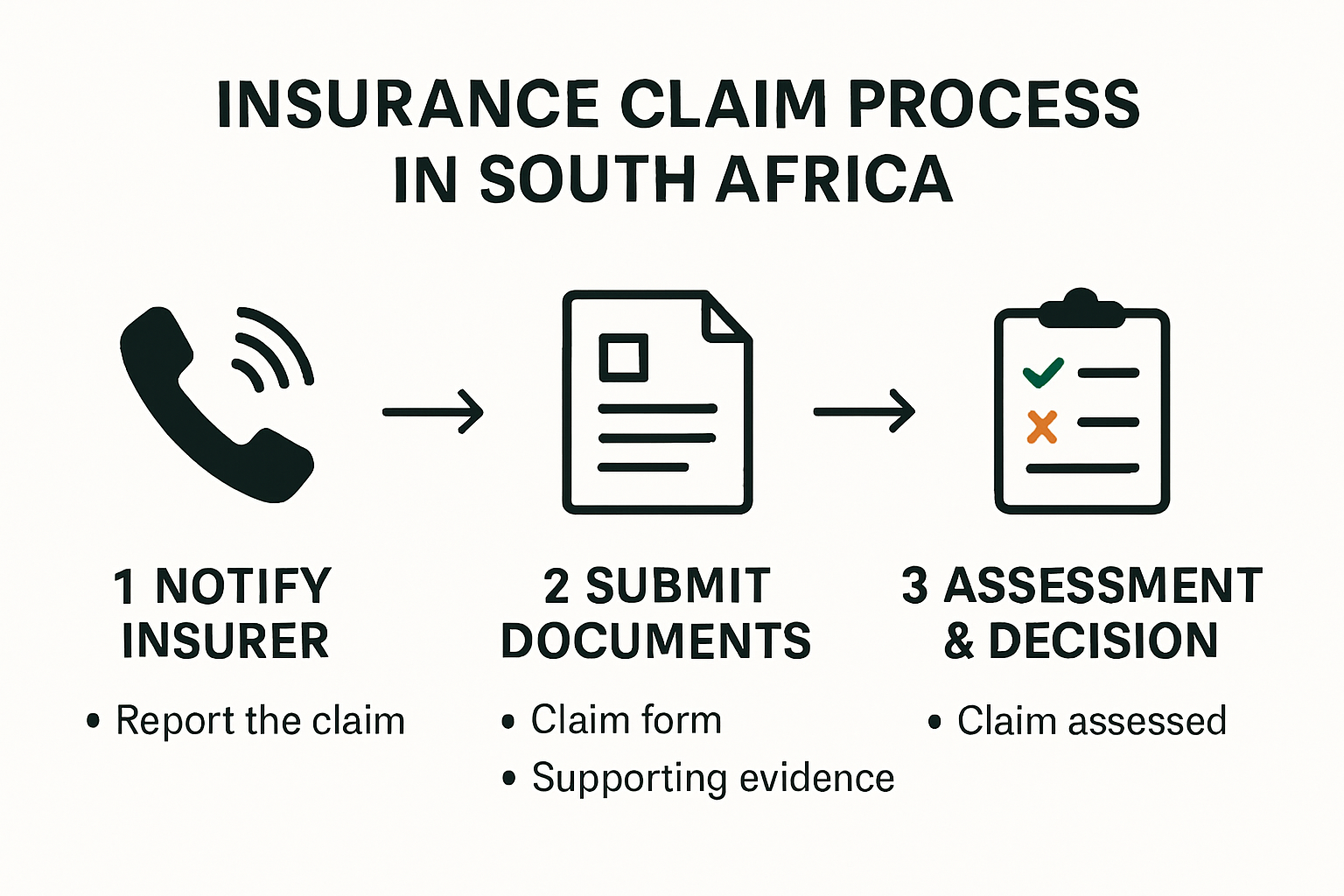
Navigating the insurance claims process in South Africa requires understanding specific procedures and legal requirements that protect both insurers and policyholders. The process involves multiple critical steps designed to ensure fair compensation and verification of legitimate claims.
Understanding the Initial Claim Notification
When an incident occurs that might trigger an insurance claim, immediate action becomes crucial. Learn more about the car insurance claim process for comprehensive guidance. According to the South African government regulations, individuals must report incidents within specific timeframes to maintain claim eligibility.
For instance, workplace injury claims require reporting to the employer within 12 months of the incident. Similarly, after a motor vehicle accident, South African Police Service regulations mandate reporting the incident within 24 hours. Failure to comply can result in claim rejection or potential legal complications.
Documentation and Evidence Collection
Successful insurance claims hinge on comprehensive documentation. Policyholders must gather and submit precise evidence supporting their claim. According to medical insurance guidelines, documentation should include:
- Patient Details: Full name and membership number
- Provider Information: Complete contact and service details
- Medical Documentation: Diagnosis codes (ICD-10) and treatment records
- Financial Proof: Payment receipts and invoices
Insurers typically require original documents, photographs, police reports, and other relevant evidence specific to the claim type. Each piece of documentation serves as crucial verification for processing the claim efficiently.
Claims Assessment and Resolution
Once documentation is submitted, insurers conduct a thorough investigation to validate the claim. This process involves assessing the incident’s circumstances, reviewing submitted evidence, and determining coverage according to the policy terms. Professional claims assessors examine each submission meticulously, looking for consistency, authenticity, and alignment with policy conditions.
The assessment period varies depending on claim complexity. Simple claims might be resolved within weeks, while more intricate cases could take several months. Insurers communicate regularly with claimants, providing updates and requesting additional information if needed. Transparency and clear communication remain paramount throughout the claims resolution process.
Policyholders should maintain open communication with their insurance provider, promptly responding to queries and providing requested documentation to expedite the claims process. Understanding these procedural nuances helps individuals navigate the insurance claims landscape more effectively, ensuring a smoother experience during potentially stressful situations.

Steps to File Your Insurance Claim
Filing an insurance claim requires careful preparation and systematic execution to ensure a smooth and successful process. Understanding the precise steps can significantly improve your chances of receiving fair compensation and minimizing potential complications.
Below is a table summarizing the step-by-step process to file an insurance claim, including the key actions and documents required at each stage:
| Step | Action Required | Key Documentation |
|---|---|---|
| 1. Immediate Incident Documentation | Report incident to SAPS within 24 hours, collect evidence and witness info | Police report, photos, witness details |
| 2. Comprehensive Claim Preparation | Compile all necessary documents and records | Incident report, official police report, proof of ownership, repair estimates, medical reports (if applicable) |
| 3. Formal Claim Submission & Follow-up | Notify insurer, submit forms, respond to queries | Completed claim forms, copies of all documents, communication log |
Immediate Incident Documentation
The moment an incident occurs that may trigger an insurance claim, your actions become critical. Learn more about navigating insurance claims for comprehensive guidance. According to legal experts, you must take immediate steps to protect your claim’s validity:
- Police Reporting: Contact the South African Police Service (SAPS) within 24 hours of the incident. This is mandatory for accidents involving injury, death, or significant property damage.
- Photographic Evidence: Take clear, detailed photographs of the damage, accident scene, or relevant circumstances.
- Witness Information: Collect contact details of any witnesses who can provide independent accounts of the incident.
Timely and thorough documentation serves as the foundation of a successful insurance claim. Professional claims assessors rely heavily on this initial evidence to validate your submission.
Comprehensive Claim Preparation
Preparing a comprehensive claim requires meticulous attention to detail. According to insurance industry guidelines, you should compile the following documentation:
- Incident Report: A detailed written account of what occurred
- Official Police Report: The official SAPS incident number and report
- Proof of Ownership: Vehicle registration, property documents, or relevant ownership certificates
- Repair Estimates: Professional assessments of damage and repair costs
- Medical Reports: If applicable, comprehensive medical documentation for injury claims
Each document plays a crucial role in substantiating your claim. Insurance providers require clear, unambiguous evidence to process claims efficiently.
Formal Claim Submission and Follow-up
The final stage involves formally submitting your claim and maintaining proactive communication with your insurance provider. Experts recommend:
- Prompt Notification: Contact your insurer within 30 days of the incident
- Complete Claim Forms: Fill out all required documentation accurately
- Maintain Communication: Respond quickly to any queries from claims assessors
- Keep Detailed Records: Maintain copies of all submitted documents
The claims process can be complex and time-consuming. Some claims may be resolved within weeks, while others might take several months depending on their complexity. Patience and thorough documentation are key to navigating this process successfully.
Remember that each insurance provider may have slightly different procedures. Always consult your specific policy documents and communicate directly with your insurance representative to understand the exact requirements for your particular claim. By following these systematic steps and maintaining meticulous documentation, you increase the likelihood of a smooth and successful insurance claim resolution.
What to Expect After You Submit a Claim
Once you submit an insurance claim, a complex and structured process begins that involves multiple stages of investigation, verification, and potential resolution. Understanding what happens behind the scenes can help manage expectations and prepare you for potential outcomes.
To help you see the sequence of what happens after you submit a claim, here’s a table outlining the main stages and what each involves:
| Stage | Key Activities | Possible Outcomes |
|---|---|---|
| Claims Investigation & Assessment | Verify documents, assess loss, check policy compliance, site inspection | Move to next stage, or request more info |
| Fraud Detection & Risk Management | Scrutinize for inconsistencies, cross-reference details, use specialist teams/tools | Continue review, flag for further investigation |
| Resolution & Dispute Management | Approve, partially pay, reject, or request further details; dispute handled by Ombudsman if needed | Claim approved, partially approved, rejected, or escalated |
Claims Investigation and Assessment
After submitting your claim, insurers initiate a comprehensive investigation to validate the details. Explore more about the claim verification process for deeper insights. According to research on insurance claims management, this stage involves several critical steps:
- Document Verification: Thoroughly examining all submitted documentation for accuracy and completeness
- Loss Assessment: Evaluating the extent of damage or loss
- Policy Compliance: Confirming that the claim meets all policy terms and conditions
- Site Inspection: Potentially conducting physical assessments of the reported damage
Professional claims assessors meticulously review each aspect of your claim, looking for consistency and alignment with your insurance policy’s specific provisions.
Fraud Detection and Risk Management
Insurance providers implement rigorous fraud detection mechanisms to protect themselves and legitimate policyholders. Insurance industry guidelines highlight the importance of comprehensive fraud prevention strategies:
- Systematic Document Scrutiny: Examining claim documents for potential inconsistencies
- Cross-referencing Information: Verifying details across multiple sources
- Specialized Fraud Detection Teams: Trained professionals who investigate suspicious claims
- Advanced Analytical Tools: Using technology to identify potential fraudulent patterns
This process ensures the integrity of the claims system and helps maintain fair premium rates for all policyholders. While most claims are legitimate, these measures protect the insurance ecosystem from potential misuse.
Resolution and Dispute Management
After thorough investigation, your claim will reach one of several potential outcomes. According to the Ombudsman for Short-Term Insurance, the resolution process typically involves:
- Claim Approval: Full or partial compensation based on policy terms
- Claim Rejection: Denial of the claim with detailed explanation
- Request for Additional Information: Seeking further documentation or clarification
In cases of dispute, policyholders have recourse through independent bodies like the Ombudsman for Short-Term Insurance (OSTI). This organization provides an impartial platform for resolving conflicts between insurers and claimants, ensuring consumer protection and fair treatment.
The entire claims process can vary in duration from a few weeks to several months, depending on the claim’s complexity. Maintaining open communication with your insurance provider, responding promptly to any queries, and providing comprehensive documentation can significantly expedite the resolution.
Remember that transparency, patience, and thorough documentation are your strongest allies in navigating the post-claim submission landscape. By understanding each stage of the process, you can approach your insurance claim with confidence and clarity.
Tips for a Smooth Claim Experience
Navigating the insurance claims process can be challenging, but with the right approach, you can significantly improve your chances of a successful and stress-free experience. Understanding key strategies can help you manage your claim more effectively and minimize potential complications.
Know Your Policy Inside Out
Discover expert strategies for managing insurance claims to protect your interests. According to insurance industry experts, thoroughly understanding your insurance policy is the first critical step in ensuring a smooth claim experience:
- Coverage Details: Carefully review what is and is not covered
- Policy Limits: Understand the maximum compensation available
- Claim Procedures: Familiarize yourself with the specific steps required by your insurer
- Exclusions: Identify potential scenarios that might invalidate your claim
By investing time in understanding your policy, you can avoid unexpected surprises and set realistic expectations during the claims process. Knowledge is your most powerful tool in navigating insurance complexities.
Comprehensive Documentation and Communication
Documentation is the backbone of a successful insurance claim. Insurance professionals recommend creating a meticulous record of the incident and maintaining clear, consistent communication:
- Immediate Evidence Collection: Photograph and video document damage immediately
- Detailed Incident Reports: Write comprehensive accounts of what occurred
- Preserve Physical Evidence: Keep damaged items when possible
- Organize Documentation: Create a dedicated file for all claim-related documents
- Communication Log: Keep records of all interactions with your insurance provider
Professional claims assessors rely heavily on clear, well-organized documentation. The more comprehensive and precise your evidence, the smoother your claims process will be.
Proactive Management and Follow-up
Successful claims require proactive engagement and strategic follow-up. Experts suggest several approaches to manage your claim effectively:
- Prompt Reporting: Notify your insurer immediately after an incident
- Regular Follow-ups: Contact your claims handler periodically for updates
- Be Responsive: Quickly provide any additional information requested
- Remain Patient: Understand that complex claims take time to process
- Seek Clarification: Ask questions if any part of the process seems unclear
Maintaining a cooperative and patient approach can significantly reduce stress and potential conflicts. If disputes arise, remember that the Ombudsman for Short-Term Insurance provides an independent platform for resolution.
Additionally, consider seeking advice from independent insurance consultants if you encounter complex claim scenarios. Their expertise can provide valuable guidance and potentially help expedite your claim.
Ultimately, a successful insurance claim experience is built on preparation, documentation, communication, and patience. By implementing these strategies, you position yourself to navigate the claims process more confidently and effectively.
Frequently Asked Questions
What documents do I need to submit an insurance claim in South Africa?
To submit an insurance claim in South Africa, you typically need a police report, photographic evidence, an incident report, proof of ownership, and any medical reports if applicable. Ensure all documentation is complete to avoid delays.
How long does it take for an insurance claim to be processed?
The time taken to process an insurance claim can vary widely. Simple claims may be resolved within weeks, while more complex cases could take several months. Regular communication with your insurer can help you stay informed.
What should I do immediately after an accident to support my insurance claim?
Immediately after an accident, report the incident to the South African Police Service within 24 hours, gather photographic evidence of the scene and damages, and collect contact information from witnesses to strengthen your claim.
Can my insurance claim be denied, and if so, why?
Yes, insurance claims can be denied for various reasons, including missing documentation, failure to report the incident within the required timeframe, policy exclusions, or if the claim is found to be fraudulent upon investigation.
Take Control of Your Insurance Claims with Confidence
If you have ever felt anxious about the paperwork or strict timelines of a claim, you are not alone. The article above highlights how a single missed document or misunderstanding can stall your payout. Whether you worry about incomplete documentation or navigating uncertainty after an incident, these challenges are real for many South Africans managing car, home or valuables insurance claims.
You do not have to face the insurance claim process alone. At King Price Insurance, you get clear, step-by-step advice and access to industry expertise designed for South Africans. Discover tips for fast claims across car insurance, home insurance and cellphone insurance. Ready to skip the claim confusion and protect your payout? Get quick help, valuable resources and instant quotes to make your next insurance claim stress-free. Act now to secure your peace of mind and be prepared for what 2025 brings.
Recommended
- How to Claim Car Insurance in South Africa: Step-by-Step Guide 2025
- How to Switch Insurers in 2025: A Simple Guide for Car and Home Owners – Savvy Insurance
- Saving Money on Car Insurance: Top Tips for 2025 – Savvy Insurance
- Top Car Insurance Tips South Africa 2025: Save and Stay Covered – Savvy Insurance
- What Is Car Insurance? A Simple Guide for 2025 – Savvy Insurance
- Top Tips for Cheaper Car Insurance in South Africa 2025 – Savvy Insurance