

Most South Africans believe car insurance is all about protecting your wheels, while travel insurance is just for covering cancelled flights. Oddly enough, more than 60 percent of South Africans overlook key benefits in at least one of the policies. Here is the real kicker. Sometimes having the wrong cover can leave you stranded right when you need help most.
Table of Contents
- Understanding Travel And Car Insurance Basics
- Coverage Comparison: What Each Insurance Protects
- When To Choose Travel Insurance Or Car Insurance
- Tips For South Africans: Saving On Both Policies
Quick Summary
| Takeaway | Explanation |
|---|---|
| Car insurance is mandatory for vehicle owners. | Many regions require car insurance to legally operate a vehicle, making it a critical purchase for owners. |
| Travel insurance protects against trip disruptions. | This insurance provides coverage for trip cancellations, medical emergencies, and lost luggage, safeguarding your travel investment. |
| Evaluate specific needs for insurance selection. | Consider your travel frequency, vehicle use, and individual risks when deciding between car and travel insurance for optimal coverage. |
| Annual reviews can lower insurance costs. | Regularly comparing quotes and reassessing policies can help consumers find better pricing and enhance coverage suitability. |
| Combined insurance policies may save money. | Bundling travel insurance with other policies, like home insurance, can reduce overall costs while maintaining robust protection. |
Understanding Travel and Car Insurance Basics
Insurance serves as a critical financial safety net, protecting individuals from unexpected expenses and potential financial disasters. While travel insurance and car insurance might seem similar on the surface, they are distinctly different products designed to address specific risks and scenarios.
The Fundamental Purpose of Insurance Protection
At their core, both travel and car insurance aim to provide financial security, but they protect against fundamentally different types of risks. Learn more about insurance coverage types to understand how these policies work.
Car insurance primarily focuses on vehicular risks, covering damages related to accidents, theft, and potential liability from traffic incidents. According to Travelers Insurance, typical car insurance includes components like bodily injury liability, collision coverage, and comprehensive protection against non-collision events.
Travel insurance, conversely, protects travelers against a broader range of potential disruptions. As the Massachusetts Division of Insurance highlights, this type of insurance typically covers financial losses from trip cancellations, medical emergencies abroad, lost baggage, and unexpected travel interruptions.
Key Coverage Differences
To better illustrate the core differences between car insurance and travel insurance, the following table compares their main coverage areas and purposes.
| Feature / Coverage Area | Car Insurance | Travel Insurance |
|---|---|---|
| Mandatory (in most regions) | Yes | No |
| Primary Focus | Vehicle-related risks | Trip and travel-related risks |
| Typical Protections | Accidents, theft, third-party liability | Trip cancellation, medical emergencies, baggage |
| Medical Coverage | For accident injuries relating to the car | For medical emergencies during travel |
| Asset Replacement | Vehicle repair/replacement | Reimbursement of non-refundable trip expenses |
| Baggage/Luggage Protection | Not Included | Included |
| Legal Liability Coverage | Included | Sometimes (for travel-related incidents) |
The scope of protection distinguishes these insurance types significantly. Car insurance is legally mandated in many jurisdictions and centers on vehicle-related risks. Wikipedia’s vehicle insurance overview notes that car insurance generally provides financial protection against physical damage, bodily injury, and potential legal liabilities arising from traffic collisions.
Travel insurance, by contrast, is optional and designed to mitigate risks associated with travel itself. This can include medical emergencies in foreign countries, trip cancellations due to unforeseen circumstances, emergency medical evacuations, and compensation for lost or delayed luggage. While car insurance protects your vehicle and potential third-party damages, travel insurance protects your travel investment and personal well-being during journeys.
Understanding these fundamental differences helps consumers make informed decisions about their insurance needs. Whether you’re planning an international trip or ensuring your vehicle is properly protected, recognizing the unique attributes of each insurance type is crucial for comprehensive personal risk management.
Potential policyholders should carefully review policy details, coverage limits, and exclusions to ensure they select the most appropriate protection for their specific circumstances. Each insurance type offers distinct benefits tailored to different life scenarios, emphasizing the importance of targeted, personalized insurance solutions.
Coverage Comparison: What Each Insurance Protects
Understanding the specific protections offered by travel and car insurance is crucial for making informed financial decisions. While both insurance types aim to mitigate risk, they provide dramatically different coverage tailored to unique scenarios. Explore comprehensive vehicle insurance options to better understand your protection needs.
Car Insurance Coverage Essentials
Car insurance provides comprehensive protection specifically designed for vehicular risks. According to Travelers Insurance, typical car insurance encompasses several critical coverage types:
- Liability Coverage: Protects against financial losses if you’re responsible for bodily injury or property damage during an accident
- Collision Coverage: Covers vehicle repair or replacement costs after an accident, regardless of fault
- Comprehensive Coverage: Addresses damages from non-collision events like theft, natural disasters, or vandalism
- Uninsured/Underinsured Motorist Protection: Safeguards you if involved in an accident with a driver lacking sufficient insurance
These coverage options ensure financial protection against various automotive-related risks, making car insurance a critical safety net for vehicle owners.
Travel Insurance: Comprehensive Travel Protection
Travel insurance offers a fundamentally different protection model focused on mitigating travel-related risks. Investopedia highlights the comprehensive nature of travel insurance, which typically includes:
- Trip Cancellation Coverage: Reimburses prepaid, non-refundable travel expenses if you must cancel your trip for covered reasons
- Medical Emergency Protection: Covers unexpected medical treatments and emergency medical evacuations during international travel
- Baggage Loss and Delay Compensation: Provides financial support for lost, stolen, or delayed luggage
- Travel Interruption Insurance: Reimburses additional expenses if your trip is unexpectedly cut short
As the Massachusetts Division of Insurance explains, travel insurance acts as a comprehensive financial safeguard for travelers, protecting their investment and personal well-being during journeys.
Key Differences in Protection Scope
The primary distinction between car and travel insurance lies in their fundamental purpose and coverage scope. Car insurance is typically mandatory and focuses exclusively on vehicle-related risks, while travel insurance is optional and provides broader protection for travel experiences.
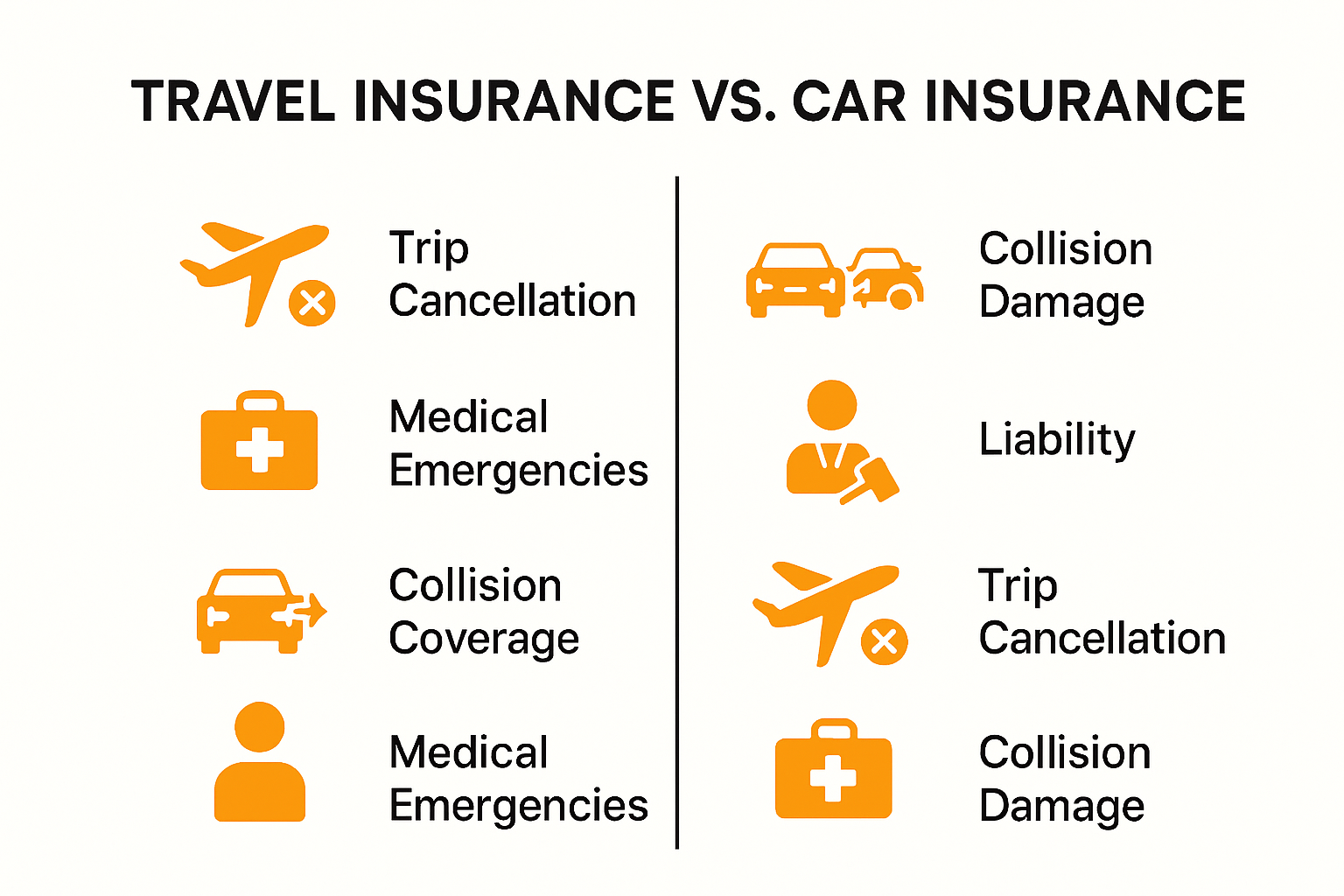
Car insurance primarily protects against financial losses from vehicle accidents, damages, and potential legal liabilities. Travel insurance, conversely, protects the traveler’s overall trip investment, covering a wide range of potential disruptions from medical emergencies to trip cancellations.
Consumers should carefully assess their specific needs, considering factors like travel frequency, vehicle ownership, and personal risk tolerance when selecting insurance coverage. Understanding these nuanced differences ensures you choose the most appropriate protection for your unique circumstances.
When to Choose Travel Insurance or Car Insurance
Selecting the right insurance requires a strategic approach based on individual circumstances, potential risks, and personal financial protection needs. Understanding when to prioritize travel insurance or car insurance can help consumers make informed decisions that safeguard their assets and provide peace of mind. Learn about car insurance options for different scenarios.
Scenarios Requiring Car Insurance
Car insurance becomes essential in multiple critical situations. Vehicle owners must prioritize car insurance when:
- Legal Requirement: Most jurisdictions mandate car insurance for vehicle registration and legal operation
- Vehicle Financing: Lenders typically require comprehensive coverage for financed vehicles
- Asset Protection: Protects against significant financial losses from accidents, theft, or damage
- Daily Transportation: Necessary for individuals who rely on personal vehicles for work, family, or daily commuting
According to the National Association of Insurance Commissioners, car insurance is not just a recommendation but a crucial financial safeguard for vehicle owners.
Travel Insurance Decision Factors
Travel insurance requires more nuanced consideration. The Massachusetts government recommends evaluating travel insurance based on several key factors:
- Trip Cost: Higher-value trips with significant prepaid expenses warrant more comprehensive travel insurance
- Destination Risks: International travel to regions with potential medical or political instability
- Personal Health: Travelers with pre-existing medical conditions or those engaging in high-risk activities
- Trip Complexity: Multi-destination journeys or trips involving multiple connections
Smartraveller emphasizes the importance of understanding policy specifics, including coverage limits and exclusions specific to planned travel activities.
Making the Right Insurance Choice
The decision between travel and car insurance isn’t always mutually exclusive. Many individuals require both types of protection depending on their lifestyle and risk exposure. Key considerations include:
- Evaluating personal risk tolerance
- Assessing financial capacity to absorb potential losses
- Understanding specific coverage needs based on travel frequency and vehicle usage
- Reviewing existing insurance policies for potential overlapping protections
Consumers should conduct a comprehensive assessment of their individual circumstances. This involves analyzing potential financial risks, reviewing current insurance coverage, and consulting with insurance professionals who can provide personalized guidance.
Ultimately, the goal is to create a comprehensive insurance strategy that provides robust protection across different aspects of life. Whether protecting a valuable vehicle or safeguarding an important travel investment, choosing the right insurance requires careful consideration of personal needs, potential risks, and financial capabilities.
Tips for South Africans: Saving on Both Policies
Navigating insurance costs requires strategic planning and informed decision-making. South African consumers can significantly reduce their insurance expenses by understanding key cost-saving strategies for both travel and car insurance. Discover insider tips for reducing car insurance premiums.
Car Insurance Cost-Cutting Strategies
Reducing car insurance premiums involves multiple approaches. The South African Insurance Association recommends several practical methods:
- Enhanced Vehicle Security: Installing approved tracking devices and immobilizers can lower risk and reduce premiums
- Increasing Voluntary Excess: Selecting a higher excess payment can substantially decrease monthly insurance costs
- Regular Vehicle Maintenance: Demonstrating responsible vehicle care can positively influence insurance rates
- Annual Policy Review: Comparing quotes and reassessing coverage annually ensures optimal pricing
Drivers with clean driving records and those who complete defensive driving courses often qualify for additional discounts, making proactive risk management a financially smart approach.
Travel Insurance Savings Techniques
Travel insurance presents unique opportunities for cost reduction. The Financial Sector Conduct Authority suggests several money-saving approaches:
- Annual Multi-Trip Policies: Frequent travelers can save significantly by purchasing comprehensive annual coverage
- Bundled Insurance Packages: Combining travel insurance with existing health or home insurance can reduce overall costs
- Selective Coverage: Choosing policy features that match specific travel needs prevents overpaying for unnecessary protections
- Early Booking Discounts: Some insurers offer reduced rates for policies purchased well in advance of travel dates
South African Insurance Brokers Association emphasizes the importance of carefully comparing policy details to ensure comprehensive protection without unnecessary expenses.
Smart Insurance Purchasing Techniques
Below is a table summarising the key strategies South Africans can use to save money on car and travel insurance, as discussed in the article.
| Saving Strategy | Car Insurance | Travel Insurance |
|---|---|---|
| Annual Policy Review | Yes | Yes |
| Bundled Insurance Discounts | Sometimes | Often (with health/home policies) |
| Enhanced Security Measures | Yes (tracking devices, immobilisers) | Not Applicable |
| Multi-Trip/Annual Policy | Not Applicable | Yes (for frequent travellers) |
| Higher Excess/Voluntary Deductible | Yes | Sometimes |
| Selective Feature Choices | Yes | Yes |
| Early Booking Discounts | Not Applicable | Yes |
Maximizing insurance value requires a holistic approach. Key strategies include:
- Maintaining a good credit record, which can positively influence insurance pricing
- Leveraging professional or group affiliations that might offer special insurance rates
- Utilizing online comparison tools to evaluate multiple insurance options
- Considering package deals that combine different types of insurance
Consumers should approach insurance as a strategic financial tool. While cost is crucial, the cheapest option is not always the most beneficial. Balancing comprehensive coverage with affordable premiums requires careful consideration of individual risk profiles and specific needs.
Ultimately, South African insurance consumers can achieve significant savings by being proactive, informed, and strategic in their insurance choices. Regular policy reviews, understanding coverage details, and exploring diverse savings opportunities can help individuals protect their assets while managing insurance expenses effectively.

Frequently Asked Questions
What is the main purpose of car insurance?
Car insurance primarily protects vehicle owners against risks related to accidents, theft, and liability for damages incurred during traffic incidents. It is often mandatory in many jurisdictions to operate a vehicle legally.
How does travel insurance differ from car insurance?
Travel insurance is designed to protect travelers against trip disruptions such as cancellations, medical emergencies, and lost luggage, whereas car insurance focuses on vehicular risks and is required for vehicle operation.
When should I consider purchasing travel insurance?
You should consider purchasing travel insurance if you are planning an expensive trip, traveling to high-risk destinations, or if you have pre-existing medical conditions. It protects your financial investment in case of cancellations or emergencies during your trip.
Can I save money on both travel and car insurance?
Yes, you can save money on both types of insurance by comparing rates annually, bundling policies, choosing higher excess options, and taking advantage of discounts for good driving records or purchasing early.
Discover Tailored Insurance that Meets Your Real-Life Risks
You have just learned how confusing it can be to choose between travel insurance and car insurance. Most South Africans run the risk of being left out of pocket when they pick the wrong cover or neglect to check the key differences in protection for 2025. Whether you need serious vehicle protection for daily use or peace of mind while travelling afar, it is your personal financial safety net on the line.
Don’t get caught without the right support when your trip is cancelled or your car is in an accident. Head over to insurance.kingprice.co.za for exclusive tips and the smartest ways to compare travel and car insurance offers. Make your next move count and request a free quote today. Get proper protection for your ride and your journey before prices go up or life throws you a curveball.