Understanding Insurance for Students: A Complete Guide
Student life comes with freedom and new responsibilities and those risks can add up quickly. Nearly 30 percent of students have lost or damaged expensive electronics during their studies. That looks like just bad luck but the real surprise is how a bit of insurance can turn a stressful disaster into a minor setback. Most students do not realise how little it costs to protect everything that actually matters.
Table of Contents
- What Is Insurance For Students And Why Is It Important?
- Types Of Insurance Relevant For Students
- How Insurance For Students Works: Key Concepts
- Real-World Applications Of Insurance For Students
- Understanding Common Terms In Student Insurance
Quick Summary
| Takeaway | Explanation |
|---|---|
| Insurance provides financial security for students | It protects against risks like theft, health emergencies, and accidents during academic life. |
| Understand your coverage options thoroughly | Different types like health, property, and liability insurance are essential to protect multiple aspects of student life. |
| Investing in insurance offers peace of mind | A small premium can prevent significant out-of-pocket costs, helping students focus on their studies. |
| Be aware of claims processing steps | Knowing how to file a claim properly ensures quick reimbursement and minimizes disruptions in daily life. |
| Learn key insurance terminology | Familiarity with terms like premium, deductible, and claim is essential for making informed insurance decisions. |
What is Insurance for Students and Why is it Important?
Insurance for students represents a crucial financial protection mechanism designed to safeguard young individuals against potential financial risks during their academic journey. Student insurance strategies are specifically tailored to address the unique vulnerabilities and challenges faced by students in various aspects of their lives.
Understanding Student Insurance Fundamentals
Student insurance goes beyond traditional insurance models by recognizing the specific needs and limited financial resources of young learners. It typically covers multiple dimensions of risk, including personal belongings, health, travel, and potential liability scenarios that students might encounter.
Key Coverage Areas for Students:
- Personal property protection for electronics, textbooks, and personal items
- Medical and health emergency coverage
- Accidental damage protection
- Personal liability insurance
Financial Protection and Risk Management
For students, insurance serves as a critical safety net that prevents minor mishaps from turning into significant financial setbacks. According to Cambridge University’s financial advice centre, unexpected events like theft, accidental damage, or health emergencies can derail a student’s academic progress and financial stability.
The primary objective of student insurance is not just protection but financial peace of mind. By investing a relatively small premium, students can mitigate potential risks that could otherwise result in substantial out-of-pocket expenses. This approach allows young learners to focus on their education without constant worry about potential financial disruptions.

Students should view insurance as a strategic investment in their personal and academic security, providing a protective buffer against unforeseen circumstances that could otherwise compromise their educational journey and financial wellness.
Types of Insurance Relevant for Students
Students encounter various potential risks during their academic journey, making diverse insurance options critical for comprehensive financial protection.
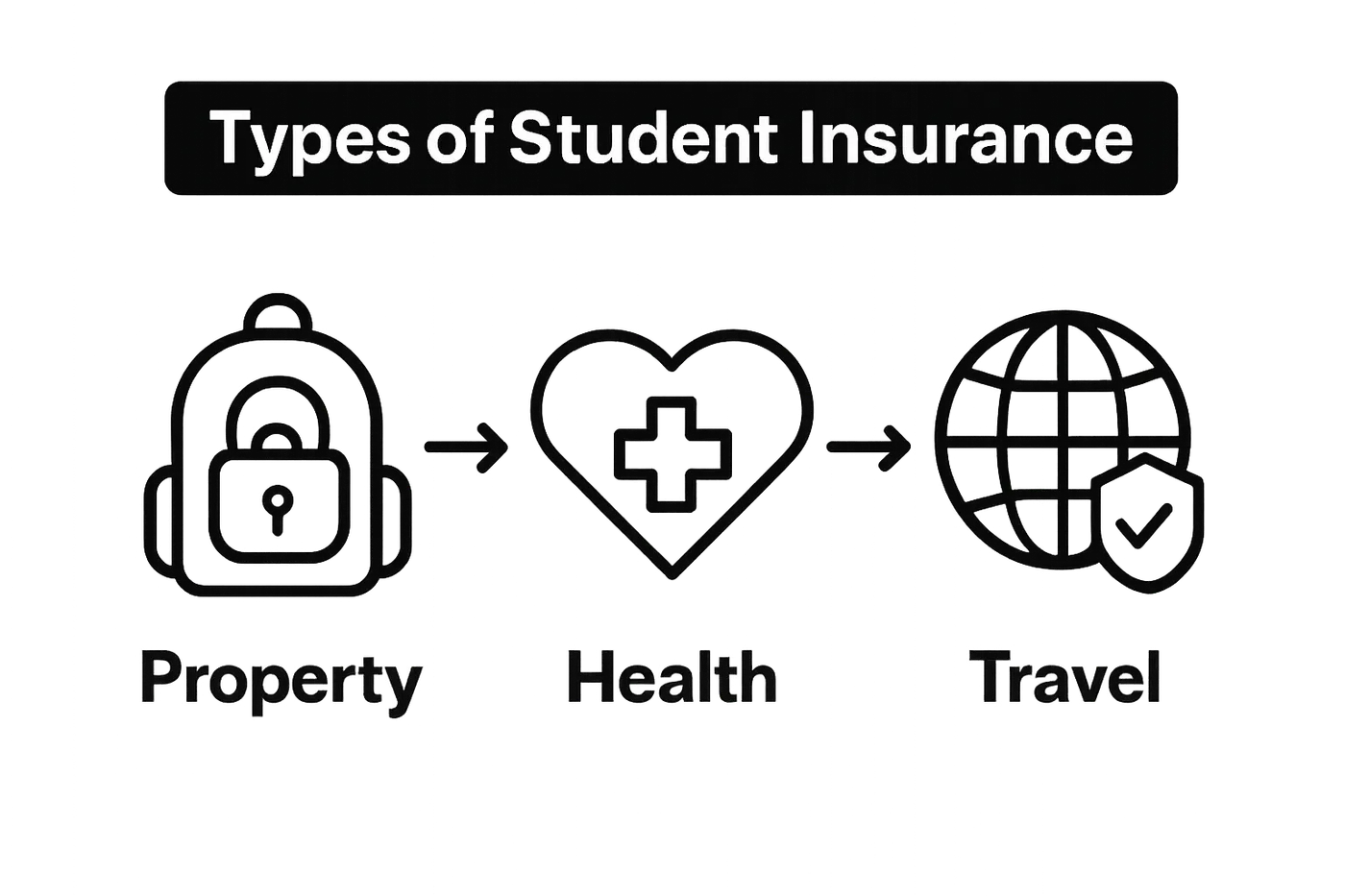 Top insurance tips for students highlight the importance of understanding different insurance categories tailored to young learners’ unique needs.
Personal Property and Belongings Insurance
Students typically carry valuable electronics, textbooks, and personal items that require protection against theft, damage, or loss. This insurance category provides financial coverage for replacing expensive equipment like laptops, smartphones, and study materials that are essential for academic success.
Key Considerations for Property Insurance:
- Coverage for electronics and study equipment
- Protection against theft from student accommodation
- Replacement costs for damaged or lost items
- Worldwide coverage for items carried during travel
Health and Medical Insurance Options
Comprehensive health insurance is paramount for students, addressing potential medical emergencies and routine healthcare needs. According to Student Health Association research, students without adequate medical coverage can face significant financial challenges during health-related incidents.
Important Medical Coverage Elements:
- Emergency medical treatment
- Hospitalization expenses
- Prescription medication coverage
- Mental health support services
- Preventive healthcare consultations
Travel and Liability Insurance
Students frequently travel for academic purposes, internships, or personal exploration, making travel insurance a crucial protection mechanism. Liability insurance complements travel coverage by protecting students against potential legal and financial risks associated with accidental damages or personal injury scenarios.
Whether studying locally or internationally, students must recognize insurance as a strategic financial safeguard.
Below is a comparison table outlining the main types of insurance relevant for students, highlighting their core purpose and what each typically covers.
| Insurance Type | Main Purpose | Typical Coverage Examples |
|---|---|---|
| Personal Property Insurance | Protects valuable items from theft, loss, or damage | Electronics, textbooks, personal items |
| Health/Medical Insurance | Covers healthcare expenses for emergencies and routine care | Emergency treatment, hospitalisation, prescriptions |
| Travel Insurance | Safeguards financial loss during travel related to studies | Emergency evacuation, trip cancellation, belongings |
| Liability Insurance | Covers legal/financial risks due to accidental harm to others | Personal liability, legal expenses |
| The right insurance portfolio ensures peace of mind, allowing young learners to focus on their academic and personal growth without constant worry about potential financial setbacks. |
How Insurance for Students Works: Key Concepts
Understanding the mechanics of student insurance requires insight into several fundamental principles that govern how protection and financial coverage operate. Car insurance for students serves as an excellent example of how specialized insurance products cater to unique demographic needs.
Premium Calculation and Risk Assessment
Insurance for students is primarily based on comprehensive risk evaluation, where insurers analyze multiple factors to determine appropriate coverage and premium rates. Actuarial experts assess potential financial exposures specific to student lifestyles, including personal characteristics, geographic location, and individual risk profiles.
Key Risk Assessment Factors:
- Age and academic status
- Type of educational institution
- Personal asset value
- Geographic location
- Historical claims data
Coverage Structures and Policy Mechanisms
Student insurance policies typically employ flexible structures designed to provide targeted protection across various potential scenarios. According to Financial Student Protection Research, these policies are engineered to balance comprehensive coverage with affordable premium rates.
Essential Policy Components:
- Defined coverage limits
- Specific inclusion and exclusion clauses
- Deductible arrangements
- Claim submission procedures
- Renewal and modification options
Claims Processing and Financial Reimbursement
The claims process represents a critical component of student insurance, providing a structured mechanism for financial recovery following unexpected events.
Students must understand the precise steps required to initiate and successfully navigate insurance claims, ensuring minimal disruption to their academic and personal lives.
Effective insurance for students goes beyond mere financial protection. It offers peace of mind, allowing young learners to focus on their educational journey while knowing they have a robust safety net supporting their personal and professional development.
Real-World Applications of Insurance for Students
Insurance for students transcends theoretical protection, offering tangible solutions to real-life challenges encountered during academic and personal development phases. Top insurance tips for students demonstrate how strategic coverage can mitigate potential financial risks in various scenarios.
Academic Travel and International Study Protection
Students engaged in international exchange programs or academic research face unique challenges that require specialized insurance coverage. According to Global Student Mobility Research, comprehensive travel insurance becomes critical when navigating unfamiliar environments and unexpected medical or logistical complications.
Key Protection Areas for Academic Travel:
- Emergency medical evacuation services
- Comprehensive health coverage across international borders
- Trip cancellation and interruption protection
- Personal liability coverage during study abroad
- Equipment and research material protection
Technology and Personal Asset Security
Modern students heavily rely on technological devices for academic and personal communication. Insurance provides crucial financial protection against potential loss, theft, or accidental damage to essential electronic equipment.
Typical Technology Insurance Scenarios:
- Laptop replacement after theft from student accommodation
- Smartphone damage repair or replacement
- Tablet and digital device protection during transportation
- Worldwide coverage for academic and personal electronics
Financial Risk Mitigation for Part-Time Workers
Many students supplement their income through part-time employment, introducing additional potential liability risks. Insurance serves as a critical safety net, protecting students from potential financial consequences of workplace incidents or personal accidents during professional engagements.
By understanding and strategically implementing appropriate insurance coverage, students can navigate their academic journey with greater confidence and financial security. Insurance transforms from a theoretical concept to a practical tool for managing life’s unpredictable challenges, allowing young learners to focus on personal growth and educational achievements.
Understanding Common Terms in Student Insurance
Navigating the complex world of student insurance requires a comprehensive understanding of key terminology that can often seem like a foreign language. Insurance tips for students provide essential guidance in demystifying these intricate technical terms.
Core Insurance Terminology Explained
Insurance contracts are filled with specialized language that can be challenging for students to comprehend. According to Insurance Education Resources, understanding these fundamental terms is crucial for making informed coverage decisions.
Essential Insurance Vocabulary:
- Premium: The regular payment made to maintain insurance coverage
- Deductible: The amount a student pays out-of-pocket before insurance coverage begins
- Policy: The formal written contract detailing insurance terms and conditions
- Claim: A formal request for financial compensation for a covered loss
- Rider: An additional provision that modifies or extends basic insurance coverage
Risk Assessment and Coverage Terminology
Students must grasp the nuanced language used by insurers to evaluate and determine appropriate coverage. These technical terms directly impact the scope and cost of insurance protection.
Key Risk and Coverage Terms:
- Underwriting: The process of evaluating and calculating insurance risk
- Coverage Limit: The maximum amount an insurer will pay for a specific type of loss
- Exclusion: Specific conditions or circumstances not covered by an insurance policy
- Co-payment: The percentage of costs shared between the student and the insurance provider
- Comprehensive Coverage: A broader protection that includes multiple types of potential risks
Claim Processing and Reimbursement Language
Understanding the terminology associated with filing and processing insurance claims empowers students to navigate the reimbursement process more effectively. Clear comprehension of these terms can significantly reduce confusion and streamline potential claim experiences.
By developing a solid understanding of these common insurance terms, students can approach insurance decisions with greater confidence and clarity.
This table provides definitions of common insurance terms mentioned in the guide, assisting students in understanding key language used throughout their insurance journey.
| Term | Definition |
|---|---|
| Premium | The regular payment made to maintain insurance coverage |
| Deductible | Amount paid out-of-pocket by the student before the insurance starts covering costs |
| Policy | The official, written contract that details the terms, cover, and conditions of insurance |
| Claim | A formal request submitted to the insurer for financial compensation after a covered loss |
| Rider | An add-on to an existing policy that extends or modifies the standard cover |
| Underwriting | The insurer’s assessment of risk to decide eligibility and pricing for cover |
| Exclusion | Specific situations or items that are not covered by a particular insurance policy |
| Co-payment | The portion of costs shared by the insured and insurer, often a set percentage or amount |
| Knowledge transforms complex insurance language from an intimidating barrier to a valuable tool for financial protection and personal risk management. |
Protect Your Studies and Your Finances with Smart Insurance
Many South African students worry about losing valuable personal items or facing medical emergencies during their academic journey. The stress of replacing electronics, paying for unexpected healthcare, or facing liability claims can disrupt your studies and your future. “Understanding Insurance for Students” highlights how critical the right cover is to keep your mind on your goals and not on surprise expenses. Whether you want to learn more about protecting your cellphone or securing your home contents, our practical insurance tips and tricks are made for every student challenge.
Why wait until something goes wrong? Get affordable and reliable solutions now. Visit insurance.kingprice.co.za to discover how easy it is to compare cover options for your personal items, car, or home contents. Secure your academic peace of mind and start your quote today. Your studies matter. Let us help you stay protected.
Frequently Asked Questions
What is student insurance?
Student insurance is a financial protection mechanism that covers various aspects of a student’s life, including personal belongings, health, travel, and liability against potential risks during their academic journey.
Why is insurance important for students?
Insurance provides essential financial protection that can prevent minor mishaps like theft, accidental damage, or health emergencies from becoming significant financial setbacks, thus ensuring peace of mind while pursuing education.
What types of insurance do students typically need?
Students typically need personal property insurance, health insurance, travel insurance, and personal liability insurance to safeguard against various risks they may encounter during their studies.
How does the claims process work for student insurance?
The claims process involves submitting a formal request for financial compensation for covered losses. It’s crucial for students to understand the specific steps required to navigate this process efficiently to minimize disruptions to their academic and personal lives.