Understanding Insurance Fraud Warning Signs Clearly
Insurance fraud sounds like something that only affects massive companies or dodgy individuals you see on TV. But wait. The facts show insurance fraud drains over R5.8 trillion globally every year and every honest person pays the price through higher premiums. You might think this is a distant problem but even the tiniest white lie on an insurance form could put you at risk without you even realising it.
Table of Contents
- Defining Insurance Fraud: What It Is And Why It Matters
- The Impact Of Insurance Fraud On Individuals And Businesses
- Common Insurance Fraud Warning Signs To Recognize
- How Insurance Fraud Schemes Operate
- The Role Of Reporting And Preventing Insurance Fraud
Quick Summary
| Takeaway | Explanation |
|---|---|
| Insurance fraud is a serious crime. | It undermines the integrity of insurance systems and financially impacts consumers and companies alike. |
| Recognize warning signs of fraud. | Be alert to low premiums, aggressive sales tactics, and vague documentation to protect yourself. |
| Fraud causes higher premium rates. | Fraudulent activities lead to increased costs for insurance companies, which are ultimately passed on to honest policyholders. |
| Report suspected fraud immediately. | Utilize dedicated reporting channels like state fraud bureaus or hotlines to combat fraudulent practices. |
| Preventive measures improve detection. | Implementing data analytics and training for insurance professionals enhances the ability to identify and counter fraud effectively. |
Defining Insurance Fraud: What It Is and Why It Matters
Insurance fraud represents a serious financial crime that undermines the integrity of insurance systems and impacts everyone involved. The National Association of Insurance Commissioners defines insurance fraud as a deliberate deception committed by any party in the insurance transaction to obtain an illegitimate financial gain.
Understanding the Types of Insurance Fraud
Insurance fraud is not a monolithic concept but encompasses various deceptive practices. Primarily, fraud can be categorised into two significant types:
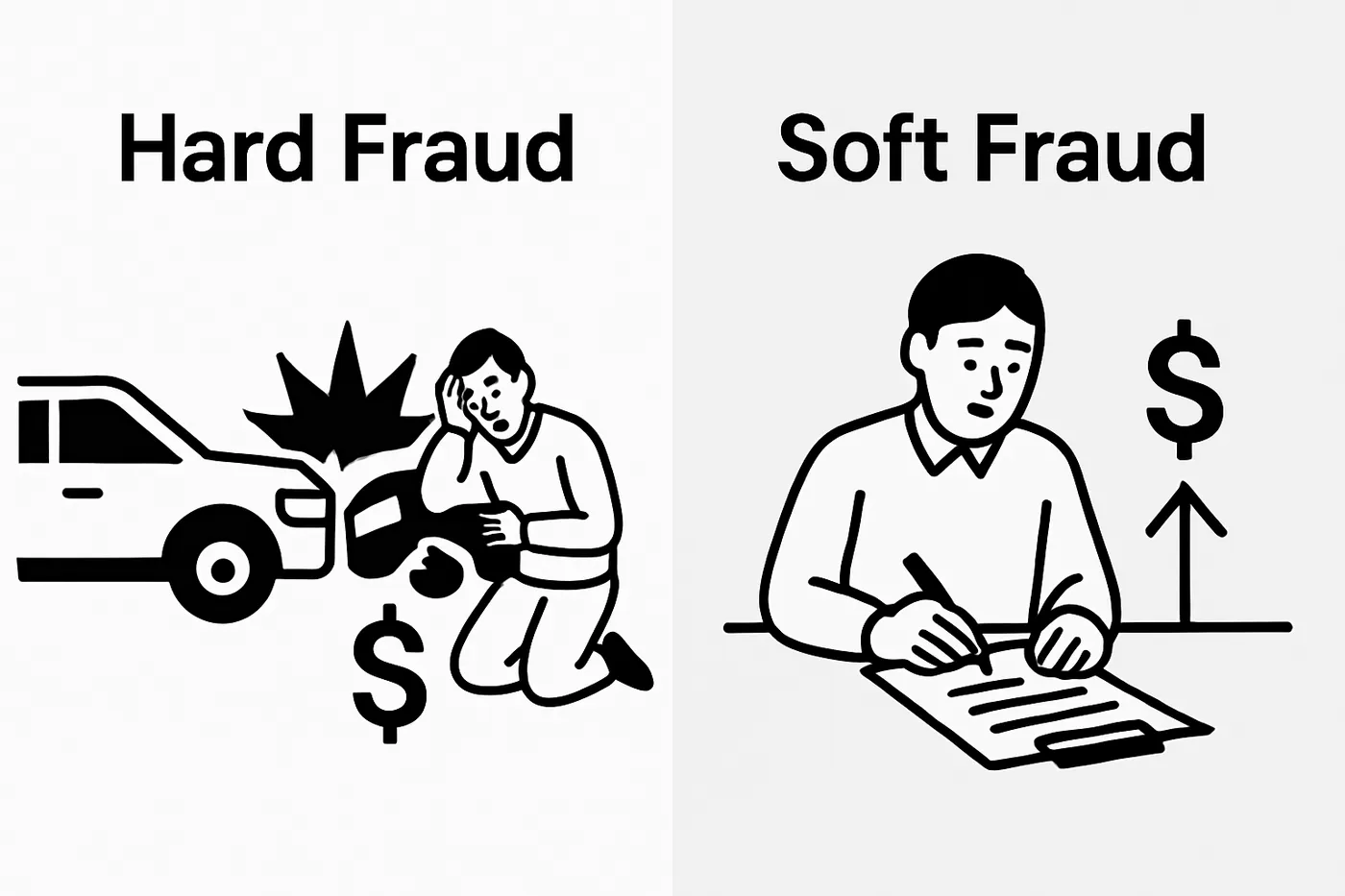
- Hard Fraud: Involves deliberately staging or fabricating an incident to claim insurance money
- Soft Fraud: Includes exaggerating legitimate claims or providing false information during policy application
Economic Impact and Consequences
The financial ramifications of insurance fraud are staggering. Research from the Coalition Against Insurance Fraud estimates that fraudulent activities cost approximately $308.6 billion annually. These losses are not abstract figures but translate directly into increased premiums for honest consumers.
Moreover, insurance fraud is not a victimless crime. It creates a ripple effect that impacts:
- Insurance companies’ operational costs
- Higher premium rates for consumers
- Potential legal consequences for perpetrators
For those wanting to understand more about specific fraud risks, learn more about vehicle insurance fraud prevention and how to protect yourself from potential scams.
The Impact of Insurance Fraud on Individuals and Businesses
Insurance fraud creates extensive financial consequences that extend far beyond individual transactions, generating substantial economic disruption across multiple sectors. Research from the National Association of Insurance Commissioners reveals the profound systemic impact of fraudulent activities.
Direct Financial Consequences
The economic ramifications of insurance fraud are significant and multifaceted. Fraudulent claims and deceptive practices result in massive financial losses that are ultimately absorbed by legitimate policyholders and businesses. Estimated annual losses exceed $308.6 billion, which translates into tangible economic burdens for consumers and organisations.
Specifically, insurance fraud impacts various sectors differently:
- Property and Casualty Insurance: Experiences approximately 10% of total losses
- Life Insurance: Suffers substantial financial drain from fraudulent claims
- Health Insurance: Encounters significant monetary challenges from systematic fraud
Broader Economic Implications
Beyond immediate financial losses, insurance fraud triggers a complex chain of economic repercussions. Insurance companies are compelled to increase premium rates to offset fraudulent claim expenses, effectively passing these costs to honest consumers. This creates an unsustainable cycle where legitimate policyholders bear the financial burden of criminal activities.
Businesses also experience significant indirect consequences. Higher insurance premiums increase operational expenses, potentially limiting growth, reducing competitiveness, and constraining investment opportunities. Understand more about preventing insurance risks to protect your financial interests.
Moreover, insurance fraud undermines market stability, erodes consumer trust, and creates an environment of increased financial uncertainty. The cumulative effect is a systemic challenge that requires comprehensive prevention strategies and collaborative efforts from insurers, law enforcement, and regulatory bodies.
Common Insurance Fraud Warning Signs to Recognize
Recognizing insurance fraud warning signs is crucial for protecting yourself from potential financial scams and criminal activities. The National Association of Insurance Commissioners provides comprehensive guidance on identifying potential fraudulent practices.
Red Flags in Insurance Transactions
Insurance fraud can manifest through various suspicious behaviors and patterns. Consumers and businesses should remain vigilant and watch for these critical warning signs:
- Unusually Low Premium Rates: Offers significantly below market standard
- Aggressive Sales Tactics: Intense pressure to purchase immediately
- Incomplete or Vague Documentation: Lack of clear policy details
- Reluctance to Provide Official Information: Difficulty obtaining verifiable contact details
Digital and Personal Fraud Indicators
Digital fraud warnings have become increasingly sophisticated. Potential red flags include:
- Unsolicited emails claiming urgent account issues
- Communications with poor grammar or generic greetings
- Requests for personal information via unsecured channels
- Unexpected claims or policy notifications you did not initiate
Personal interactions can also reveal potential fraud. Be cautious of insurance representatives who:
- Cannot provide clear explanations about coverage
- Refuse to share official licensing information
- Avoid direct questions about policy specifics
Explore advanced strategies for protecting your insurance investments to stay ahead of potential fraudulent schemes.
Ultimately, protecting yourself requires constant vigilance, thorough verification, and a healthy dose of skepticism when encountering suspicious insurance offers or claims.
This table summarises the common warning signs of insurance fraud in both digital and physical interactions, making it easier for readers to know what to watch out for.
| Warning Sign Category | Examples in Practice |
|---|---|
| Low Premium Offers | Premium rates far below market standard |
| Aggressive Tactics | Intense pressure to sign up immediately |
| Vague Documentation | Policy lacking clear cover details and terms |
| Reluctance to Disclose | Refusal to provide official contact or licensing information |
| Digital Red Flags | Unsolicited emails, poor grammar, generic greetings, requests for personal info |
| Unexpected Notifications | Claims or policy alerts that you did not initiate |
| Evasive Representatives | Avoiding direct answers, not explaining cover adequately |

How Insurance Fraud Schemes Operate
Insurance fraud schemes are complex, sophisticated networks designed to exploit systemic vulnerabilities in insurance processes. The California Department of Insurance provides critical insights into the intricate mechanisms behind these criminal operations.
Staged Incident Strategies
One prevalent approach involves deliberately manufacturing scenarios to trigger insurance claims. Automotive fraud schemes represent a prime example, with criminal networks employing elaborate techniques:
- Sudden Stop: Intentionally causing rear-end collisions
- Swoop and Squat: Coordinated driving maneuvers to force accidents
- Stuffed Passengers: Adding fictitious injury claims to legitimate incidents
- Right-of-Way Collisions: Deliberately creating traffic confrontations
Digital and Network Fraud Mechanisms
Modern insurance fraud extends beyond physical staging, leveraging technological infrastructure to generate false claims. Sophisticated schemes often involve:
- Coordinated networks of participants including telemarketers
- Corrupt medical professionals generating unnecessary documentation
- Electronic fabrication of medical records and treatment reports
- Systematic recruitment of willing participants
Organized fraud rings typically operate with remarkable precision, creating elaborate documentation trails and utilizing professional “cappers” who recruit participants and direct them through complex claim processes.
Discover advanced protection strategies for your insurance investments to understand how these networks function.
Understanding these operational strategies is crucial. Insurance fraud represents a calculated criminal enterprise, not random opportunistic actions, requiring comprehensive vigilance and systemic countermeasures.
The Role of Reporting and Preventing Insurance Fraud
Effective insurance fraud prevention requires a collaborative approach involving consumers, insurance companies, and regulatory bodies. The National Association of Insurance Commissioners emphasizes the critical importance of proactive reporting and systematic intervention.
Reporting Mechanisms and Channels
Individuals play a crucial role in combating insurance fraud by understanding and utilizing appropriate reporting channels. Key reporting strategies include:
- Contacting state insurance fraud bureaus
- Utilizing online fraud reporting systems
- Communicating directly with insurance providers
- Submitting anonymous tips to dedicated hotlines
Prevention Strategies and Collaborative Efforts
Prevention extends beyond individual reporting and requires multi-layered approaches. Effective fraud prevention involves:
- Implementing advanced data analytics
- Conducting thorough background investigations
- Developing robust verification processes
- Training insurance professionals to recognize warning signs
Technological advancements have significantly enhanced fraud detection capabilities. Machine learning algorithms and sophisticated data monitoring systems now enable real-time identification of suspicious patterns and potential fraudulent activities.
Learn comprehensive strategies for protecting your insurance investments and understand the latest prevention techniques.
Ultimately, successful insurance fraud prevention demands continuous vigilance, technological innovation, and a collective commitment from all stakeholders to maintain the integrity of insurance systems.
Protect Yourself from Insurance Scams in South Africa
Spotting insurance fraud warning signs can be stressful. The worry about falling prey to fake agents or dishonest claims is real, especially when your vehicle, home, or personal belongings are on the line. Whether you have car insurance or need home contents cover, understanding fraud risks like false claims and unclear policy details keeps your finances safer. Why let uncertainty and the fear of overpaying for someone else’s dishonesty hang over your head?
Take action today and get peace of mind with trusted cover and clear policy terms from a friendly, local team. Visit Savvy Insurance for practical advice and honest protection against all types of insurance fraud. Ready to simplify your insurance and keep your wallet protected? Explore more tips and get a quote directly at Savvy Insurance. Don’t let the stress of potential scams put your assets at risk - make the smart move now.
Frequently Asked Questions
What are the common warning signs of insurance fraud?
Common warning signs include unusually low premium rates, aggressive sales tactics, incomplete or vague documentation, and reluctance to provide official information.
How can I recognize digital insurance fraud indicators?
Digital fraud indicators include unsolicited emails claiming urgent account issues, communications with poor grammar or generic greetings, requests for personal information via unsecured channels, and unexpected claims or policy notifications you did not initiate.
Why is it important to be aware of insurance fraud warning signs?
Being aware of insurance fraud warning signs helps consumers protect themselves from financial scams, ensures they do not unintentionally become involved in fraudulent schemes, and supports the integrity of the insurance industry.
What should I do if I suspect insurance fraud?
If you suspect insurance fraud, report it to your insurance provider or a state insurance fraud bureau, utilize online reporting systems, and consider submitting anonymous tips to dedicated hotlines.
Recommended
- Car Insurance Fraud Risks in 2025
- Insurance Inspection Requirements 2025
- How to Avoid Underinsurance
- Top Tips for Choosing an Insurer in 2025
Ready to compare insurance? Get free, no-obligation quotes from South Africa's top insurers in a few minutes and see how much you could save.
Compare insurance quotes →Free · No obligation · POPIA compliant · We never sell your data