

Smart home insurance discounts are quickly changing how people protect their homes. Most folks think smart technology is just about convenience or controlling lights with your phone. But here is the real shocker. Homeowners with a full smart home setup can slice insurance premiums by up to 20 percent. That means your gadgets might actually be the secret to saving a lot more than just electricity.
Table of Contents
- What Are Smart Home Insurance Discounts?
- Why Smart Home Insurance Discounts Matter
- How Smart Home Technology Influences Insurance Premiums
- Key Concepts Behind Smart Home Insurance Discounts
- Real-World Applications Of Smart Home Insurance Discounts
Quick Summary
| Takeaway | Explanation |
|---|---|
| Smart home tech reduces insurance premiums. | Homeowners installing smart technologies can receive discounts of 5% to 20% on their insurance policies. |
| Investing in security technologies is beneficial. | High-tech security systems mitigate risks, leading to fewer claims and lower premiums. |
| Real-time monitoring enhances safety. | Technologies like water leak sensors and smoke alarms provide immediate alerts, minimizing potential damages. |
| Discounts depend on technology depth. | The more complex the smart home systems, the greater the insurance discount opportunity. |
| Holistic risk management benefits all. | Smart home systems not only save money but improve property marketability and safety for homeowners. |
What Are Smart Home Insurance Discounts?
Smart home insurance discounts are financial incentives offered by insurance providers to homeowners who integrate intelligent technology into their properties, effectively reducing potential risks and improving overall home safety. These innovative discounts recognise the proactive approach homeowners take in protecting their most valuable asset.
To help you scan the essential technologies that insurers prefer for discount qualification, here is a summary of key smart home tech and the primary risks they help mitigate:
| Smart Home Technology | Main Risk Mitigated | Benefit for Homeowners |
|---|---|---|
| Security systems with real-time monitoring | Theft, unauthorised entry | Prevents burglaries, lowers claims |
| Water leak detection sensors | Flooding, water damage | Early leak warning, reduces repairs |
| Smart smoke and CO detectors | Fire, carbon monoxide poisoning | Rapid alert, saves lives and assets |
| Surveillance cameras | Vandalism, theft | Deters crime, assists investigations |
| Environmental monitoring systems | Mould, damp, climate-related damage | Maintains healthy home environment |
Understanding the Technology Behind Discounts
Modern smart home technologies transform traditional home security and risk management strategies. Insurance companies now view these advanced systems as powerful risk mitigation tools. By installing devices that can monitor, detect, and prevent potential damages, homeowners demonstrate a commitment to reducing insurance claims.
Key smart home technologies that can trigger insurance discounts include:
- Security systems with real-time monitoring and alerts
- Water leak detection sensors
- Smart smoke and carbon monoxide detectives
- Connected home surveillance cameras
- Automated temperature and environmental monitoring systems
According to research from the South African National Treasury, emerging insurance approaches are exploring private sector technologies to enhance risk management strategies.
How Insurance Providers Calculate These Discounts
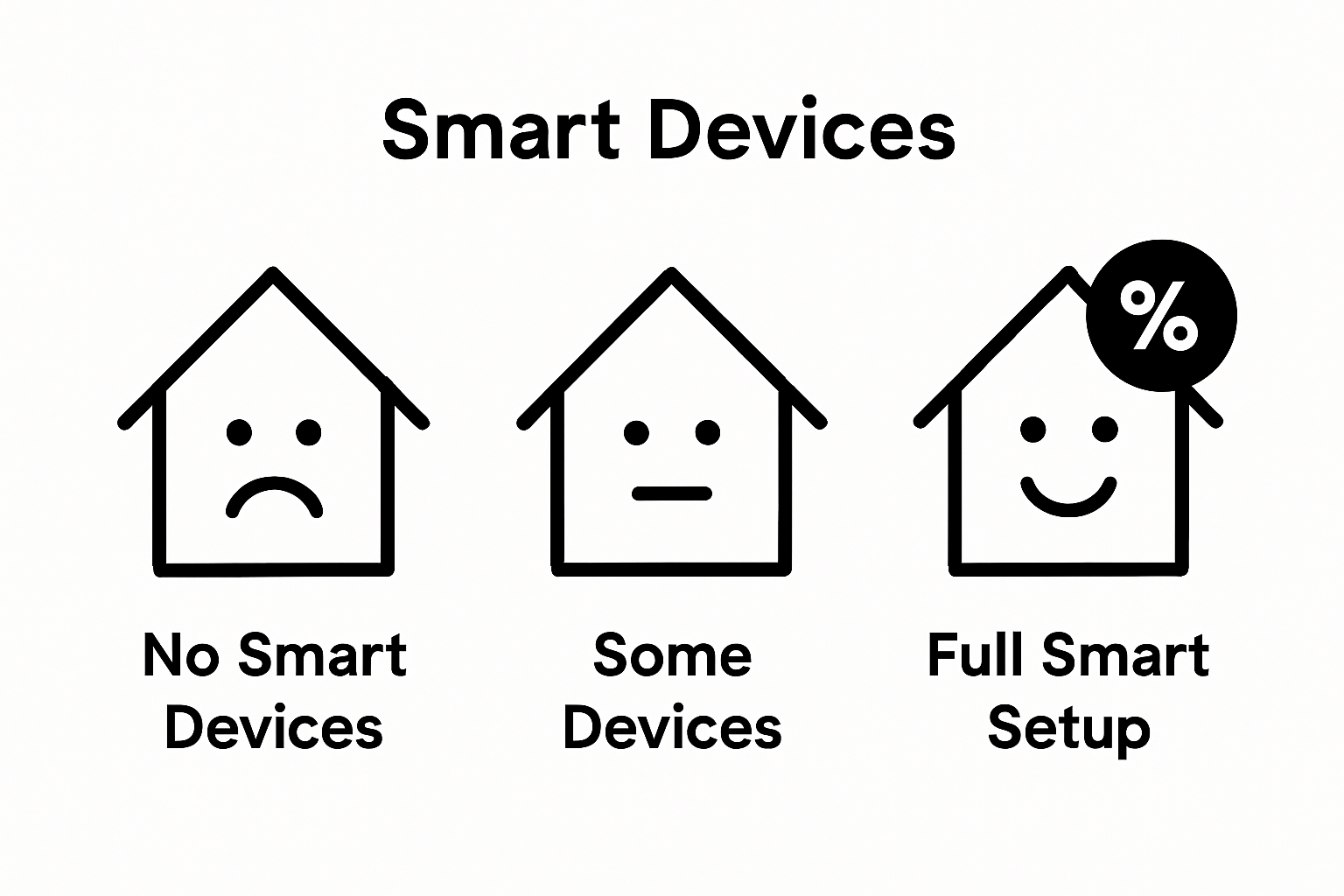
Insurers typically calculate smart home insurance discounts by assessing the specific technologies installed and their potential to reduce risk. The more comprehensive your smart home setup, the higher the potential discount. Most insurance providers offer percentage-based reductions ranging from 5% to 20% depending on the sophistication of your integrated systems.
For more insights on reducing your insurance premiums, check out our comprehensive guide on lowering home insurance costs.
By investing in smart home technologies, homeowners not only enhance their property’s security but also unlock financial benefits through strategic insurance discounts.
Why Smart Home Insurance Discounts Matter
Smart home insurance discounts represent more than just financial savings. They signal a transformative approach to property protection, risk management, and proactive home maintenance that benefits both homeowners and insurance providers.
Financial and Risk Reduction Benefits
The strategic implementation of smart home technologies offers substantial advantages beyond mere monetary incentives. Homeowners who invest in these systems significantly reduce their potential insurance risks, creating a win-win scenario for both property owners and insurance companies.
Key financial and risk reduction benefits include:
- Substantial reduction in potential property damage claims
- Lower insurance premiums through demonstrable risk mitigation
- Enhanced property value and marketability
- Improved home security and safety monitoring
- Potential long-term cost savings on maintenance and repairs
According to research from the South African National Treasury, emerging insurance strategies are exploring how private sector technologies can revolutionise risk management approaches.
Long-Term Economic and Safety Implications
Smart home insurance discounts represent a forward-thinking approach to property protection. By incentivising technological investment, insurers encourage homeowners to adopt systems that provide real-time monitoring, immediate threat detection, and rapid response capabilities.
For homeowners looking to understand how these technologies can translate into broader financial strategies, learn more about reducing insurance premiums and maximise your property’s potential.
Ultimately, smart home insurance discounts are not just about immediate savings. They represent a comprehensive strategy for creating safer, more resilient, and economically efficient homes in an increasingly technology-driven world.
How Smart Home Technology Influences Insurance Premiums
Smart home technologies have transformed how insurance providers evaluate and price home insurance policies. By providing real-time data and advanced risk assessment capabilities, these innovative technologies enable more precise and personalised premium calculations.
This table offers a quick side-by-side comparison of traditional insurance models versus smart home-based insurance approaches, highlighting how technology is changing risk management and premium calculations:
| Insurance Model | Risk Assessment Approach | Premium Calculation | Role of Technology |
|---|---|---|---|
| Traditional Insurance | Broad statistical categories | Static, profile-based pricing | Minimal (manual reports, paperwork) |
| Insurance with Smart Home Discounts | Real-time, granular data | Dynamic, personalised premium rates | Major (integrated smart devices) |
Data-Driven Risk Assessment
Traditional insurance models relied on broad statistical categories and generalised risk profiles. Smart home technologies introduce granular, instantaneous data collection that allows insurers to understand property risks with unprecedented accuracy.
Key technological risk assessment features include:
- Continuous monitoring of potential hazards
- Immediate detection of water leaks, fire risks, and security breaches
- Real-time environmental condition tracking
- Automated alerts for potential damage prevention
- Comprehensive documentation of home maintenance conditions
According to research from the South African National Treasury, emerging insurance strategies are exploring how technology can revolutionise risk management approaches.
Premium Calculation Transformation
Insurers now leverage smart home data to create more dynamic and personalised premium structures. Instead of static pricing models, technology enables context-specific risk evaluation. Homeowners who demonstrate proactive risk management through smart technologies can receive significant premium reductions.
For homeowners seeking comprehensive strategies to optimise their insurance costs, discover expert tips on reducing insurance expenses.
Ultimately, smart home technologies represent a paradigm shift in insurance risk assessment, moving from reactive to predictive risk management strategies that benefit both insurers and homeowners.
Key Concepts Behind Smart Home Insurance Discounts
Smart home insurance discounts represent a sophisticated intersection of technology, risk management, and financial incentives. Understanding the underlying principles helps homeowners leverage these innovative discount opportunities more effectively.
Risk Mitigation Through Advanced Technology
Insurance providers view smart home technologies as proactive risk reduction tools, fundamentally transforming traditional insurance assessment models. These technologies enable comprehensive monitoring and immediate threat detection, significantly reducing potential property damage risks.
Core risk mitigation technologies include:
- Intelligent security systems with real-time monitoring
- Automated water leak detection sensors
- Connected smoke and carbon monoxide detectives
- Environmental condition tracking devices
- Advanced home surveillance networks
According to research from the South African National Treasury, emerging insurance strategies are exploring sophisticated technological risk management approaches.
Data-Driven Discount Calculation
Insurance discounts are calculated using complex algorithmic models that evaluate the specific smart technologies installed in a home. The more comprehensive and interconnected the smart home system, the greater the potential insurance premium reduction. Insurers analyze multiple data points to determine risk profiles and corresponding discount structures.
For homeowners interested in comprehensive strategies to optimise insurance costs, explore expert insights on reducing insurance expenses.
Ultimately, smart home insurance discounts represent a forward-thinking approach to property protection, incentivising technological investment while providing tangible financial benefits to proactive homeowners.
Real-World Applications of Smart Home Insurance Discounts
Smart home insurance discounts transform theoretical technological potential into practical financial benefits for homeowners. By integrating advanced monitoring systems, property owners can actively reduce their insurance risks and unlock substantial premium reductions.
Practical Technology Implementation
Modern smart home technologies provide tangible risk management solutions that go beyond traditional security measures. These innovative systems offer comprehensive monitoring and immediate intervention capabilities, significantly minimising potential property damage scenarios.
Key practical applications include:
- Water leak detection with automatic shut-off mechanisms
- Temperature and humidity monitoring to prevent mould growth
- Advanced security systems with real-time alerts
- Electrical system monitoring to prevent potential fire hazards
- Comprehensive environmental condition tracking
According to research from the South African National Treasury, emerging insurance strategies are exploring sophisticated technological risk management approaches.
Financial Incentive Structures
Insurance providers design specific discount frameworks based on installed smart technologies. The more comprehensive and interconnected the home monitoring system, the greater the potential premium reduction. Homeowners can strategically invest in technologies that not only enhance property safety but also generate meaningful financial returns through insurance discounts.
For homeowners seeking comprehensive strategies to optimise insurance costs, explore expert insights on reducing insurance expenses.
Ultimately, smart home insurance discounts represent a progressive approach to property protection, enabling homeowners to proactively manage risks while enjoying substantial financial benefits.
Ready to Unlock Smart Home Insurance Savings?
Smart home technology offers so much more than just convenience. If you have invested in real-time monitoring or advanced security systems, you are already a step ahead in protecting your home. But have you realised that many South Africans miss out on valuable insurance discounts simply because they do not know how these smart upgrades impact their premiums? Homeowners who install water leak sensors, smoke detectors and smart cameras not only get peace of mind but also stand to lower their insurance costs significantly.
You deserve more value for your efforts. If you want to see real rewards for your investment in safety and modern living, start by exploring your insurance options today. Visit insurance.kingprice.co.za and let us help you match your smart home solutions with responsive cover and great discounts. Do not wait until your next renewal to benefit from your risk-reducing technology. Secure your quote now and bring your premium down with smart home discounts tailored for South Africa’s best homeowners.
Frequently Asked Questions
What are smart home insurance discounts?
Smart home insurance discounts are financial incentives offered by insurance providers to homeowners who install smart technologies that enhance property security and reduce potential risks.
How do I qualify for smart home insurance discounts?
To qualify for smart home insurance discounts, homeowners must install specific smart technologies, such as security systems, water leak detection sensors, and smart smoke detectors, that demonstrate a commitment to reducing insurance claims and risk.
How much can I save with smart home insurance discounts?
Savings from smart home insurance discounts typically range from 5% to 20%, depending on the sophistication and comprehensive integration of your smart home technologies.
How do smart home technologies influence insurance premiums?
Smart home technologies provide real-time data and enhance risk assessment capabilities, enabling insurers to offer more personalized premium calculations. Homes equipped with these technologies can demonstrate proactive risk management, potentially leading to lower premiums.