

Storms in South Africa are getting worse every year and property owners are feeling the pressure. Insurers have seen a spike in storm damage claims as extreme weather events hit more frequently, with payouts increasing by over 20 percent in the last two years. Most people think insurance is a safety net that kicks in without much hassle, but the real story is way more complicated than ticking a few boxes. There are hidden pitfalls and surprising gaps in cover that can cost you big if you do not know what to look out for.
Table of Contents
- What Are Storm Damage Insurance Claims?
- Why Storm Damage Insurance Claims Matter
- The Mechanisms Of Storm Damage Insurance
- Key Elements Of Coverage In Storm Damage Claims
- The Role Of Assessments In Storm Damage Claims
Quick Summary
| Takeaway | Explanation |
|---|---|
| Storm damage claims are crucial for financial recovery. | They help property owners recover costs stemming from severe weather, preventing economic hardship after disasters. |
| Documentation is essential for successful claims. | Policyholders must gather detailed evidence of damage, including photos and reports, to support their claims effectively. |
| Climate change increases storm damage risk. | The growing frequency of extreme weather events makes having storm damage insurance more important for property owners. |
| Professional assessments validate claims and costs. | Trained assessors provide crucial evaluations that determine the legitimacy and value of damage claims in the insurance process. |
| Understanding policy exclusions is vital. | Not all storm-related damages are covered; reviewing policy specifics ensures comprehensive protection against potential gaps. |
What Are Storm Damage Insurance Claims?
Storm damage insurance claims represent a critical financial protection mechanism for property owners experiencing losses from severe weather events. According to the South African Insurance Association, these claims cover damages resulting from unpredictable and potentially devastating weather conditions such as heavy rainfall, powerful winds, destructive hailstorms, and lightning strikes.
Understanding the Basics of Storm Damage
Storm damage insurance claims are formal requests made by policyholders to their insurance providers for compensation when extreme weather events cause significant harm to their property. These claims are designed to help individuals recover financially from unexpected natural disasters that can cause extensive and often expensive damage.
Key characteristics of storm damage insurance claims include:
- Covering physical damage to residential and commercial structures
- Protecting against losses from wind, hail, lightning, and flooding
- Requiring comprehensive documentation of the damage
- Involving a professional assessment by insurance claim adjusters
The Impact of Climate Variability
Research from climate experts indicates that South Africa is experiencing an increasing frequency of severe weather events, making storm damage insurance claims more relevant than ever. Climate change has contributed to more unpredictable and intense weather patterns, which means property owners need robust insurance coverage.
For those wanting to understand more about protecting their assets, our comprehensive guide on weather damage coverage provides additional insights into comprehensive protection strategies. Understanding storm damage insurance claims is not just about financial recovery but also about proactive risk management in an era of changing environmental conditions.
Why Storm Damage Insurance Claims Matter
Storm damage insurance claims are more than just financial transactions. They represent a critical safety net that protects individuals and businesses from potentially catastrophic economic losses caused by extreme weather events. Comprehensive insurance coverage can mean the difference between financial recovery and long-term economic hardship.
Financial Protection and Risk Mitigation
According to financial risk experts, storm damage can result in substantial repair and replacement costs that most individuals cannot afford out of pocket. Insurance claims provide a structured mechanism for transferring financial risk from the property owner to the insurance provider, ensuring that unexpected weather-related damages do not result in devastating economic consequences.
Key reasons why storm damage insurance claims are crucial include:
- Providing immediate financial support during crisis situations
- Protecting personal and business assets from complete loss
- Enabling faster recovery and rebuilding processes
- Offering psychological reassurance during stressful events
Broader Economic and Social Implications
Beyond individual financial protection, storm damage insurance claims play a significant role in broader economic stability. When property owners can quickly recover from weather-related damages, they contribute to maintaining community resilience and preventing widespread economic disruption.
The economic impact of uninsured storm damage can be substantial, potentially leading to prolonged financial strain for individuals and entire communities. Research from economic impact studies suggests that robust insurance mechanisms help mitigate the long-term economic consequences of natural disasters.
For those interested in understanding how to maximize their protection, our guide on fire damage insurance claims offers additional insights into comprehensive risk management strategies. Storm damage insurance claims are not just about financial compensation but represent a critical component of modern risk management and economic protection.
The Mechanisms of Storm Damage Insurance
Storm damage insurance operates through a complex system of risk assessment, documentation, and financial compensation designed to protect property owners from the devastating economic impacts of extreme weather events. Understanding these intricate mechanisms helps policyholders navigate the claims process more effectively.
Risk Assessment and Policy Determination
According to insurance industry research, insurers employ sophisticated methodologies to evaluate potential storm damage risks. This process involves analyzing multiple factors such as geographical location, historical weather patterns, property construction quality, and regional climate trends.
Key components of storm damage insurance risk assessment include:
- Mapping geographical zones with higher storm vulnerability
- Evaluating historical weather data and climate change projections
- Assessing individual property structural integrity
- Calculating potential repair and replacement costs
- Determining appropriate premium rates based on risk profiles

Claims Processing and Compensation Mechanisms
When a storm damage event occurs, the insurance claim process follows a structured approach. Policyholders must provide comprehensive documentation of the damage, including photographs, professional assessment reports, and detailed inventories of affected property.
The typical storm damage insurance claim process involves:
- Initial damage reporting to the insurance provider
- Professional site inspection by claims adjusters
- Damage verification and extent assessment
- Calculation of compensation based on policy terms
- Negotiation and settlement of the claim
For individuals seeking deeper insights into property damage protection strategies, our guide on fire damage coverage offers additional perspectives on comprehensive insurance mechanisms. Understanding these intricate processes empowers property owners to make informed decisions about their insurance protection.
This table outlines each major stage in the storm damage insurance claims process, providing a brief description to guide South African policyholders through what to expect at each step.
| Claims Process Stage | Description |
|---|---|
| Damage Reporting | Notify your insurer promptly and provide initial details of loss |
| Professional Assessment | An insurance assessor visits to inspect and document damage |
| Documentation Compilation | Gather photos, inventories, reports, and supportive evidence |
| Claim Submission | Submit all required documents to your insurer |
| Review & Validation | Insurer reviews the claim and assessment for completeness |
| Settlement & Compensation | Negotiation or direct payment according to policy terms |
Key Elements of Coverage in Storm Damage Claims
Storm damage insurance coverage encompasses a broad range of protection mechanisms designed to shield property owners from the financial consequences of severe weather events. Understanding the specific elements of coverage helps policyholders make informed decisions and maximize their insurance benefits.
Types of Storm-Related Damages Covered
Research from the South African Insurance Association indicates that comprehensive storm damage insurance typically covers a wide spectrum of weather-related incidents. The coverage extends beyond simple property damage to include multiple potential scenarios that can arise during extreme weather conditions.
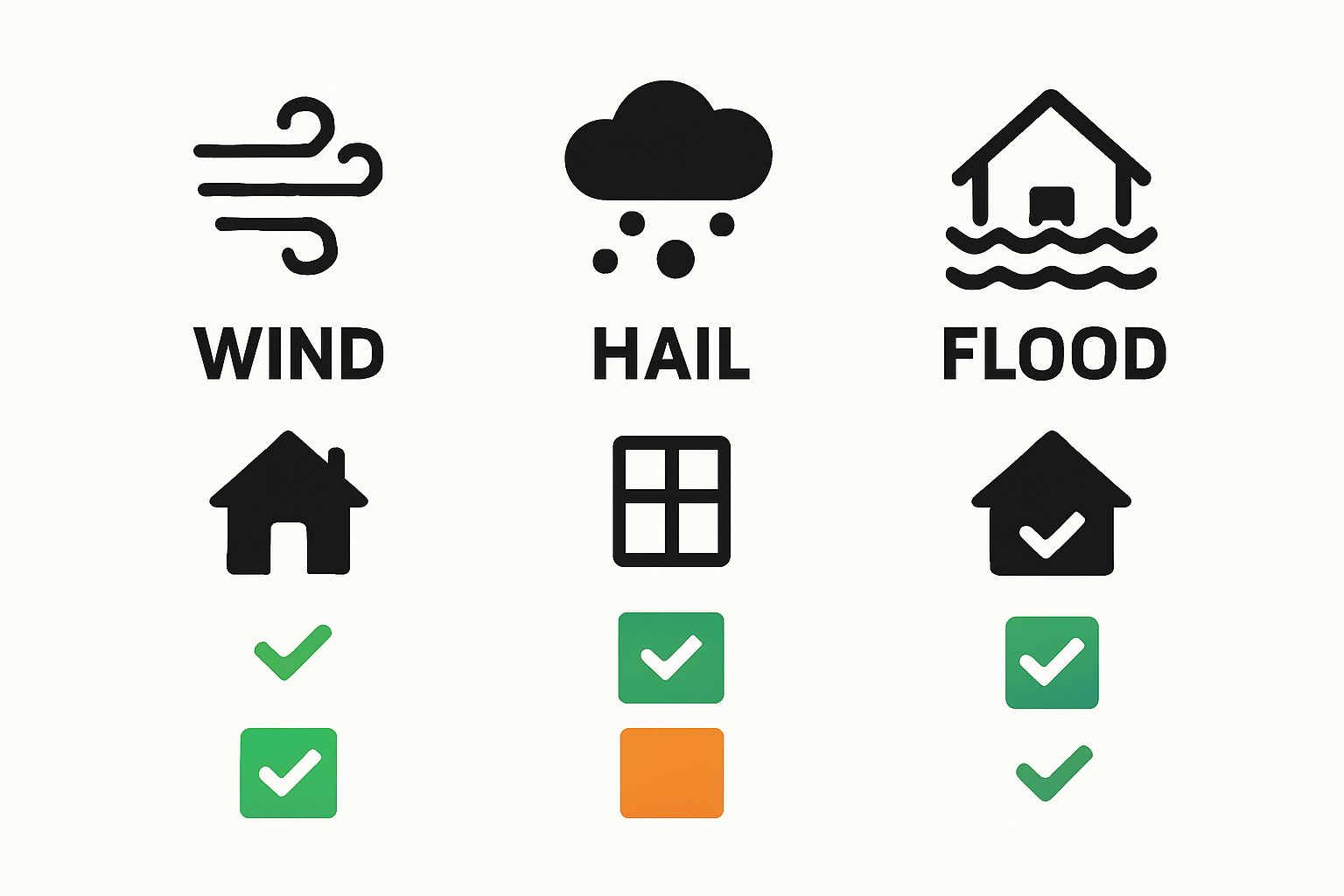
Key types of storm-related damages typically covered include:
- Direct physical damage from wind and hail
- Structural damage caused by falling trees or debris
- Water damage from roof leaks and flooding
- Lightning strikes and electrical system damage
- Wind-driven rain infiltration
Exclusions and Limitations in Storm Damage Policies
Not all storm-related damages are automatically included in standard insurance policies. Policyholders must carefully review their specific contract terms to understand potential coverage gaps. Some damages might require additional riders or specialized insurance products.
Common exclusions in storm damage insurance policies often involve:
- Gradual water damage from poor maintenance
- Flooding from external water sources
- Damage resulting from inadequate property protection
- Cosmetic damages that do not affect structural integrity
- Pre-existing conditions before policy inception
For individuals seeking comprehensive understanding of property protection strategies, our guide on fire damage coverage provides additional insights into navigating complex insurance landscapes. Recognizing the nuanced elements of storm damage coverage empowers property owners to select appropriate insurance solutions that offer robust financial protection.
To help clarify the range of damages covered versus those commonly excluded from storm damage insurance policies in South Africa, the following table provides a side-by-side comparison for quick reference.
| Type | Typically Covered | Commonly Excluded |
|---|---|---|
| Wind & Hail | Direct physical damage to structures and roofs | Cosmetic or superficial, non-structural damage |
| Water/Flooding | Water damage from roof leaks occurring during storms | Flooding from external water sources, gradual water damage |
| Falling Objects | Structural damage caused by trees or debris | Damage due to lack of property maintenance |
| Lightning | Damage to electrical systems, fires caused by strikes | Electrical issues unrelated to storm or pre-existing faults |
| Rain Infiltration | Wind-driven rain resulting in water ingress | Damage from poor maintenance or existing weaknesses |
| Additional Property | Damage to outbuildings, garages, and boundary walls | Pre-existing conditions before policy started |
The Role of Assessments in Storm Damage Claims
Professional assessments form the critical backbone of storm damage insurance claims, transforming subjective damage reports into objective, scientifically-validated documentation. These comprehensive evaluations determine the extent of damage, verify claim legitimacy, and establish the financial compensation framework.
Professional Damage Assessment Process
According to insurance industry experts, a systematic damage assessment involves multiple sophisticated techniques designed to provide precise and transparent damage evaluation. Professional assessors utilize advanced technologies and methodological approaches to create comprehensive damage reports.
Key components of a professional storm damage assessment include:
- Detailed photographic documentation of damage
- Structural integrity evaluations
- Precise measurement and quantification of damage
- Material degradation analysis
- Identification of immediate and potential future risks
Technical and Legal Significance of Assessments
Damage assessments serve multiple critical functions beyond simple documentation. They represent legal evidence, technical validation, and financial determinants in the insurance claims process. Insurance companies rely on these professional evaluations to make fair and accurate compensation determinations.
Important aspects of assessment significance include:
- Establishing objective evidence of storm-related damage
- Preventing fraudulent or exaggerated claims
- Determining appropriate repair or replacement costs
- Providing clear documentation for legal and financial processes
- Supporting long-term risk management strategies
For property owners seeking deeper insights into damage protection strategies, our guide on fire damage coverage offers additional perspectives on comprehensive insurance assessment mechanisms. Understanding the intricate role of professional assessments empowers policyholders to navigate complex insurance claims with confidence and clarity.
Protect Your Property From Storm Damage with Insurance Solutions That Work
Worried about unexpected costs after a severe storm hits? As you learned in our guide, storm damage can wreck your home, leave repair bills piling up, and put your financial security at risk. Many South Africans feel anxious when unpredictable weather threatens their peace of mind. The pain of having to document every loss and negotiate with insurers is real, especially if you do not have the right cover in place. You need proven solutions that support fast recovery and shield your assets from the next big storm.
Take action before the next disaster strikes. Explore our easy-to-understand insurance options to get the protection you need for your home, car, and valuables. Visit King Price Insurance now for tips, expert guidance, and cover you can rely on. Make sure your finances and future are secure—get a quote or discover how you could save today.
Frequently Asked Questions
What are storm damage insurance claims?
Storm damage insurance claims are formal requests made by property owners to their insurance providers for compensation due to damages caused by severe weather events. To file a claim, gather all necessary documents, such as photos of the damage, and contact your insurer as soon as possible after the storm.
How do I document storm damage for my insurance claim?
To document storm damage effectively, take clear photographs of all affected areas and items, prepare a detailed inventory of the damage, and consult a professional assessor if necessary. Start this process right after the storm to ensure you capture accurate evidence for your claim.
What is the typical process for filing a storm damage insurance claim?
The typical process includes reporting the damage to your insurer, having a professional assessment, and providing thorough documentation of the loss. Follow a step-by-step approach by first notifying your insurer, and aim to complete documentation and assessment within 30 days to expedite the claim approval process.
What types of damages are covered under storm damage insurance policies?
Storm damage insurance typically covers direct physical damage from wind, hail, flooding, and more, but it may vary based on policy details. Review your policy carefully to identify specific types of coverage and exclusions before a storm occurs, ensuring you’re adequately prepared.
How can I ensure my storm damage insurance claim is successful?
To increase the likelihood of a successful claim, provide detailed evidence, comply with your policy’s requirements, and keep detailed records of all communications with your insurance company. Make it a priority to submit all necessary documentation promptly, ideally within 60 days of the storm, to avoid processing delays.
What should I do if my storm damage claim is denied?
If your claim is denied, review the denial letter for specific reasons and gather additional evidence or clarification if needed. Follow up with your insurance provider for a detailed explanation, and consider appealing the decision if you believe your claim meets the policy requirements.
Recommended
- Understanding Fire Damage Insurance Claims: A Comprehensive Guide – Savvy Insurance
- Essential Cover for Weather Damage: Protect Your Home and Car – Savvy Insurance
- Understanding Fire Damage Coverage for Home and Auto – Savvy Insurance
- Insurance Claim Process Explained: A Guide for 2025 – Savvy Insurance