Understanding Telematics and Car Insurance Explained
Telematics is changing the way people think about car insurance across South Africa. Traditional insurers priced everyone the same and trusted old stats, but that’s not how things work anymore. Thanks to new tech, drivers who use telematics can see insurance premiums drop by as much as 30 percent if they prove they drive safely, and that leaves some people saving real money just by switching on an app.
Table of Contents
- What Is Telematics And How Does It Relate To Car Insurance?
- The Importance Of Telematics In Modern Car Insurance Policies
- How Telematics Works: Data Collection And Analysis
- Key Concepts Of Telematics: Gps, Usage-Based Insurance, And Safety Features
- The Real-World Impact Of Telematics On Drivers And Insurance Costs
Quick Summary
| Takeaway | Explanation |
|---|---|
| Telematics improves risk assessment accuracy | By analyzing real-time driving data, insurers create precise profiles that enhance premium calculations. |
| Safe driving reduces insurance costs | Drivers who display responsible habits can see premium reductions of up to 30%, encouraging safer behavior on the road. |
| Real-time feedback enhances driving safety | Telematics provides immediate insights into driving performance, helping drivers identify and rectify risky behaviors. |
| Usage-based insurance personalizes premiums | Insurers use individual driving data to tailor insurance rates, departing from broad demographic models for fairness. |
| Advanced tracking supports vehicle recovery | Telematics facilitates better vehicle tracking and emergency response, adding an extra layer of protection for drivers. |
What is Telematics and How Does It Relate to Car Insurance?
Telematics represents a groundbreaking technological approach transforming how car insurance is calculated and managed. At its core, telematics is a sophisticated method of monitoring vehicle usage and driver behavior through advanced digital tracking systems.
Understanding Telematics Technology
Telematics combines telecommunications and informatics to collect precise data about vehicle movement and driver performance. According to research from the National Institutes of Health, this technology enables insurers to develop more accurate risk assessment models by analyzing critical driving metrics.
To clarify the core data points and how they influence insurance assessment, see the table below. It organises the key telematics data features and their impact on your car insurance profile.
| Telematics Data Feature | What It Tracks | Influence on Insurance |
|---|---|---|
| Distance travelled | Total kilometres driven | Higher mileage can increase perceived risk |
| Time of day driven | Day, night, peak hours | Safer hours (e.g., daytime) may lower premiums |
| Acceleration patterns | How quickly you speed up | Aggressive acceleration may raise risk profile |
| Braking intensity | Sudden or gentle stops | Frequent hard braking seen as riskier behaviour |
| Speed consistency | Steady vs. erratic speeds | Consistent speeds indicate safer driving habits |
| Geographic location | Routes and areas driven in | Riskier zones or hotspots may affect costs |
Key data points collected through telematics include:
- Distance traveled
- Time of day driven
- Acceleration patterns
- Braking intensity
- Speed consistency
- Geographic location
How Telematics Transforms Car Insurance
Traditional car insurance relied on broad demographic categories and historical data to determine premiums. Telematics introduces a revolutionary personalized insurance approach where individual driving behavior directly influences insurance costs.
Drivers who demonstrate safe driving habits can benefit from reduced premiums, creating a direct financial incentive for responsible road conduct. By tracking real-time driving performance, insurers can offer more customized and fair insurance pricing.
For those interested in understanding additional vehicle protection options, explore advanced insurance strategies that complement telematics technology.
The integration of telematics represents a significant shift from generic risk assessment to data-driven, individualized insurance solutions that reward safe driving practices.
The Importance of Telematics in Modern Car Insurance Policies
Telematics has emerged as a transformative technology that is reshaping the landscape of car insurance, offering unprecedented insights into driver behavior and risk assessment. By leveraging advanced digital tracking systems, insurers can now develop more nuanced and personalized insurance strategies.
Risk Assessment Revolution
Precision in pricing is the cornerstone of telematics-driven insurance policies. Research from insurance industry experts indicates that traditional insurance models relied on broad demographic categories, which often resulted in unfair premium calculations.
Key advantages of telematics-based risk assessment include:
- Accurate individual driver profiling
- Dynamic premium adjustments based on actual driving performance
- Reduced insurance costs for safe drivers
- Comprehensive understanding of risk factors
Financial and Safety Benefits
Telematics extends beyond mere premium calculation. It provides powerful incentives for safer driving behaviors by directly linking insurance costs to individual performance. Drivers who demonstrate responsible road conduct can significantly reduce their insurance expenses.
Moreover, the technology offers additional safety benefits:
- Real-time driving feedback
- Potential accident prevention through behavioral insights
- Enhanced vehicle tracking and recovery
- Immediate emergency response capabilities
Learn about comprehensive vehicle protection strategies that complement telematics technology and provide holistic risk management.
The integration of telematics represents a fundamental shift towards more transparent, fair, and personalized car insurance models that prioritize individual driver performance and safety.
How Telematics Works: Data Collection and Analysis
Telematics operates through a sophisticated system of digital data collection and intelligent analysis that transforms raw vehicle information into meaningful insights for insurers and drivers alike. This technological approach provides unprecedented transparency in understanding driving behaviors and associated risks.
Data Collection Mechanisms
According to research from RAND Corporation, telematics employs multiple methods for gathering vehicle and driver performance data. Modern systems typically utilize three primary collection technologies:
- Onboard Diagnostic (OBD-II) Devices: Plugged directly into a vehicle’s diagnostic port
- Smartphone Applications: GPS and motion sensor tracking
- Integrated Vehicle Telematics Systems: Built-in manufacturer communication platforms
Data Analysis and Risk Profiling
Advanced algorithms transform collected data into comprehensive driver profiles. These sophisticated analytical processes examine multiple dimensions of driving performance, creating nuanced risk assessments that go far beyond traditional insurance rating methods.
Key metrics analyzed include:
- Acceleration and braking patterns
- Average driving speeds
- Time of day driven
- Frequency of hard braking events
- Total distance traveled
- Geographic driving zones
Discover more about comprehensive vehicle protection strategies that integrate cutting-edge telematics technologies.
The intricate process of telematics data collection and analysis represents a quantum leap in personalized insurance assessment, providing unprecedented insights into individual driving behaviors and potential risk factors.
Key Concepts of Telematics: GPS, Usage-based Insurance, and Safety Features
Telematics represents a complex technological ecosystem integrating multiple advanced systems to revolutionize vehicle monitoring and insurance assessment. By combining sophisticated tracking technologies, insurers can develop more responsive and personalized risk management strategies.
Global Positioning and Tracking
According to research from the National Association of Insurance Commissioners, GPS technology forms the foundational backbone of telematics systems. Global Positioning Systems enable precise location tracking and movement analysis, providing critical insights into driving patterns and vehicle usage.
Key GPS tracking capabilities include:
- Real-time geographical location monitoring
- Route history and pattern identification
- Speed and movement trajectory analysis
- Geofencing and boundary detection
Usage-based Insurance Mechanics
Dynamic insurance pricing emerges as a revolutionary approach enabled by telematics technology. Instead of relying on generalized demographic profiles, insurers can now develop personalized premium calculations based on individual driving behaviors.
Primary components of usage-based insurance involve:
- Continuous driving performance assessment
- Reward mechanisms for safe driving
- Granular risk profiling
- Immediate feedback on driving habits
Explore advanced vehicle protection strategies that leverage cutting-edge telematics technologies for comprehensive risk management.
The integration of GPS, data analytics, and usage-based insurance represents a transformative approach to vehicle monitoring, offering unprecedented transparency and personalization in insurance services.
The Real-World Impact of Telematics on Drivers and Insurance Costs
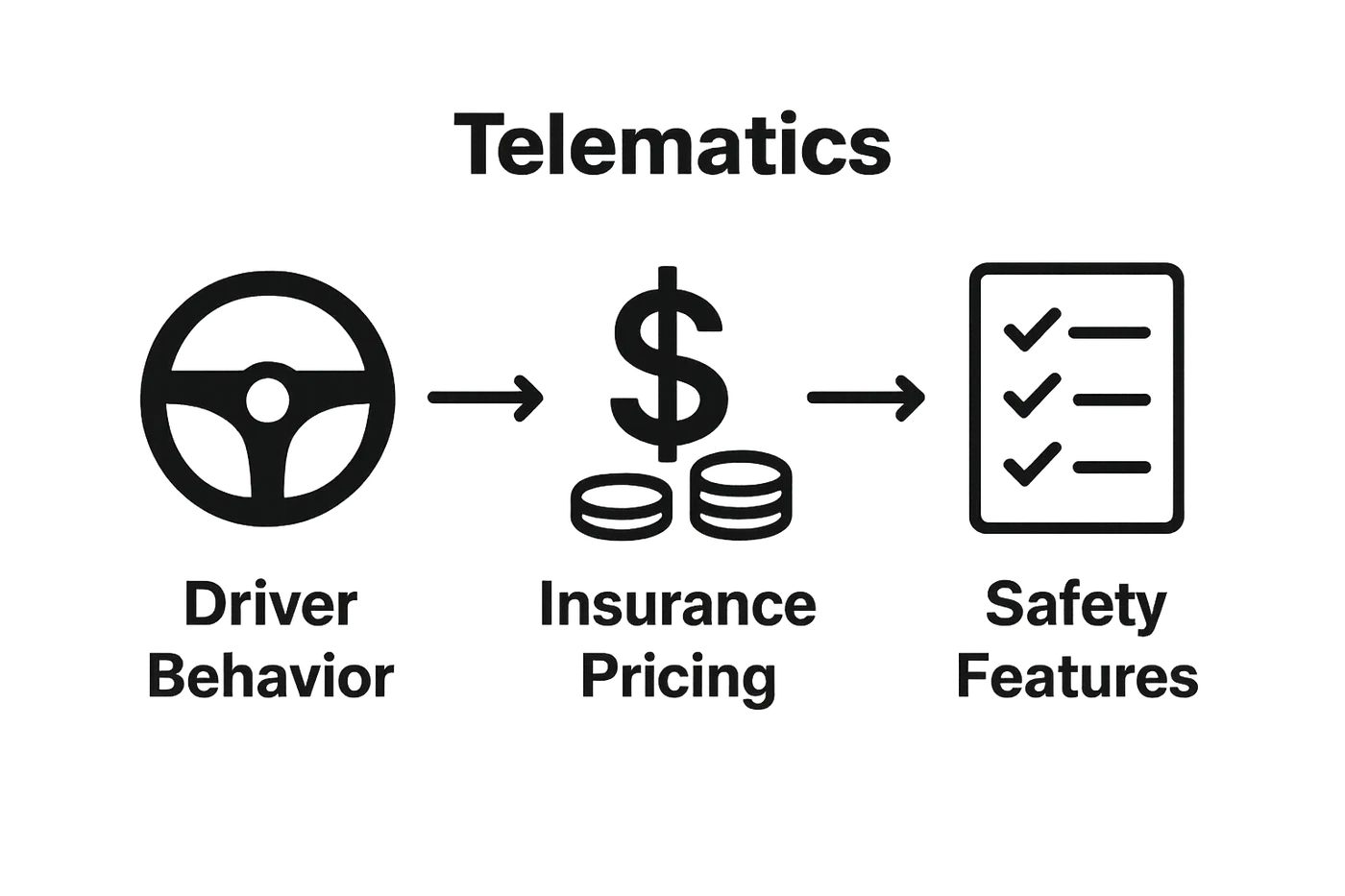
Telematics has transformed the landscape of car insurance, moving beyond traditional risk assessment models to create a more dynamic and personalized approach to vehicle coverage. This technological innovation directly impacts how drivers interact with insurance providers and manage their financial risks.
Cost Reduction and Financial Incentives
According to research from RAND Corporation, pay-as-you-drive insurance models enabled by telematics can significantly reduce insurance expenses for responsible drivers. Safe driving becomes financially rewarding, with measurable economic benefits for conscientious vehicle owners.
Key financial advantages include:
- Potential premium reductions up to 30%
- Direct correlation between driving behavior and insurance costs
- Transparent pricing mechanisms
- Immediate feedback on driving performance
Behavioral Transformation and Safety Improvements
Telematics goes beyond mere cost calculation, serving as a powerful tool for encouraging safer driving practices. By providing real-time insights and performance tracking, these systems motivate drivers to adopt more responsible road behaviors.
Significant safety improvements encompass:
- Reduced aggressive driving incidents
- Enhanced awareness of personal driving patterns
- Proactive identification of risky driving behaviors
- Potential reduction in accident rates
Learn more about factors influencing car insurance costs and how telematics is revolutionizing risk assessment.
The integration of telematics represents a fundamental shift in how insurers and drivers understand and manage vehicular risk, creating a more transparent, personalized, and incentive-driven insurance ecosystem.

Experience Fair Car Insurance with Telematics in South Africa
Are you tired of paying for traditional car insurance that does not consider your actual driving habits? Many drivers want insurance premiums that truly reflect their safe behaviour behind the wheel. As explained in our article, telematics uses real-time data from your own driving patterns. This means you could benefit from lower premiums if you drive safely, avoid risky zones, and stay accident-free - helping you save money while staying protected.
Why wait to see if your good driving goes unnoticed? With the right car insurance provider, you can take advantage of usage-based assessments, enjoy transparent pricing, and feel fully in control of your cover. Visit Savvy Insurance now and discover how telematics-powered insurance can reward you for safe and responsible driving. Make the smart move today for savings and peace of mind.
Frequently Asked Questions
What is telematics in car insurance?
Telematics in car insurance is a technology that uses digital tracking systems to monitor vehicle usage and driver behavior. It collects data such as distance traveled, speed, and driving patterns to help insurers assess risk and determine premiums more accurately.
How does telematics affect my car insurance premium?
Telematics can lower your car insurance premium by providing insurers with real-time data on your driving behavior. Safe driving habits can lead to reduced premiums, offering a financial incentive for responsible driving.
What data is collected through telematics systems?
Telematics systems typically collect data on distance traveled, time of day you drive, acceleration and braking patterns, speed, and geographic location. This information is used to create a detailed profile of your driving habits.
What are the benefits of usage-based insurance models?
Usage-based insurance models, enabled by telematics, provide benefits like personalized premium calculations based on actual driving behavior, potential premium reductions, immediate feedback on performance, and incentives for safer driving practices.
Recommended
- Car Insurance Terms Guide 2025: Simple Tips for SA Drivers - Savvy Insurance
- Best Insurance for New Cars in 2025: Top Picks and Tips - Savvy Insurance
- Beyond Car Insurance: Extra Protection for Vehicles in 2025 - Savvy Insurance
- Understanding Types of Vehicle Insurance in 2025: A Guide for Car Owners - Savvy Insurance
Ready to compare insurance? Get free, no-obligation quotes from South Africa's top insurers in a few minutes and see how much you could save.
Compare insurance quotes →Free · No obligation · POPIA compliant · We never sell your data