Women and Car Insurance: Key Insights for 2025

South African women looking at car insurance often find themselves lumped into broad categories based on outdated assumptions. Yet the truth is women drivers actually face different risks on the road. In fact, men made up a whopping 71 percent of motor vehicle crash deaths in 2019. That should mean lower premiums for women, right? Not so fast. All sorts of hidden factors and new rules are changing how insurance companies set prices. The real story is less about gender and more about how you drive today.
Table of Contents
- How Car Insurance Differs For Women
- Factors Affecting Premiums For Women
- Tips For Women To Save On Car Insurance
- Understanding Insurance Laws For Women Car Owners
Quick Summary
| Takeaway | Explanation |
|---|---|
| Women’s Driving Profiles are Viewed as Lower Risk | Women typically have safer driving habits, fewer accidents, and better adherence to traffic regulations, which insurers consider when calculating premiums. |
| Utilize Technology for Personalized Insurance | Emerging trends in insurance involve telematics and usage-based models that assess individual driving behavior, allowing women to demonstrate their safe driving directly and potentially reduce premiums. |
| Shop Around for the Best Rates | Women can save significantly on car insurance by comparing quotes from multiple providers, assessing coverage levels, and asking about discounts specifically for women drivers. |
| Understand Your Rights Under Insurance Laws | Being informed about legal protections against gender discrimination in insurance pricing enables women to advocate for fair practices and understand how their premiums are determined. |
| Regularly Review Coverage Needs | Life changes such as marriage or relocation can affect insurance requirements, prompting women to reassess their policies for potential savings. |
How Car Insurance Differs for Women
When it comes to car insurance, women experience unique considerations that set them apart from male drivers. Historically, insurers have viewed gender as a significant factor in determining risk and premium rates. The relationship between gender and car insurance is complex and evolving, revealing fascinating insights into risk assessment and pricing strategies.
Risk Profiles and Driving Behavior
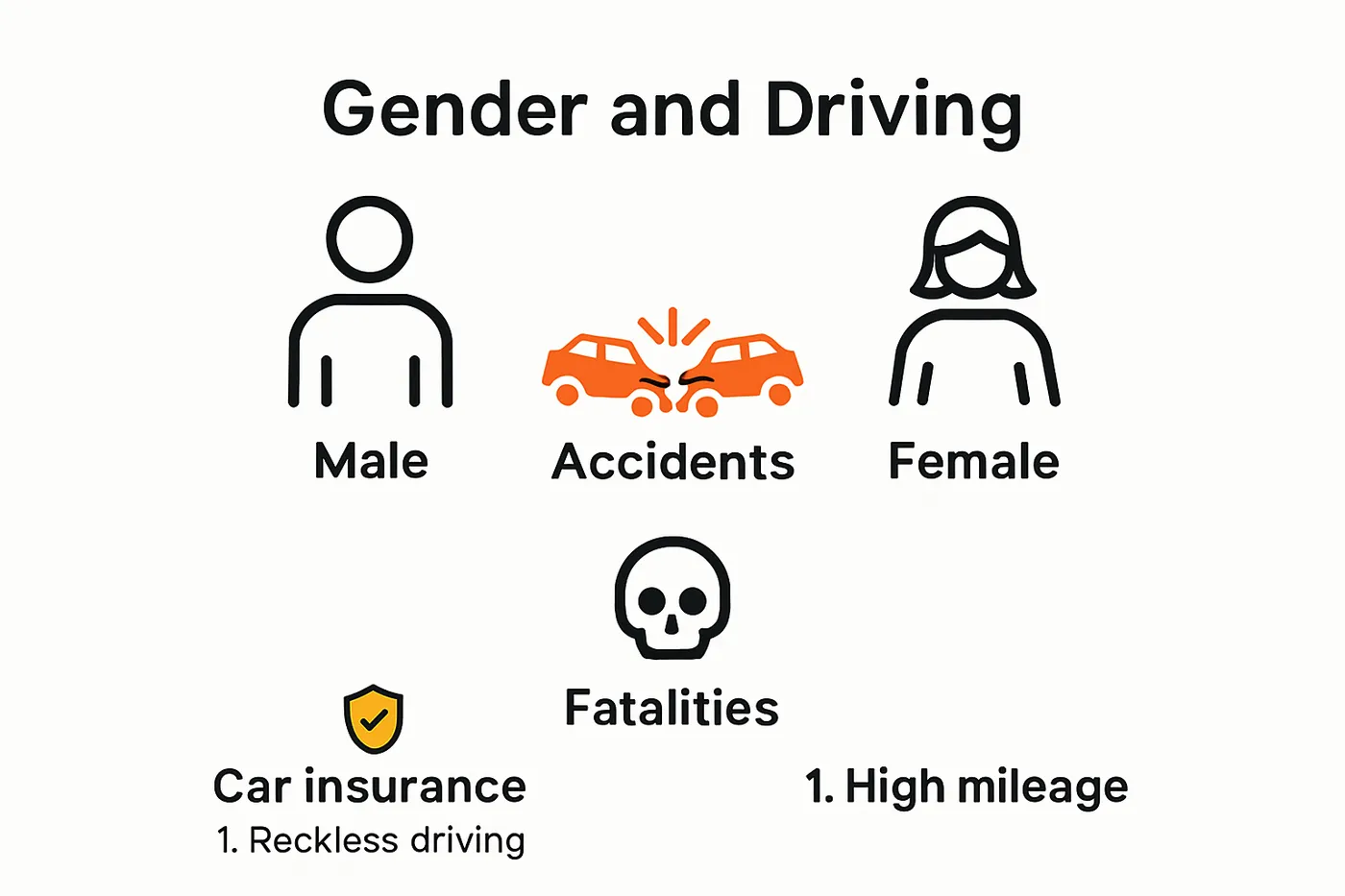
Statistical evidence demonstrates notable differences in driving patterns and risk profiles between men and women. According to the Insurance Institute for Highway Safety, men are substantially more likely to be involved in fatal car accidents. In 2019, a staggering 71% of motor vehicle crash deaths were males, highlighting significant variations in driving behavior and risk management.
Female drivers typically exhibit characteristics that insurers consider lower risk:
- Safer Driving Habits: Women tend to drive fewer miles annually and are statistically less likely to engage in aggressive driving behaviors.
- Lower Accident Rates: Comprehensive studies show women have fewer serious traffic violations and are involved in fewer high-speed collisions.
- More Cautious Approach: Female drivers often demonstrate more defensive driving techniques and greater adherence to traffic regulations.
Premium Calculation and Gender Considerations
Insurance companies have traditionally used gender as a factor in calculating premiums, recognizing the statistical differences in driving risk. While some regions have implemented regulations limiting gender-based pricing, the underlying risk assessment remains nuanced.
Research from the National Association of Insurance Commissioners indicates that insurers consider multiple factors beyond gender when determining car insurance rates. These include:
- Driving history
- Age
- Vehicle type
- Geographic location
- Credit score
Women can often leverage their lower-risk profile by demonstrating consistent safe driving behaviors. Learn more about saving on car insurance with our comprehensive guide on smart insurance strategies.
Emerging Trends in Gender-Neutral Insurance
The insurance landscape is rapidly changing, with increasing emphasis on individual driving behavior rather than broad demographic categorizations. Modern insurance models are shifting towards more personalized risk assessment, utilizing telematics and advanced data analytics to provide more accurate and fair pricing.
This evolution means women can potentially benefit from technology-driven insurance approaches that reward safe driving regardless of gender. Innovative insurance products now focus on:
- Real-time driving behavior monitoring
- Personalized risk assessment
- Usage-based insurance models
These developments signal a more equitable approach to car insurance, where individual driving skills and safety records take precedence over traditional gender-based assumptions. Women can expect increasingly sophisticated and fair insurance evaluation methods in the coming years, reflecting a more nuanced understanding of driver risk.
Factors Affecting Premiums for Women
Car insurance premiums for women are influenced by a complex array of factors that extend far beyond simple gender classification. Understanding these variables can help women make informed decisions about their insurance coverage and potentially reduce their overall costs.
Personal Risk Profile Considerations
The personal risk profile of a female driver plays a critical role in determining insurance premiums. According to the Insurance Information Institute, several key personal characteristics significantly impact insurance rates:
- Driving Experience: Years of driving history and continuous coverage
- Credit Score: Financial stability indicators that insurers use to assess risk
- Age and Marital Status: Younger drivers typically pay higher premiums
- Occupation: Certain professions are considered lower risk
Statistically, women tend to demonstrate characteristics that insurers view favorably. Research from the National Highway Traffic Safety Administration shows that female drivers are involved in fewer high-severity accidents, which can translate to more competitive insurance rates.
Vehicle and Usage Factors
To help you understand the main vehicle- and usage-related factors insurers consider for women, see the table below summarising these key influences on your premium:
| Factor | How It Affects Premiums |
|---|---|
| Type of Vehicle | High-performance/luxury cars often cost more to insure |
| Vehicle Safety Features | Advanced safety tech can lower premiums |
| Annual Mileage | Less driving usually means lower rates |
| Parking Location | Safe/secure parking decreases risk and cost |
| Vehicle Age and Condition | Older or well-maintained cars may cost less to insure |
Insurance companies carefully evaluate:
- Type of vehicle
- Vehicle safety features
- Annual mileage
- Parking location
- Vehicle age and condition
Women who choose vehicles with advanced safety technologies and maintain low annual mileage can often secure more attractive insurance rates. Learn more about calculating car premiums with our comprehensive guide.
Technology and Personalized Insurance Models
Emerging insurance technologies are revolutionizing how premiums are calculated for women. Telematics and usage-based insurance models provide more personalized and potentially more affordable options. These innovative approaches track actual driving behavior, offering women the opportunity to demonstrate their safe driving skills directly.

Modern insurance models now incorporate:
- Real-time driving behavior monitoring
- Smartphone app tracking
- Precise risk assessment based on individual driving patterns
- Potential discounts for consistently safe driving
These technological advancements mean women are no longer confined to broad demographic risk assessments. Instead, they can actively influence their insurance costs through demonstrable safe driving behaviors. The future of car insurance is increasingly personalized, data-driven, and equitable, offering women more control and potentially more competitive rates based on their individual driving performance.
Tips for Women to Save on Car Insurance
Saving money on car insurance requires strategic planning and proactive approaches. Women can leverage multiple techniques to reduce their insurance premiums while maintaining comprehensive coverage. Understanding these strategies can lead to significant financial savings and more tailored insurance protection.
Smart Shopping and Comparison Strategies
According to the Insurance Information Institute, one of the most effective ways to save on car insurance is to shop around and compare quotes from multiple providers. Women should not settle for the first quote they receive but instead:
- Request quotes from at least three different insurance companies
- Compare coverage levels, not just prices
- Review policy details carefully
- Ask about available discounts specific to women drivers
Research from Consumer Reports suggests that insurance rates can vary significantly between providers. By dedicating time to comprehensive comparison, women can potentially save hundreds of dollars annually. Learn more about effective insurance savings strategies with our comprehensive guide.
Risk Reduction and Policy Optimization
The following table sums up common strategies women can use to reduce insurance risk and optimise their policy, as discussed in this section:
| Strategy | Impact on Premiums |
|---|---|
| Maintain clean driving record | Lower risk leads to reduced rates |
| Defensive driving course | Eligible for potential discounts |
| Increase deductibles | Lowers monthly payments |
| Bundle insurance policies | Can save by combining coverages |
| Install vehicle safety devices | Often results in discounts |
| Usage-based programmes | Rewards safe, low-risk driving |
Reducing personal risk profile and optimizing insurance policies can substantially lower premiums. Key strategies include:
- Maintaining a clean driving record
- Completing defensive driving courses
- Increasing deductibles to lower monthly payments
- Bundling multiple insurance policies
- Installing vehicle safety devices
Technology plays a crucial role in modern insurance savings. Many insurers now offer usage-based insurance programs that track driving behavior through smartphone apps or telematics devices. Women who demonstrate safe driving habits can earn significant discounts by providing real-time data about their driving patterns.
Vehicle and Coverage Considerations
The type of vehicle and selected coverage dramatically impact insurance costs. The Wisconsin Office of the Commissioner of Insurance recommends several practical approaches for reducing insurance expenses:
- Choose vehicles with lower insurance risk profiles
- Consider dropping comprehensive coverage on older vehicles
- Evaluate actual vehicle value versus insurance costs
- Maintain excellent credit scores
- Take advantage of professional or alumni association discounts
Women should regularly review their insurance needs, as life changes can impact coverage requirements. Factors such as marriage, career changes, or relocating can present opportunities to reassess and potentially reduce insurance premiums.
By combining these strategic approaches - comparing quotes, reducing personal risk, and making informed vehicle and coverage choices - women can effectively manage their car insurance expenses. The key is remaining proactive, continuously educating oneself about insurance options, and being willing to adjust strategies as personal circumstances and insurance market conditions evolve.
Understanding Insurance Laws for Women Car Owners
The landscape of insurance laws for women car owners is complex and continuously evolving, reflecting broader societal changes in gender equality and risk assessment. Understanding these legal frameworks is crucial for women to make informed decisions about their car insurance and protect their rights.
Legal Protections and Gender Discrimination
According to the National Association of Insurance Commissioners, insurance regulations vary significantly across different jurisdictions. Some regions have implemented strict laws prohibiting gender-based pricing, while others still allow insurers to consider gender as a factor in premium calculations.
Key legal considerations for women car owners include:
- Prohibition of direct gender discrimination in insurance pricing
- Regulations mandating fair and transparent risk assessment
- Protection against arbitrary premium increases
- Requirements for clear communication of pricing factors
Modern insurance laws increasingly emphasize individual driving behavior over demographic characteristics. This shift means women are evaluated based on their personal driving record, safety habits, and risk profile rather than broad gender-based assumptions. Learn more about navigating insurance coverage limits with our comprehensive guide.
Regulatory Compliance and Consumer Rights
Insurance regulators play a critical role in protecting women car owners. Research from the Insurance Regulatory and Development Authority highlights several important consumer protection mechanisms:
- Mandatory disclosure of pricing factors
- Right to challenge insurance decisions
- Access to detailed explanations of premium calculations
- Protection against discriminatory practices
Women should be aware of their rights and actively engage with insurance providers. This includes requesting detailed breakdowns of how premiums are calculated, understanding the specific factors influencing their insurance rates, and challenging any decisions that seem unfair or discriminatory.
Emerging Legal Trends in Insurance
The legal landscape for car insurance is rapidly transforming, driven by technological advancements and changing societal norms. Emerging trends include:
- Increased use of telematics and usage-based insurance
- More personalized risk assessment methods
- Greater emphasis on individual driving behavior
- Legal frameworks supporting data-driven insurance models
These developments signal a more equitable approach to car insurance. Women can expect increasingly sophisticated legal protections that prioritize individual driving performance over traditional demographic categorizations. The future of insurance law is moving towards more transparent, fair, and personalized risk assessment models.
Navigating the complex world of insurance laws requires ongoing education and awareness. Women car owners should stay informed about their rights, understand the legal frameworks governing insurance, and actively advocate for fair and transparent pricing practices. By being proactive and knowledgeable, women can ensure they receive equitable treatment in the car insurance marketplace.
Frequently Asked Questions
What factors influence car insurance premiums for women in South Africa?
Car insurance premiums for women are influenced by factors such as driving history, vehicle type, annual mileage, and credit score. Insurance companies evaluate personal risk profiles, including years of driving experience and the presence of safety features in the vehicle.
How can women save money on car insurance?
Women can save on car insurance by comparing quotes from multiple providers, maintaining a clean driving record, considering bundling policies, and utilizing usage-based insurance programs that reward safe driving.
Are there legal protections for women regarding car insurance pricing?
Yes, there are legal protections in place to prevent gender discrimination in car insurance pricing in some regions. These laws mandate fair and transparent risk assessments, ensuring that insurance rates reflect individual driving behavior rather than demographic characteristics.
What are emerging trends in gender-neutral car insurance?
Emerging trends in gender-neutral car insurance focus on personalized risk assessment using telematics and data analytics. These technologies allow insurers to evaluate driving behavior more accurately, leading to potentially fairer pricing that is based on individual driving habits rather than gender stereotypes.
Take Control of Your Car Insurance Journey - Built for Modern South African Women
Are you tired of outdated gender assumptions affecting your car insurance premiums? If you have ever felt frustrated by a lack of transparency or worried that your safe driving is not reflected in your quote, you are not alone. The article highlights how women drivers are often treated as a statistic, despite proven safer habits and fewer high-risk incidents. Now there is a better way to get cover that matches your needs, your driving style, and your budget.
You work hard to drive safely and manage risks. With Savvy Insurance, you can experience fair, personalised insurance that puts you in control. Find flexible car insurance options that reward smart driving, offer easy ways to compare cover, and help you save each month. Visit Savvy Insurance now to get a quote that recognises who you really are on the road. Discover how affordable, trustworthy cover can give you peace of mind today - start your journey towards smarter car insurance for women in 2025.
Recommended
- Saving Money on Car Insurance: Top Tips for 2025 - Savvy Insurance
- Beyond Car Insurance: Extra Protection for Vehicles in 2025 - Savvy Insurance
- Car Insurance for Students: Best Tips and Savings 2025 - Savvy Insurance
- Top Car Insurance Tips South Africa 2025: Save and Stay Covered - Savvy Insurance
- Moving and Storage Insurance Guide 2025: Protect Your Belongings - STOMO Mobile Storage and MOVEMO Moving Service
- What Insurance Do Couriers Need? A Comprehensive Guide - BHA Couriers
Ready to compare insurance? Get free, no-obligation quotes from South Africa's top insurers in a few minutes and see how much you could save.
Compare insurance quotes →Free · No obligation · POPIA compliant · We never sell your data