How Petrol Price Affects Insurance: Understanding the Link
Petrol prices are making headlines across South Africa, and the cost of filling up your tank keeps climbing every month. What might surprise you is that rising fuel costs can drive your car insurance premiums higher too, sometimes by as much as 15 percent. Most people think your insurance rate only changes when you have an accident or buy a new car, but the truth is the price you pay at the pump is busy reshaping the entire insurance industry in ways you probably never imagined.
Table of Contents
- The Relationship Between Petrol Prices And Insurance Costs
- Why Rising Fuel Prices Influence Insurance Premiums
- Understanding Risk Assessment In The Context Of Petrol Prices
- The Impact Of Petrol Prices On Claims And Insurance Payouts
- Real-World Examples: How Fuel Prices Have Affected Insurance
Quick Summary
| Takeaway | Explanation |
|---|---|
| Rising petrol prices affect insurance premiums | High fuel costs lead to changes in driver behavior that influence risk assessments by insurers. |
| Financial strain modifies vehicle maintenance practices | Increased petrol prices cause drivers to delay critical repairs, which can elevate accident risks. |
| Insurance companies adapt risk models | Insurers analyze economic indicators like petrol prices to adjust premium rates and improve risk predictions. |
| Petrol price fluctuations impact claim probabilities | Rising fuel prices create indirect risks such as mechanical failures, leading to more insurance claims. |
| Economic pressures influence driver behavior | Financial stress from increased fuel costs may lead to risky driving habits and decreased vehicle usage. |
The Relationship Between Petrol Prices and Insurance Costs
Petrol prices play a surprisingly significant role in shaping insurance costs, creating a complex economic relationship that impacts car owners across South Africa. Understanding this connection requires examining how fuel expenses influence multiple aspects of vehicle ownership and risk assessment.
Economic Impact on Vehicle Operation
The fluctuation of petrol prices directly affects how much drivers spend on transportation, which subsequently influences insurance risk calculations. When petrol prices surge, drivers tend to modify their driving behaviors, which insurance companies carefully consider when determining premiums. Research from the Fuels Industry Association of South Africa reveals that these price changes can dramatically alter driver patterns.
Key considerations in this relationship include:
- Reduced driving during high petrol price periods
- Increased likelihood of economic stress affecting vehicle maintenance
- Changes in vehicle usage patterns that impact potential accident risks
Risk Assessment and Premium Calculations
Insurance providers evaluate multiple factors when calculating premiums, and petrol prices form an integral part of their risk assessment models. Higher fuel costs can lead to financial strain, potentially resulting in:
- Decreased vehicle maintenance due to budget constraints
- Higher stress levels among drivers
- Potential increases in insurance claim probabilities
Interestingly, these factors contribute to what insurers call “indirect risk indicators.” Drivers experiencing financial pressure might delay essential vehicle repairs or take more significant risks on the road.
For more comprehensive insights into how various factors influence your insurance costs, read our detailed guide on key factors affecting car insurance.
Long-Term Economic Implications
The intricate relationship between petrol prices and insurance costs extends beyond immediate premium calculations. Economic pressures created by fuel price volatility can trigger broader changes in driver behavior, vehicle ownership patterns, and risk management strategies.
Below is a table comparing how rising petrol prices influence different aspects of the car insurance landscape, helping clarify where the impact is most significant.
| Aspect | Direct Impact from Petrol Prices | Resulting Insurance Effect |
|---|---|---|
| Vehicle Maintenance | Maintenance often delayed or skipped | Higher risk of mechanical failures and claims |
| Driver Behaviour | Increased stress, altered driving patterns | Potential for riskier driving and accidents |
| Insurance Risk Assessment | Incorporates higher economic risk | Premiums may increase to cover potential risks |
| Claims Frequency | More frequent breakdowns or accidents | Higher number of insurance claims filed |
| Operational Costs for Insurers | Elevated cost of parts and repairs | Claims cost inflation and premium adjustments |
| Premium Calculation Models | Adapt to economic indicators like fuel costs | Rates recalculated based on predictive models |
Understanding these dynamics helps car owners make more informed decisions about their insurance needs and potential cost-mitigation strategies in an ever-changing economic landscape.
Why Rising Fuel Prices Influence Insurance Premiums
The connection between rising fuel prices and insurance premiums is complex and multifaceted, revealing how economic shifts directly impact risk assessment and financial calculations in the insurance industry. Understanding this relationship requires examining the intricate ways petrol price fluctuations influence driver behavior, vehicle maintenance, and overall insurance risk profiles.
Economic Pressure and Driver Behavior
When fuel prices escalate, drivers experience significant financial strain that fundamentally alters their driving and vehicle management patterns. According to research from the Journal of Energy in Southern Africa, these price increases create substantial economic pressures that modify driver behaviors and risk profiles.
Key behavioral changes include:
- Reducing overall vehicle usage to conserve fuel
- Postponing non-essential vehicle maintenance
- Choosing alternative transportation methods
- Increasing financial stress levels
Risk Assessment and Premium Calculations
Insurance companies meticulously analyze these behavioral shifts when calculating risk and determining premium rates.
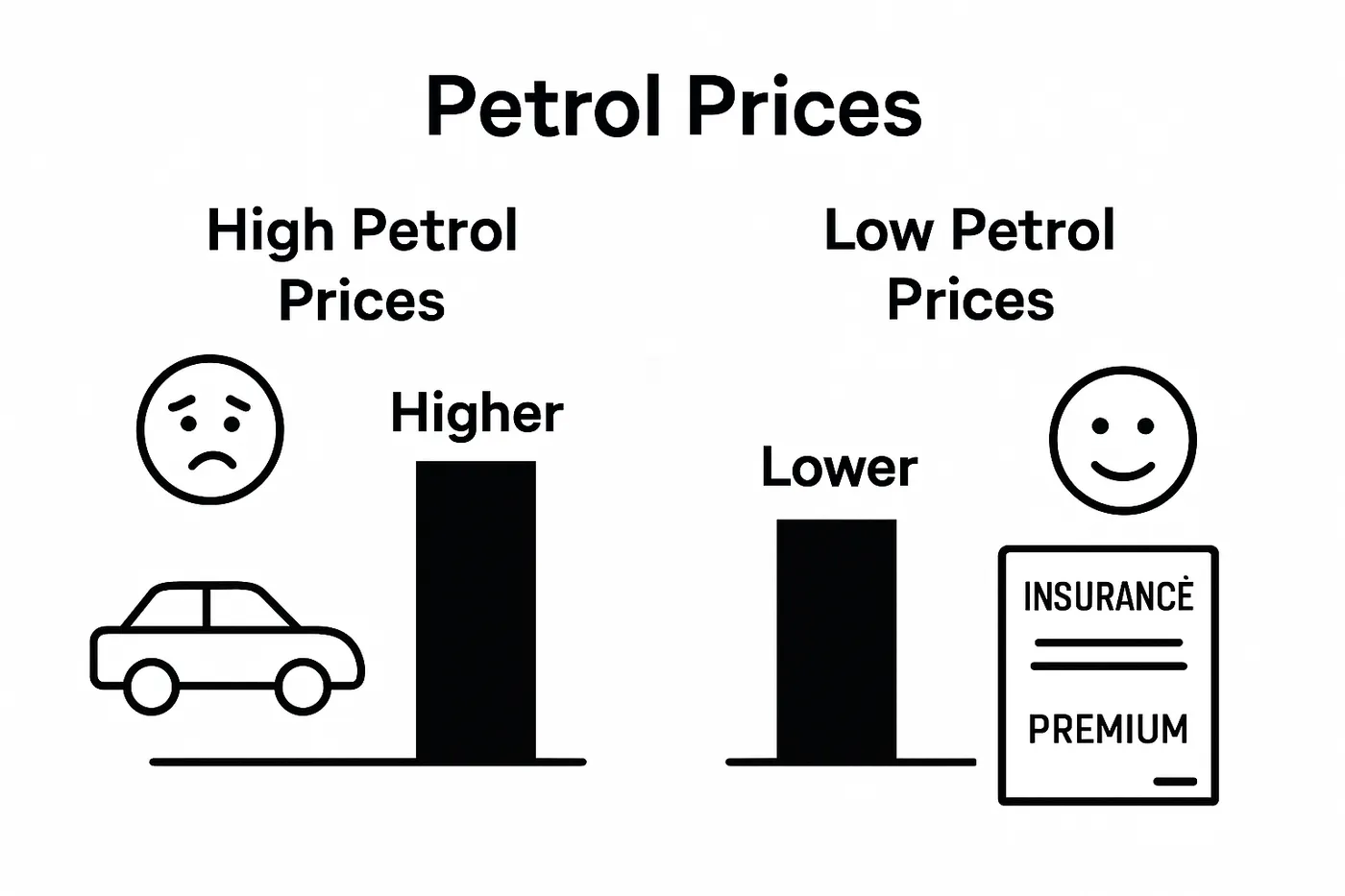 Higher fuel prices create indirect indicators that suggest potential increased risk, such as:
- Potential delays in critical vehicle maintenance
- Higher likelihood of mechanical failures
- Increased driver stress leading to potential reckless driving
These factors contribute to what insurers consider complex risk modeling, where economic pressures directly translate into potential insurance claim probabilities. Learn more about how car premiums are calculated in our comprehensive guide.
Long-Term Economic Impact
Beyond immediate premium calculations, rising fuel prices create a broader economic ecosystem that influences insurance industry strategies. Insurers must continuously adapt their risk assessment models to accommodate these dynamic economic conditions, balancing consumer affordability with sustainable business practices.
The interconnected nature of fuel prices, driver behavior, and insurance risk demonstrates the sophisticated economic mechanisms that shape insurance pricing in an ever-changing financial landscape.
Understanding Risk Assessment in the Context of Petrol Prices
Risk assessment in insurance is a sophisticated process that involves analyzing multiple economic and behavioral factors, with petrol prices emerging as a critical variable in understanding potential insurance claims and premium calculations. This intricate evaluation requires insurers to examine how fuel price fluctuations impact driver behavior, vehicle maintenance, and overall financial risk.
Economic Indicators and Risk Modeling
According to research from the Journal of Energy in Southern Africa, petrol prices serve as powerful economic indicators that reveal deeper insights into potential insurance risks. Insurers utilize these price movements as complex predictive signals that help them understand potential claim probabilities and driver behaviors.
Key economic risk indicators include:
- Changes in vehicle usage patterns
- Potential delays in vehicle maintenance
- Increased financial stress among drivers
- Shifts in transportation preferences
Behavioral Risk Analysis
Insurance companies employ advanced risk assessment techniques that transform petrol price data into nuanced understanding of driver behavior. When fuel prices rise, drivers often modify their economic strategies, which directly influences their risk profile.
Important behavioral risk factors include:
- Reduced frequency of vehicle maintenance
- Higher likelihood of driving older or less maintained vehicles
- Increased financial pressure leading to potential risk-taking behavior
- Changes in commuting and transportation strategies
For a comprehensive understanding of how these factors impact your insurance, explore our detailed guide on car insurance costs.
Predictive Risk Modeling
Modern insurance risk assessment goes beyond traditional metrics, incorporating dynamic economic indicators like petrol prices into sophisticated predictive models. These advanced algorithms analyze multiple data points to create a comprehensive risk profile that helps insurers make more accurate premium calculations.
The interplay between petrol prices, driver behavior, and insurance risk demonstrates the complex economic ecosystem that shapes contemporary insurance strategies, highlighting the need for adaptive and intelligent risk assessment approaches.
This table outlines the key economic and behavioural indicators insurers monitor in relation to petrol price movements, showing how each factor connects to insurance risk.
| Indicator | How Petrol Prices Influence It | Insurance Risk Implication |
|---|---|---|
| Vehicle Usage Patterns | Driving reduced to save on fuel | Accident frequency may drop or shift |
| Vehicle Maintenance Delays | Servicing and repairs are postponed | Higher chance of mechanical failures |
| Financial Stress Levels | Increased from extra fuel expenses | Riskier driving decisions may arise |
| Repair and Parts Costs | Costs rise with fuel price increases | Higher claims payouts for repairs |
| Alternative Transport Adoption | May increase as fuel costs rise | Less frequent use of insured vehicles |
The Impact of Petrol Prices on Claims and Insurance Payouts
Petrol prices play a critical role in shaping insurance claims and payouts, creating a complex economic ecosystem that directly influences the financial calculations of insurance providers. Understanding this relationship requires a deep dive into how fuel price fluctuations impact repair costs, vehicle maintenance, and overall insurance claim dynamics.
Cost of Repairs and Claims Inflation
According to research from the Journal of Energy in Southern Africa, rising petrol prices trigger a cascading effect on insurance claim expenses. When fuel prices increase, the cost of transporting vehicle parts, conducting repairs, and managing claim-related logistics becomes significantly more expensive.
Key factors contributing to claims inflation include:
- Higher transportation costs for replacement parts
- Increased expenses for towing and repair services
- Elevated workshop and mechanic labor rates
- Higher costs of specialized repair equipment
Indirect Economic Pressures on Insurance Claims
Beyond direct repair costs, petrol price fluctuations create broader economic pressures that influence insurance claim patterns. Drivers experiencing financial strain from high fuel prices might delay vehicle maintenance, leading to a higher probability of mechanical failures and subsequent insurance claims.
Significant indirect claim risk factors encompass:
- Postponed vehicle servicing and repairs
- Increased likelihood of mechanical breakdowns
- Higher stress levels potentially causing driver errors
- Financial constraints reducing overall vehicle care
Discover more about managing insurance costs during economic fluctuations.
Predictive Modeling and Risk Mitigation
Modern insurance providers employ sophisticated predictive models that incorporate petrol price data to anticipate potential claim scenarios. These advanced algorithms help insurers develop more accurate pricing strategies and develop proactive risk mitigation approaches.
By understanding the intricate relationship between fuel prices, economic pressures, and insurance claims, insurers can create more responsive and financially sustainable insurance products that protect both the consumer and the insurance provider.
Real-World Examples: How Fuel Prices Have Affected Insurance
The intricate relationship between fuel prices and insurance goes beyond theoretical models, manifesting in tangible ways that directly impact consumers and insurance providers. Real-world scenarios demonstrate how petrol price fluctuations create complex economic ripple effects across the insurance landscape.
Vehicle Maintenance and Claims Frequency
According to research from the South African Reserve Bank, rising fuel prices have triggered notable shifts in vehicle maintenance behaviors. When petrol costs escalate, drivers often postpone routine maintenance, leading to increased mechanical failures and insurance claims.
Practical examples of maintenance-related claim impacts include:
- Higher frequency of engine breakdown claims
- Increased wear and tear on vehicle components
- More frequent roadside assistance requests
- Greater likelihood of comprehensive claim submissions
Economic Stress and Risk Profiles
Fuel price increases create significant economic pressure that fundamentally alters driver risk profiles. Insurers have observed substantial changes in driver behavior and claim patterns during periods of high petrol prices.
Key behavioral shifts affecting insurance risks include:
- Reduced overall vehicle usage
- Increased financial stress leading to potential driving errors
- Delayed vehicle repairs and maintenance
- Higher probability of choosing cheaper, potentially less reliable vehicle repair options
Learn more about how these factors influence your insurance costs.
Operational Costs and Premium Adjustments
Insurance companies must continuously adapt their operational strategies in response to fuel price volatility. The cascading economic effects of rising petrol prices force insurers to recalibrate their risk assessment models and premium structures.
The dynamic nature of fuel prices reveals a sophisticated economic ecosystem where insurance providers must remain agile, balancing consumer affordability with sustainable business practices. By understanding these intricate connections, consumers can make more informed decisions about their insurance needs in an ever-changing economic landscape.

Protect Yourself From Soaring Petrol Prices With Smarter Insurance Choices
Seeing how unpredictable petrol prices can affect not only your wallet but also your car insurance premiums can leave you feeling frustrated and worried about unexpected costs. As highlighted in the article, rising fuel costs put extra pressure on car maintenance and claim payouts, placing many South African drivers at risk of higher insurance expenses and increased claim probabilities.
You do not have to accept these financial shocks. At Savvy Insurance, you can find budget-friendly car insurance solutions that adapt to your changing needs. Save on your monthly premiums without compromising on cover by choosing from options like comprehensive car insurance or even affordable third party car insurance. With transparent advice and flexible benefits, King Price gives you the control to manage your risks and keep your car covered no matter what happens at the petrol pump.
Ready to take control of your insurance costs before prices rise again? Visit Savvy Insurance today, get a quick online quote and see how much you could save. Do not let unpredictable petrol prices catch you off guard when smarter cover is just one click away.
Frequently Asked Questions
How do rising petrol prices affect car insurance premiums?
Rising petrol prices can increase the financial strain on drivers, potentially affecting their vehicle maintenance and driving behavior, which may lead insurers to adjust premiums based on perceived higher risks.
What are the indirect risks associated with high fuel prices?
High fuel prices can lead to decreased vehicle maintenance, increased stress levels, and changes in driving patterns, all of which can increase the likelihood of accidents and insurance claims.
Why do insurance companies consider fuel prices in their risk assessments?
Insurance companies consider fuel prices as they serve as economic indicators of driver behavior, vehicle usage, and maintenance practices, which can all significantly influence overall risk and premiums.
How can drivers mitigate the impact of petrol price fluctuations on their insurance costs?
Drivers can mitigate the impact by maintaining their vehicles regularly, being mindful of their driving habits, and monitoring their insurance policies to ensure they align with their current financial situation.
Recommended
- Why Car Insurance Increases
- Key Factors Influencing Car Insurance Costs Explained
- Saving Money on Car Insurance
- How Car Premiums Are Calculated in 2025
Ready to compare insurance? Get free, no-obligation quotes from South Africa's top insurers in a few minutes and see how much you could save.
Compare insurance quotes →Free · No obligation · POPIA compliant · We never sell your data