How to Claim for Theft: A Step-by-Step Guide
Theft strikes fast and can leave you completely rattled, but did you know that filing an official police report within just 24 to 48 hours is required by most insurance companies and missing that window could wreck your entire claim? Plenty of folks rush to hunt for receipts or call their insurer first. The real difference between a denied claim and a payout usually comes down to how quickly you get to the police station. That tiny step decides if your insurance will actually help or leave you out of pocket.
Table of Contents
- Step 1: Report The Theft To Local Authorities
- Step 2: Gather Necessary Documentation And Evidence
- Step 3: Notify Your Insurance Company Promptly
- Step 4: Complete The Claim Form Thoroughly
- Step 5: Follow Up On Your Claim Status Regularly
Quick Summary
| Key Point | Explanation |
|---|---|
| 1. Report theft to authorities quickly | Notify your local police within 24-48 hours to document the incident and support your insurance claim. |
| 2. Organize all relevant documentation | Compile purchase receipts, photos, and ownership proof to substantiate your claim and evidence of stolen items. |
| 3. Notify your insurance company immediately | Contact your insurer quickly with all gathered information to start the claims process and ensure accurate reporting. |
| 4. Complete the claim form thoroughly | Fill out the insurance claim form with precision, ensuring all details match your police report and documentation. |
| 5. Follow up on your claim regularly | Maintain consistent communication with your insurance company to track your claim’s progress and address any issues promptly. |
Step 1: Report the Theft to Local Authorities
Reporting a theft to local authorities is the critical first step in initiating your insurance claim and establishing an official record of the incident. When theft occurs, documentation becomes your most powerful tool in recovering losses and pursuing potential legal recourse.
After discovering the theft, contact your local police station immediately. Time is crucial in these situations. Head to the nearest police station in person, as face-to-face reporting often provides the most comprehensive documentation. When you arrive, request to file a detailed crime report. Bring all relevant identification documents, including your ID, proof of address, and any evidence related to the stolen property.
During the reporting process, be prepared to provide comprehensive information. Police will require specific details about the theft, including the exact date, time, location, and a thorough description of stolen items. If you have serial numbers, purchase receipts, or photographs of the stolen property, bring these documents to support your report. The more precise your information, the stronger your case will be for both law enforcement and insurance purposes.
Learn more about the comprehensive vehicle recovery process if your stolen item is a vehicle. This resource can provide additional guidance specific to automotive theft scenarios.
Ensure you obtain a case number or official police report before leaving the station. This documentation is essential for your insurance claim and serves as formal proof of the theft. Some key verification criteria for a successful police report include:
- Detailed description of stolen items
- Exact time and location of theft
- Your personal contact information
- Comprehensive list of missing property
- Any available evidence or witness statements
Remember that prompt reporting increases the likelihood of recovering your stolen property and strengthens your insurance claim. Most insurance providers require an official police report within 24 to 48 hours of discovering the theft. Delaying this critical step could potentially compromise your ability to receive compensation.
Step 2: Gather Necessary Documentation and Evidence
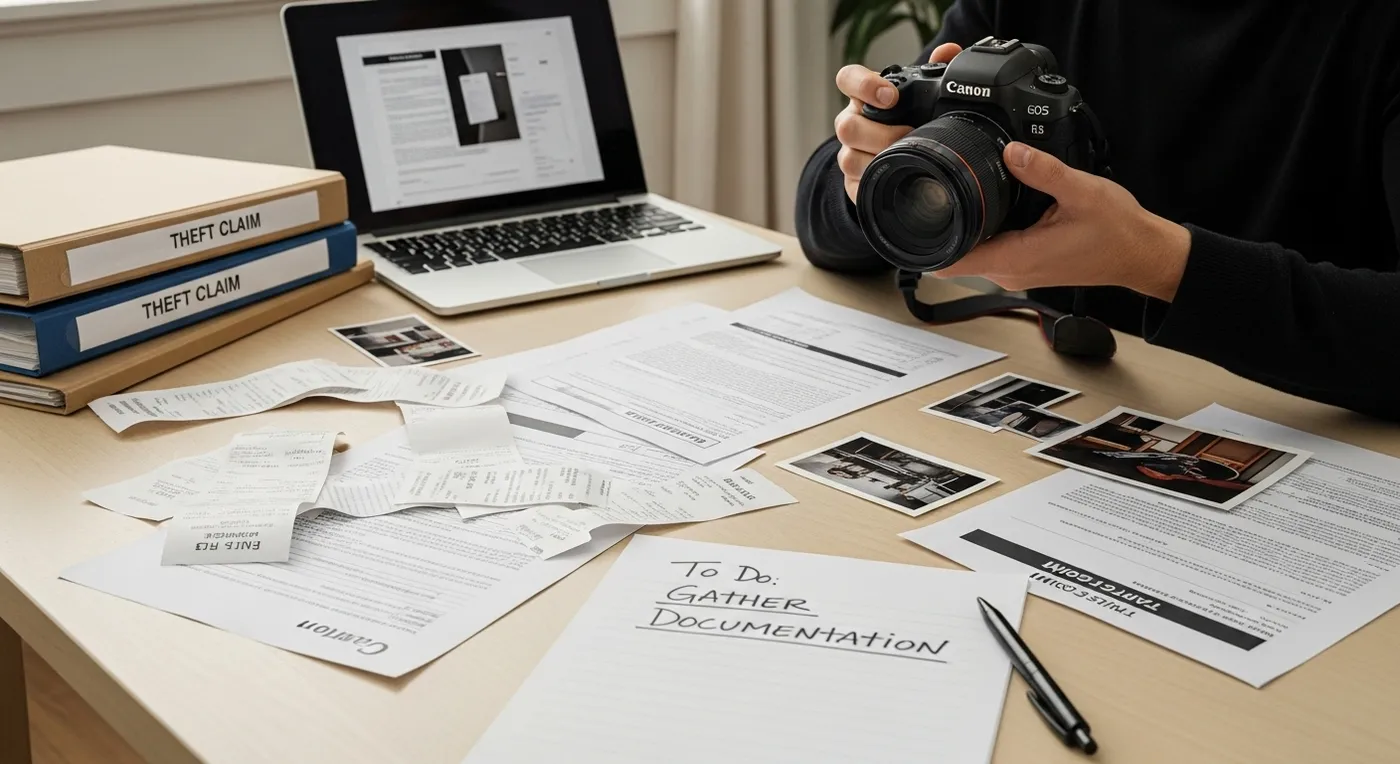
After reporting the theft to local authorities, the next critical phase involves meticulously collecting and organizing all relevant documentation and evidence. This step is fundamental in substantiating your insurance claim and creating a comprehensive record of your loss.
Start by conducting a thorough inventory of stolen items. Precision is paramount in this process. Locate and compile original purchase receipts, serial numbers, photographs, and any proof of ownership for items that were stolen. Digital records can be incredibly valuable if physical documentation is missing. Check your email archives, online shopping accounts, and cloud storage for evidence of purchases. Take clear, detailed photographs of the scene where the theft occurred, capturing any signs of forced entry or disturbance.
Financial documentation plays a crucial role in substantiating your claim. Gather bank statements, credit card records, and any receipts that can demonstrate the value of stolen items. Insurance companies require concrete proof of the items’ worth, so the more comprehensive your financial documentation, the stronger your claim will be. If you have warranty information, product registration documents, or appraisal certificates for valuable items, include these as well.
Explore our comprehensive guide on insurance claim documentation to ensure you have all necessary paperwork in order. This resource can provide additional insights into creating a robust claim.
According to research from the National Prosecuting Authority, maintaining organized and detailed documentation significantly improves your chances of a successful claim and potential recovery of stolen property. Some critical elements to document include:
- Detailed list of stolen items with estimated values
- Original purchase receipts and proof of ownership
- Photographs of stolen items and theft location
- Police case number and official report
- Serial numbers of electronic or valuable items
Organize all gathered documentation in a clear, chronological manner. Create both digital and physical copies, storing them in secure locations. Digital backups can be particularly helpful in case physical documents are lost or damaged. By meticulously gathering and preserving evidence, you establish a solid foundation for your insurance claim and potential legal proceedings.
Below is a checklist table to help you verify that you have all the necessary documentation and evidence required for a successful theft insurance claim.
| Documentation Type | Purpose | Check Status |
|---|---|---|
| Police report & case number | Official proof of theft | |
| Inventory of stolen items | Substantiates what was taken | |
| Original purchase receipts | Verifies ownership and value | |
| Photographs of stolen items | Visual evidence for insurer | |
| Serial numbers | Confirms item identification | |
| Financial records (statements) | Validates item value | |
| Warranty/registration documents | Extra ownership verification |
Step 3: Notify Your Insurance Company Promptly
Contacting your insurance company immediately after theft is a critical step in initiating your claim process. Speed and accuracy are essential when reporting a theft, as delays can potentially complicate your insurance claim and reduce your chances of successful compensation.
Begin by locating your insurance policy documents and gathering all documentation collected in the previous step. Most insurance providers offer multiple reporting channels, including dedicated claims hotlines, online claim portals, and email communication. Select the method that provides the most immediate and documented communication. When making initial contact, be prepared to provide your policy number, personal identification details, and the police case number obtained during your initial report.
During your communication with the insurance company, be thorough and precise. Clearly explain the circumstances of the theft, including the date, time, location, and specific items stolen. Present the documentation you’ve gathered, such as police reports, photographs, and purchase receipts. Insurance representatives will guide you through their specific claim submission process, which may involve completing additional forms or providing supplementary evidence.
Check out our comprehensive guide on navigating the insurance claim process for more detailed insights into effectively communicating with your insurance provider. This resource can help you understand the nuances of claim submission.
According to government guidelines, documenting every interaction with your insurance company is crucial. Some key verification criteria for a successful initial claim notification include:
- Exact date and time of theft report
- Police case number
- Comprehensive list of stolen items
- Copy of official police report
- Your policy number and personal contact information
Maintain a detailed record of all communications, including names of representatives, dates, times, and summaries of discussions. Request written confirmation of your claim submission and keep digital or physical copies of all correspondence. Some insurance providers might require an official sworn statement or additional documentation, so remain proactive and responsive throughout the claims process.
Remember that prompt and accurate reporting not only expedites your claim but also demonstrates your commitment to transparency and cooperation with your insurance provider.
Step 4: Complete the Claim Form Thoroughly
Completing the insurance claim form is a pivotal moment in your theft recovery process. Accuracy and completeness are absolutely crucial in this stage, as any inconsistencies or omissions could potentially delay or compromise your entire claim.
When you receive the claim form, approach it with meticulous attention to detail. Set aside dedicated time in a quiet environment where you can concentrate without distractions. Review each section carefully, understanding precisely what information is being requested. Use the documentation you’ve previously gathered - police reports, purchase receipts, and inventory lists - as reference materials to ensure every detail is precise and consistent.
Begin by filling out personal and contact information with extreme care. Verify that your name, address, contact numbers, and policy details are entered exactly as they appear in your official documentation. For the section describing the theft, cross-reference your police report to ensure every detail matches perfectly. Include the exact date, time, location, and circumstances of the theft. If the form provides space for additional notes, use this opportunity to provide a comprehensive narrative that supports your claim.
Explore our detailed guide on navigating insurance claims to help you understand the nuances of form completion. This resource can provide additional insights into avoiding common mistakes.
According to government documentation guidelines, maintaining precise records is essential. Some critical elements to verify when completing your claim form include:
- Accurate personal identification details
- Exact police case number
- Comprehensive list of stolen items with precise values
- Detailed description of theft circumstances
- Supporting documentation references
Before submitting, make copies of the completed form for your personal records. Review the document multiple times, checking for any potential errors or omissions. Many insurance companies now offer digital submission options, which can provide immediate confirmation of receipt. If submitting physically, consider sending the document via registered mail to ensure a trackable submission.
Remember that the claim form is your official statement of loss. Approach it with the same seriousness you would a legal document, understanding that its contents will directly impact the processing of your insurance claim.
Step 5: Follow Up on Your Claim Status Regularly
Persistent and strategic follow-up is crucial in ensuring the successful processing of your theft insurance claim. Proactive communication can significantly expedite your claim and help you navigate potential complications that might arise during the investigation.
Establish a systematic approach to tracking your claim’s progress. Create a dedicated communication log where you record every interaction with your insurance company, including dates, names of representatives, conversation summaries, and any promises or commitments made. This documentation will serve as a critical reference point and protect your interests throughout the claims process. Most insurance companies provide multiple communication channels, including dedicated claims hotlines, email support, and online tracking portals. Select the method that provides the most transparent and documented communication.
Schedule regular follow-up intervals, typically every seven to ten days, to inquire about your claim’s status. When communicating, always have your policy number, police case number, and previous correspondence details readily available. Be polite but persistent in your inquiries, requesting specific timelines and understanding any potential roadblocks in claim processing. If you encounter delays or receive incomplete information, escalate your communication to a claims supervisor or manager.
Discover more about navigating insurance claim processes effectively to enhance your understanding of claim follow-up strategies. This resource can provide additional insights into managing complex claim scenarios.
According to government documentation guidelines, maintaining comprehensive communication records is essential. Some critical elements to track during your claim follow-up include:
- Dates of all communication attempts
- Names and contact details of representatives
- Specific claim status updates
- Promised resolution timelines
- Any additional documentation requested
Utilize digital tools and technology to your advantage. Many insurance providers now offer mobile applications or online portals where you can track claim progress in real-time. Set up email or SMS notifications to stay informed about any updates or requests. If your claim seems stagnant, don’t hesitate to request a written explanation for the delay and ask about potential escalation procedures.
Remember that consistent, professional, and documented communication is your most powerful tool in navigating the insurance claim process. Your goal is to remain informed, engaged, and proactive throughout the entire journey.
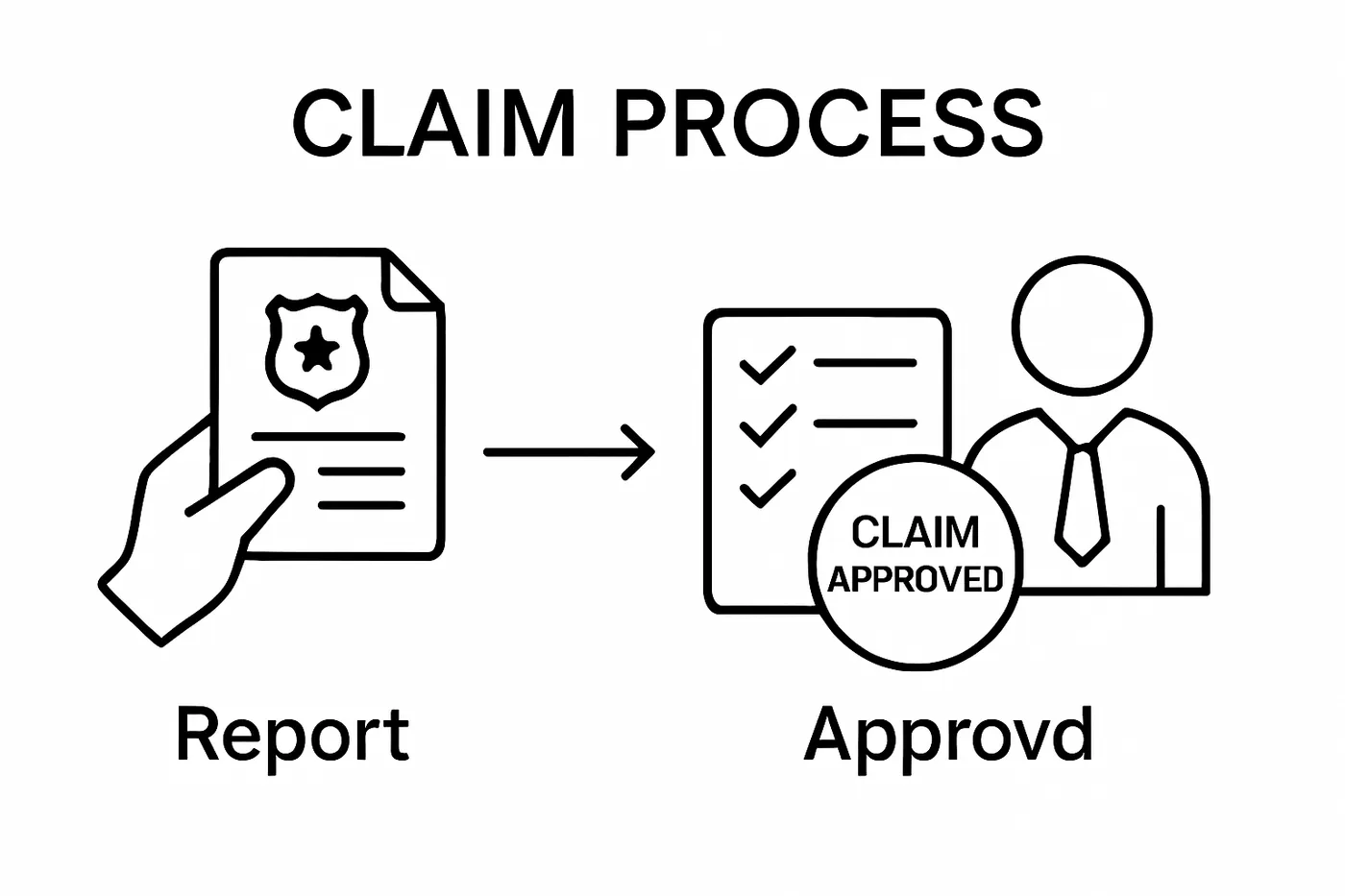
The following table provides an overview of each step involved in the theft insurance claim process, including a summary of your main action and the key outcome for each stage.
| Step | Main Action | Key Outcome |
|---|---|---|
| Report theft to authorities | File a detailed crime report with local police | Obtain police report and case number |
| Gather documentation and evidence | Compile receipts, photos, inventory, and proof of ownership | Build a strong evidence base |
| Notify your insurance company promptly | Contact insurer and provide required documents | Initiate claim process |
| Complete the claim form thoroughly | Accurately fill in all details and attach supporting docs | Submit formal, error-free claim |
| Follow up on your claim status regularly | Track progress and communicate with insurer | Resolve issues and speed up resolution |
Take the Stress Out of Your Theft Insurance Claim
Facing theft is overwhelming. The article outlined how getting your paperwork right and staying on top of your claim can mean the difference between fast compensation and endless frustration. South Africans often struggle with time pressures, missing documentation, strict insurer requirements, and uncertainty about the right steps to take. You need a partner who simplifies every stage, from reporting your loss to regular claim follow-ups.
Let Savvy Insurance help you gain peace of mind by protecting your car, home contents, cellphone, and more. Our straightforward processes and practical guides mean you can focus on recovery, not red tape. Keen to experience hassle-free claims and affordable cover? Discover how easy it is to get protected today. Visit Savvy Insurance to start your personalised quote or learn more about our trusted solutions.
Frequently Asked Questions
How do I report a theft to local authorities?
Reporting a theft involves contacting your local police station immediately to file a detailed crime report. Make sure to bring identification, and any evidence related to the stolen property, including serial numbers and purchase receipts.
What documents do I need to gather for my insurance claim after a theft?
You will need to collect documentation such as a detailed inventory of stolen items, original purchase receipts, photographs, police reports, and any financial records that substantiate the value of the items taken.
How quickly should I notify my insurance company after a theft?
It is crucial to notify your insurance company promptly after the theft, ideally within 24 to 48 hours, to ensure a smoother claims process and to meet their reporting requirements.
What should I include when filling out my insurance claim form?
When completing your insurance claim form, include accurate personal information, a comprehensive list of stolen items with values, a detailed description of the theft, and references to supporting documentation like police reports and receipts.
Recommended
- The Process After Stolen Vehicle: Insurance and Recovery Steps 2025 - Savvy Insurance
- How to Claim Car Insurance in South Africa: Step-by-Step Guide 2025
- Insurance for Stolen Vehicles: All You Need To Know for 2025 - Savvy Insurance
- Insurance Claim Process Explained: A Guide for 2025 - Savvy Insurance
Ready to compare insurance? Get free, no-obligation quotes from South Africa's top insurers in a few minutes and see how much you could save.
Compare insurance quotes →Free · No obligation · POPIA compliant · We never sell your data