

Changing your insurance details can feel like a real mission, especially when each step comes with its own paperwork and stress. Yet more than 70 percent of South Africans have discovered errors lurking in their policies simply because they didn’t double-check basic info at renewal time. Most people think this is just about updating an address or phone number. The skills you use here could actually save you thousands in claim disputes later.
Table of Contents
- Step 1: Gather Your Current Insurance Information
- Step 2: Identify Necessary Updates To Your Policy
- Step 3: Contact Your Insurance Provider
- Step 4: Submit Your Updated Information
- Step 5: Verify Changes With Your Insurance Company
Quick Summary
| Key Point | Explanation |
|---|---|
| 1. Gather current policy documents | Collect all existing insurance paperwork such as policy certificates and correspondence for accurate information. |
| 2. Identify necessary updates | Review personal circumstances that may require changes in coverage, such as life events or new assets. |
| 3. Clear communication with providers | Prepare concise notes about desired changes and be ready to discuss them with your insurance representative. |
| 4. Submit updated information carefully | Double-check all submission details and choose secure channels for sending documentation to ensure accuracy. |
| 5. Verify changes for accuracy | After receiving updates, meticulously check for correct personal details and coverage limits to prevent issues later. |
Step 1: Gather Your Current Insurance Information
Updating your insurance details starts with a comprehensive information collection process that sets the foundation for a smooth transition. Knowing exactly what coverage you currently have is crucial for making informed decisions about your future insurance needs.
Begin by locating all your existing insurance documents. This includes policy certificates, renewal notices, and correspondence from your current insurance provider. Check your physical filing system, email archives, and online insurance portals. Digital storage makes this process much easier – most insurers now offer online account access where you can download and review your complete policy documentation.
Our comprehensive guide on insurance document management can help you organize these critical papers efficiently. You’ll want to compile a comprehensive overview that includes:
- Current policy number
- Effective coverage dates
- Total premium amount
- Specific coverage types and limits
- Contact information for your current insurance provider
Pay special attention to the nuanced details within your insurance documents. Review each section carefully, noting specific terms, exclusions, and any recent changes. Some policies might have updated clauses or riders that could impact your coverage, so scrutinize every page.
If you encounter difficulties accessing your documents, contact your insurance provider directly. Most customer service representatives can help you retrieve digital or physical copies of your current policy. Pro tip: Always keep a digital backup of your insurance documents in a secure, encrypted location.
Verify that all personal information on your current policy is accurate. Check your name, address, contact details, and any listed dependents or additional insured individuals. Inaccurate personal information can complicate future claims or policy updates, so precision is key.
Once you’ve gathered all necessary documentation, create a consolidated file or digital folder containing all relevant insurance information. This preparation will streamline the subsequent steps of updating your insurance details and ensure you have all critical information at your fingertips.
Below is a step overview table to give you a quick view of the main stages involved in updating your insurance details, including the key activity and the main goal for each phase.
| Step | Key Activity | Main Goal |
|---|---|---|
| 1 | Collect current policy documents | Ensure all information is accurate and complete |
| 2 | Identify necessary policy updates | Align coverage with life changes and needs |
| 3 | Contact your insurance provider | Communicate changes and gather requirements |
| 4 | Submit updated information | Provide complete, correct details for processing |
| 5 | Verify changes with insurer | Confirm updates are processed without errors |
Step 2: Identify Necessary Updates to Your Policy
After gathering your current insurance documentation, the next critical step is identifying potential updates that will optimize your coverage. Recognizing necessary policy modifications requires a strategic and thorough review of your current insurance landscape.
Start by comparing your existing policy against your current life circumstances. Major life changes such as marriage, relocation, purchasing a new vehicle, or significant home renovations can dramatically impact your insurance requirements. Our comprehensive guide on annual insurance reviews provides additional insights into when and why policy updates become essential.
Carefully evaluate your coverage limits and assess whether they adequately protect your current assets. Underinsurance can be as problematic as over-insurance, potentially leaving you financially vulnerable during unexpected events. Consider recent changes in your property value, income level, and personal possessions that might necessitate adjustments to your existing policy.
Key areas to scrutinize for potential updates include:
- Personal liability coverage
- Asset replacement values
- Additional risk protections
- Geographical coverage limitations
- Deductible levels
Pay special attention to emerging risks specific to your lifestyle and geographic region. South African insurance needs can vary significantly based on local environmental conditions, crime rates, and infrastructure challenges. Some policies might require updates to address specific regional risks like load shedding, extreme weather events, or localized security concerns.
Take time to thoroughly understand the financial implications of potential policy modifications. Each adjustment can impact your premium, so weigh the additional coverage against potential cost increases. Some insurers offer flexible packages that allow you to customize protection without dramatically increasing your monthly expenses.
To verify you’ve completed this step effectively, create a detailed list of potential updates alongside their potential impact. This documentation will serve as a crucial reference point when you engage with your insurance provider in subsequent steps of the update process.
Thoroughness and attention to detail are your greatest allies in ensuring comprehensive insurance coverage that truly meets your current needs.
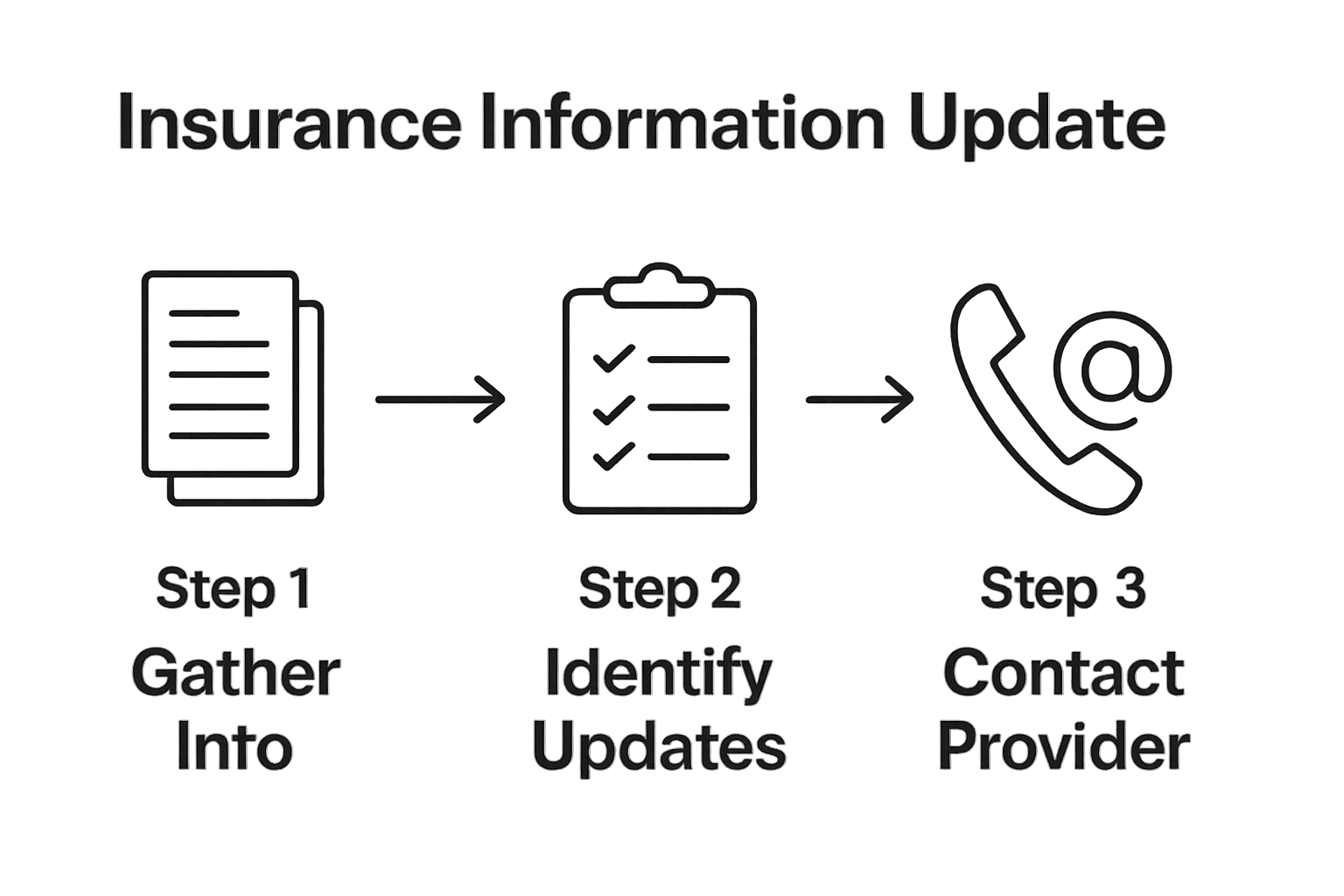
Step 3: Contact Your Insurance Provider
Reaching out to your insurance provider is a pivotal moment in updating your policy, requiring strategic communication and careful preparation. Effective communication can significantly streamline the entire update process and ensure your policy accurately reflects your current needs.
Before making contact, organize all the documentation and notes you compiled during the previous steps. Prepare a clear, concise summary of the updates you wish to discuss. Most insurance providers offer multiple communication channels, including phone, email, online portals, and in-person consultations. Check out our comprehensive guide on navigating insurance communication to choose the most appropriate method for your specific situation.
When initiating contact, have your current policy number, personal identification, and a detailed list of proposed changes readily available. Clarity and preparedness will help expedite the conversation and demonstrate your commitment to maintaining accurate insurance coverage. Be prepared to discuss specific modifications such as updated personal information, changes in asset value, or adjustments to coverage limits.
Key communication points to address during your interaction include:
- Specific policy updates you’re requesting
- Recent life changes affecting your insurance needs
- Potential impact on premium costs
- Required documentation for processing changes
- Estimated timeframe for policy modifications
Remember that insurance representatives are trained to assist you, so approach the conversation with a collaborative mindset. Ask questions about potential implications of your proposed changes and seek professional advice on optimizing your coverage. Some updates might require additional documentation or verification, so be patient and willing to provide supplementary information.
Take detailed notes during the conversation, recording the representative’s name, contact details, and a summary of the discussion. Request written confirmation of any agreed-upon changes to maintain a clear record of your policy update process. Most reputable insurance providers will send a follow-up email or letter detailing the modifications discussed during your interaction.
To verify successful completion of this step, ensure you have received formal acknowledgment of your requested updates. This documentation serves as a crucial reference point and protects your interests in case of future disputes or misunderstandings. By maintaining open, transparent communication with your insurance provider, you’re taking a proactive approach to managing your insurance coverage effectively.
Step 4: Submit Your Updated Information
Submitting your updated insurance details represents a critical transition point in your policy management journey. Precision and thoroughness are paramount when transferring your revised information to ensure accurate processing and minimal disruption to your coverage.
Begin by carefully reviewing all documentation prepared during previous steps. Our comprehensive guide on insurance documentation can help you understand the nuances of proper information submission. Double-check every detail for accuracy, including personal identifiers, contact information, and specific policy modifications discussed with your insurance representative.
Most insurance providers offer multiple submission channels, including online portals, email, physical mail, and in-person document submission. Choose the method that provides the most comprehensive documentation trail and aligns with your insurance provider’s preferred communication approach. Online portals typically offer the most secure and immediate method of information transfer, allowing instant confirmation and digital record-keeping.
Key documents to include with your submission:
- Completed update request forms
- Copies of identification documents
- Proof of address
- Supporting documentation for policy modifications
- Previous policy reference numbers
When submitting digital documents, ensure high-quality scans or photographs that clearly display all relevant information. Use standard file formats like PDF for maximum compatibility. Avoid sending sensitive information through unsecured channels, and always use encrypted email or secure upload platforms provided by your insurance company.
Pay special attention to any additional verification steps required by your insurance provider. Some companies might request a follow-up phone call, additional identification verification, or supplementary documentation. Promptly respond to any communication requesting further information to prevent delays in processing your policy updates.
To verify successful submission, request and retain confirmation documentation. This might include a submission receipt, reference number, or acknowledgment email. Follow up within 5-7 business days if you haven’t received official confirmation of your policy update. Maintain copies of all submitted documents in both digital and physical formats for your personal records.
Remember that successful information submission is more than just sending documents – it’s about ensuring your insurance coverage accurately reflects your current life circumstances and protection needs. Take your time, be meticulous, and approach the process with careful attention to detail.

Step 5: Verify Changes with Your Insurance Company
Verifying the changes to your insurance policy is the final critical step in ensuring your coverage accurately reflects your current needs. Meticulous confirmation prevents potential future complications and provides peace of mind that your updated information has been correctly processed.
Our comprehensive guide on managing insurance documentation can help you navigate this crucial verification process. Begin by carefully reviewing the official policy update documentation sent by your insurance provider. These documents typically arrive via email or physical mail and outline all modifications discussed and agreed upon during previous interactions.
Attention to detail is paramount during this verification stage. Scrutinize every aspect of the updated policy, comparing the new document against your original notes and the changes you requested. Check that personal information, coverage limits, contact details, and any special provisions are exactly as you discussed with your insurance representative.
Key elements to verify in your updated policy include:
- Accuracy of personal identification details
- Correct coverage limits and types
- Updated contact information
- Any new riders or additional protections
- Premium adjustments
Do not hesitate to contact your insurance provider immediately if you notice any discrepancies. Most companies provide a window of time during which you can request corrections without penalty. Prepare a clear, concise list of any differences you identify, and be ready to provide supporting documentation to substantiate your concerns.
Utilize multiple verification methods to ensure comprehensive confirmation. This might include comparing digital and physical copies of the policy, cross-referencing with your original communication records, and potentially scheduling a follow-up consultation with your insurance representative. Digital portals often provide the most convenient method of policy review, allowing you to examine details at your own pace and convenience.
To conclusively verify your changes, request a written confirmation document that summarizes all updates. This serves as an official record of your policy modifications and provides legal protection should any future disputes arise. Store this document securely alongside your other important insurance paperwork, ensuring you can access it quickly if needed.
The following checklist table summarises core elements to review when verifying your updated insurance policy, ensuring you catch common mistakes and have your documentation in order before considering the process complete.
| What to Check | Why It Matters |
|---|---|
| Personal identification details | Prevents mismatches during claims |
| Coverage limits and types | Ensures coverage matches your needs |
| Contact and address information | Supports reliable communication |
| New riders or special provisions | Confirms added or amended protections |
| Premium changes | Avoids unwanted surprises in monthly costs |
| Written confirmation of updates | Provides official proof for future queries |
| Document storage | Keeps records secure and easily accessible |
Remember that verification is more than a bureaucratic step – it’s your final opportunity to ensure your insurance coverage perfectly aligns with your current life circumstances and protection needs. Take your time, be thorough, and approach the process with careful, methodical attention to detail.
Take the Stress Out of Updating Your Insurance in 2025
Struggling to keep your insurance details up to date can be intimidating. The article highlights how important it is to have your policy documentation correct and current, especially after major life changes. Small errors or outdated details can cause huge headaches when it comes to claims or coverage changes. You deserve peace of mind knowing that your car, home, or valuables are always protected.
Let King Price help you. Our streamlined digital platform makes policy updates simple and hassle-free for every kind of coverage – from car insurance to home and valuables. Save time, avoid mistakes, and get the personalised support you need. Ready to make changes with confidence? Visit https://insurance.kingprice.co.za today and put effortless insurance management into your own hands.
Frequently Asked Questions
How do I gather my current insurance information?
Start by locating all existing insurance documents, including policy certificates and renewal notices. Check physical files, email archives, and online insurance portals to compile essential details like policy numbers, coverage dates, and premium amounts.
What updates should I consider for my insurance policy?
Evaluate your current life circumstances, such as marriage or relocation, that may affect your needs. Assess coverage limits, underinsurance risks, and emerging regional risks for potential adjustments in your policy.
How can I contact my insurance provider for updates?
Organize all documentation beforehand and decide on your preferred communication method—phone, email, or online portal. Have your policy number and summary of requested changes ready to facilitate an efficient conversation.
What should I verify after updating my insurance policy?
Review the official documentation for accuracy, ensuring personal details, coverage limits, and any new provisions are correct. Address any discrepancies with your insurance provider promptly to avoid complications.
Recommended
- Car Insurance After Moving: Essential 2025 Guide for South Africans – Savvy Insurance
- How to Switch Insurers in 2025: A Simple Guide for Car and Home Owners – Savvy Insurance
- Annual Insurance Review Tips for Car and Home Owners 2025 – Savvy Insurance
- Top Tips for Cheaper Car Insurance in South Africa 2025 – Savvy Insurance