Is Insurance Compulsory in South Africa Explained
Did you know that in South Africa, driving without compulsory insurance can lead to hefty fines and even criminal charges? These strict laws exist because insurance plays a key role in protecting people and businesses from unexpected losses. Whether you own a car, run events, or operate a marine vessel, knowing which types of insurance are required by law can help you avoid serious penalties and safeguard your financial future.
Key Takeaways
| Point | Details |
|---|---|
| Compulsory Insurance Defined | South Africa mandates specific insurance types to protect individuals and organizations from significant financial risks. |
| Key Types of Mandatory Insurance | Key mandatory insurances include the Road Accident Fund coverage, employer’s compensation, and public liability for events. |
| Legislative Framework | Various laws govern compulsory insurance, ensuring regulatory compliance and consumer protection in the insurance landscape. |
| Risks of Non-Compliance | Failure to comply with mandatory insurance can lead to severe legal, financial, and personal repercussions. |
Table of Contents
- Definition Of Compulsory Insurance In South Africa
- Types Of Insurance: Mandatory Vs Optional
- South African Laws Governing Compulsory Insurance
- Insurance Obligations For Vehicle And Property Owners
- Risks And Penalties For Non-Compliance
Definition of Compulsory Insurance in South Africa
In South Africa, compulsory insurance represents a legal mandate requiring specific individuals or organisations to secure a minimum level of insurance protection. According to legal research from understanding the legal requirements, this means certain insurance types aren’t optional but legally required.
The most prominent examples of compulsory insurance in South Africa include:
- Road Accident Fund (RAF) Coverage: Mandatory motor vehicle accident protection
- Public Liability Insurance: Required for sports and recreation events under the Safety at Sports and Recreation Events Act
- Marine Pollution Liability: Mandatory for oil tanker operators to cover potential environmental damages
These insurance requirements serve critical societal functions.
 By legally mandating coverage, the government ensures financial protection for individuals and organisations against potential significant risks. For vehicle owners, this means having basic accident coverage that protects both the driver and potential victims in case of road incidents.
For businesses and event organisers, compulsory insurance acts as a safety net, preventing potential financial catastrophes from unexpected incidents. Whether you’re driving a car, organizing a public event, or operating a marine vessel, understanding these mandatory insurance requirements isn’t just about legal compliance - it’s about protecting yourself and others from unexpected financial burdens.
Types of Insurance: Mandatory vs Optional
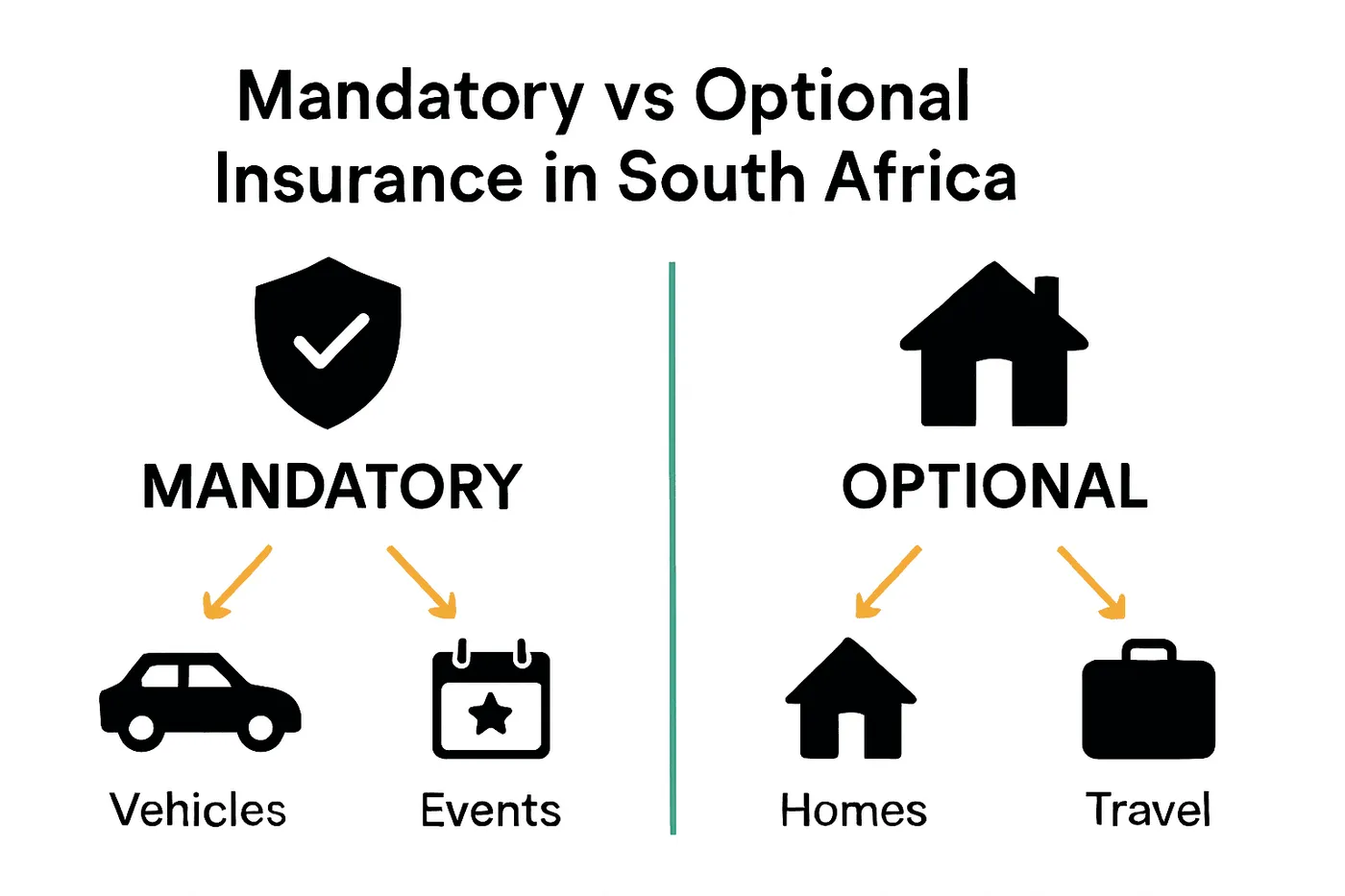
In South Africa, insurance types are distinctly categorized into mandatory and optional categories, each serving different legal and financial purposes. According to research, while some insurance types are legally required, many remain voluntary choices for individuals and businesses. Explore vehicle insurance types in detail to understand these nuanced distinctions.
Mandatory Insurance Types
Some insurance categories are legally compulsory in South Africa:
- Motor Vehicle Third-Party Liability: Required by law to cover potential accident damages
- Road Accident Fund (RAF) Coverage: Mandatory protection for vehicle-related incidents
- Employer’s Compensation Insurance: Legal requirement for workplace injury protection
Optional Insurance Types
While not legally mandated, several insurance types offer critical financial protection:
Here’s a summary comparing mandatory and optional insurance types in South Africa:
| Insurance Type | Mandatory | Typical Legal Basis | Examples |
|---|---|---|---|
| Motor Vehicle Third-Party | Yes | Statute | Road Accident Fund, Third-Party Liability |
| Employer’s Compensation | Yes | Statute | Workers’ Compensation Act |
| Public Liability (Events) | Yes | Statute | Safety at Sports and Recreation Events Act |
| Marine Pollution Liability | Yes | Statute | Marine Pollution (Control and Civil Liability) Act |
| Life Insurance | No | Voluntary/Contractual | Individual policies |
| Homeowners Insurance | No* | Loan Agreements | Bank mortgage requirement |
| Travel Insurance | No | Voluntary | Trip cover policies |
- Life Insurance: Personal financial security for dependents
- Homeowners Insurance: Recommended but not legally required
- Travel Insurance: Voluntary coverage for unexpected travel disruptions
Interestingly, some optional insurances become quasi-mandatory through practical requirements. For instance, mortgage lenders typically demand home insurance as a bond approval condition, even though it’s not strictly legal compulsion. This demonstrates how financial institutions often create their own insurance mandates beyond government regulations.
South African Laws Governing Compulsory Insurance
South Africa’s insurance landscape is meticulously regulated through a comprehensive legislative framework that defines mandatory insurance requirements. Check out the car insurance requirements for 2025 to understand how these laws impact vehicle owners directly.
Key Legislative Framework
The primary laws governing insurance in South Africa include:
- Long-term Insurance Act: Regulates life and long-term insurance products
- Short-term Insurance Act: Governs general insurance categories
- Insurance Laws Amendment Act: Provides updates and modifications to existing insurance regulations
- Financial Advisory and Intermediary Services Act: Oversees insurance intermediaries and financial advice
- Financial Services Board Act: Ensures regulatory compliance and consumer protection
Specific Compulsory Insurance Mandates
Certain laws mandate specific insurance coverages to protect public interests:
- Road Accident Fund Act: Requires mandatory motor vehicle accident coverage
- Safety at Sports and Recreation Events Act: Compels public liability insurance for sporting events
- Marine Pollution (Control and Civil Liability) Act: Mandates pollution insurance for maritime vessels, particularly oil tankers
These legislative measures demonstrate South Africa’s proactive approach to risk management. By legally requiring insurance in specific contexts, the government ensures financial protection for individuals and organizations, mitigating potential economic damages from accidents, sporting events, and environmental incidents.
Insurance Obligations for Vehicle and Property Owners
South African vehicle and property owners face specific insurance responsibilities that blend legal requirements and financial protection strategies. Understand the risks of driving without insurance to appreciate why these obligations matter.
Vehicle Insurance Obligations
For vehicle owners, insurance obligations are nuanced:
- Road Accident Fund (RAF) Coverage: A compulsory state-run social insurance automatically funded through fuel levies
- Third-Party Liability Insurance: Legally required protection against potential accident damages
- Personal Accident Cover: Recommended additional protection for comprehensive risk management
Property Insurance Requirements
Property insurance presents a different landscape:
- Home Loans: Banks typically mandate comprehensive homeowners insurance as a loan condition
- Sectional Title Properties: Body corporates must insure the entire building structure
- Personal Contents: Optional but highly recommended insurance for individual belongings
While no explicit law universally requires property insurance, financial institutions and practical risk management create de facto obligations.
 The absence of insurance can lead to significant financial vulnerability, making these coverages less of a choice and more of a strategic necessity for protecting one’s most valuable assets.
Risks and Penalties for Non-Compliance
Non-compliance with mandatory insurance requirements in South Africa can lead to significant legal, financial, and personal risks that extend far beyond simple regulatory penalties. Check out the comprehensive guide on car insurance requirements to understand the full implications of these potential consequences.
Vehicle Insurance Non-Compliance Risks
Drivers who fail to maintain required insurance coverage face multiple potential penalties:
- Traffic Fines: Immediate financial penalties for driving without mandatory insurance
- License Suspension: Potential temporary or permanent loss of driving privileges
- Legal Liability: Personal financial responsibility for accident damages
- Criminal Charges: Potential prosecution for operating an uninsured vehicle
Financial and Personal Consequences
Beyond immediate legal repercussions, non-compliance carries broader risks:
- Personal Asset Exposure: Risk of personal assets being seized to cover accident damages
- Credit Score Impact: Potential negative effects on financial credibility
- Limited Legal Protections: Reduced ability to claim compensation in accident scenarios
- Increased Future Insurance Premiums: Higher costs for subsequent insurance coverage
The potential consequences of insurance non-compliance extend well beyond simple monetary penalties. They represent a comprehensive risk to an individual’s financial stability, legal standing, and personal security. Maintaining proper insurance isn’t just a legal requirement - it’s a critical strategy for protecting yourself, your assets, and your future financial well-being.
Protect Yourself from Unexpected Financial Risks in South Africa
If you are feeling uncertain about whether you are properly protected under South Africa’s compulsory insurance laws, you are not alone. Many people worry about hidden risks, high penalties, and whether their current cover is truly enough. From Road Accident Fund responsibilities to third party car insurance and making sure your home or property is not left exposed, these rules can seem complicated, but the dangers of ignoring them are real. You deserve peace of mind knowing you are covered for the unexpected.
Let Savvy Insurance take the stress out of legal compliance and financial risk. Visit us now for straightforward advice, practical tips, and great value on car insurance, home insurance, and more. Unsure what type of insurance suits your needs? Start with our expert car insurance solutions and discover how easy it can be to protect yourself and your family. Act today to avoid costly mistakes and enjoy real security.
Frequently Asked Questions
What is compulsory insurance in South Africa?
Compulsory insurance in South Africa refers to a legal requirement for certain individuals or organizations to have a minimum level of insurance coverage, such as the Road Accident Fund and public liability insurance for events.
What types of insurance are mandatory in South Africa?
Mandatory insurance types in South Africa include motor vehicle third-party liability insurance, Road Accident Fund (RAF) coverage, public liability insurance for sports events, and employer’s compensation insurance.
What are the risks of not having compulsory insurance?
Not having required compulsory insurance can lead to traffic fines, license suspension, legal liability for accident damages, and potential financial ruin in the event of an accident or unforeseen incident.
How are insurance obligations for vehicle owners defined?
Vehicle owners must maintain Road Accident Fund coverage and third-party liability insurance as mandatory requirements. Personal accident cover is also recommended for additional protection.
Recommended
- Understanding Car Insurance Legal Requirements for Drivers - Savvy Insurance
- Car Insurance Requirements South Africa: What You Must Know for 2025 - Savvy Insurance
- Do I Need Car Insurance? Essential Guide for 2025 - Savvy Insurance
- Car Insurance Basics 2025: Simple Guide for SA Drivers - Savvy Insurance
Ready to compare insurance? Get free, no-obligation quotes from South Africa's top insurers in a few minutes and see how much you could save.
Compare insurance quotes →Free · No obligation · POPIA compliant · We never sell your data