

Insurance premiums might sound like just another monthly bill, but the reality holds plenty more than meets the eye. Most people are surprised to find that insurers fine-tune your premium using detailed risk models that examine everything from your age to your address and even your credit score. Strangely enough, it is not just about how much you might claim. The whole system quietly works behind the scenes to keep the financial wheels turning for everyone in the country.
Table of Contents
- What Are Insurance Premiums And Their Purpose?
- Factors Influencing Premium Calculations
- Risk Assessment In Premium Determination
- The Role Of Underwriting In Premium Costs
- Trends And Changes Affecting Premium Rates
Quick Summary
| Takeaway | Explanation |
|---|---|
| Insurance premiums are essential payments | They act like a subscription fee maintaining your coverage and enabling risk management. |
| Multiple factors determine premium rates | Insurers evaluate personal profiles, asset values, and environmental risks to calculate accurate premiums. |
| Risk assessment is crucial in pricing | A combination of quantitative and qualitative analyses ensures fair pricing based on potential claims. |
| Underwriting significantly impacts premiums | It assesses individual risks and categorizes them to determine the appropriate insurance rates. |
| Emerging trends affect premium calculations | Technological advancements and new risk landscapes require constant adaptation in pricing strategies. |
What Are Insurance Premiums and Their Purpose?
An insurance premium represents the financial cornerstone of any insurance contract, serving as the regular payment you make to maintain your insurance coverage. Think of it like a subscription fee that keeps your financial protection active and running. These premiums are essentially the lifeblood of insurance policies, enabling insurers to pool resources and manage potential risks across their entire customer base.
Understanding Premium Mechanics
Insurance premiums are calculated through a complex risk assessment process where insurers evaluate multiple factors to determine the likelihood and potential cost of potential claims. According to research from the South African Financial Services Board, insurers consider several key variables when setting premium rates:
- Your personal risk profile
- Historical claim statistics
- Asset value and replacement costs
- Geographic location and associated risks
- Current market conditions
For instance, a car insurance premium will differ significantly between a young driver with no claims history and an experienced driver with a clean record. The premium reflects the statistical probability of you filing a claim and the potential financial exposure for the insurance company.
The Purpose of Insurance Premiums
Beyond being a simple payment, insurance premiums serve multiple critical functions in the financial ecosystem. They allow insurance companies to create large reserve funds that can be used to pay out claims when policyholders experience losses. This mechanism transforms individual financial vulnerability into a collective risk-sharing strategy.
Moreover, premiums fund not just claim payouts but also the operational costs of insurance companies, including administrative expenses, risk management, and regulatory compliance. Read more about how insurance premiums work in our comprehensive guide on car insurance basics.
By understanding how premiums are structured, you gain insights into the intricate balance between personal risk, financial protection, and the broader insurance marketplace.
Factors Influencing Premium Calculations
Insurance premiums are not arbitrary numbers but carefully calculated estimates reflecting the complex interplay of multiple risk factors. Insurers use sophisticated mathematical models and extensive data analysis to determine the appropriate premium for each policyholder, ensuring a fair and sustainable pricing strategy.
Personal Risk Profile Assessment
Your individual characteristics play a pivotal role in premium calculations. According to research from the University of Pretoria, insurers evaluate a comprehensive range of personal attributes to assess risk:
- Age and life stage
- Occupation and income stability
- Health history and current medical condition
- Previous insurance claims record
- Credit score and financial reliability
For example, a middle-aged professional with a stable job and clean driving record will likely receive more favorable insurance rates compared to a younger driver with multiple traffic violations. Risk assessment is fundamentally about predicting potential future claims based on historical data and individual characteristics.
Asset and Environmental Considerations
Beyond personal attributes, the specific assets being insured and their environmental context significantly influence premium calculations. Insurers meticulously analyze factors such as:
- Geographic location and associated regional risks
- Property type and construction materials
- Security measures and risk mitigation strategies
- Local crime rates and natural disaster probabilities
- Market value and replacement costs of insured assets
A home in a high-crime area or a region prone to natural disasters will inherently attract higher premiums due to increased likelihood of potential claims. Discover more about how these factors impact your insurance costs in our comprehensive guide on car insurance pricing.
Understanding these intricate calculation processes empowers consumers to make informed insurance decisions and potentially manage their risk profiles more effectively.
Risk Assessment in Premium Determination
Risk assessment represents the cornerstone of insurance premium calculations, transforming complex statistical probabilities into precise financial strategies. Insurers employ sophisticated techniques to evaluate potential risks, ensuring they can accurately predict and price potential future claims while maintaining financial sustainability.
Quantitative Risk Analysis
Insurence companies rely on advanced mathematical models and big data analytics to transform raw information into actionable risk insights. According to the Short-term Insurance Act guidelines, this process involves multiple sophisticated evaluation techniques:
- Statistical probability modeling
- Historical claims data analysis
- Predictive risk scoring algorithms
- Demographic trend mapping
- Machine learning risk prediction
These quantitative methods allow insurers to create nuanced risk profiles that go far beyond simple categorizations. A young driver is no longer just a “high-risk” category but can be precisely evaluated based on specific behavioral and demographic indicators.
Qualitative Risk Evaluation
Beyond pure numbers, insurers also incorporate qualitative factors that cannot be easily quantified. These subjective elements provide crucial context to raw statistical data:
- Individual lifestyle choices
- Professional occupation and stability
- Personal risk management practices
- Psychological risk tolerance
- Community and environmental influences
By combining objective data with subjective insights, insurers develop a holistic understanding of potential risks. Learn more about how these intricate calculations impact your insurance pricing in our comprehensive car insurance guide.
Understanding risk assessment demystifies the seemingly opaque world of insurance pricing, revealing a complex yet rational system designed to balance individual variability with collective financial protection.

The Role of Underwriting in Premium Costs
Underwriting serves as the critical financial gatekeeping process where insurers meticulously evaluate and price potential risks before offering coverage. This complex procedure acts as the primary mechanism through which insurance companies determine the financial viability and potential exposure associated with each individual policyholder.
The Underwriting Decision Framework
Underwriters function as risk architects, constructing detailed profiles that translate individual characteristics into precise financial calculations. According to the South African Qualifications Authority, the underwriting process involves comprehensive assessment strategies:
- Comprehensive risk profiling
- Detailed documentation verification
- Financial stability assessment
- Medical and health history evaluation
- Asset valuation and potential replacement costs
The primary objective of underwriting is to balance risk acceptance with financial protection. By carefully analyzing each applicant’s unique circumstances, underwriters can determine appropriate premium rates that reflect the specific risk profile while ensuring the insurance company’s long-term sustainability.
Risk Classification and Premium Determination
Underwriters classify risks into multiple categories, which directly influence premium pricing. These classifications are not arbitrary but based on sophisticated statistical models and extensive historical data analysis:
- Standard risk category
- Preferred risk category
- High-risk category
- Substandard risk category
- Uninsurable risk category
Each classification carries specific implications for premium costs.
The following table summarises the main risk categories used by underwriters and how these categories impact your premium costs in the South African insurance market.
| Risk Category | Description | Effect on Premium Cost |
|---|---|---|
| Standard | Average risk profile, meets regular underwriting criteria | Average |
| Preferred | Lower risk, strong positive attributes (eg. excellent driving, robust security) | Lower than average |
| High-risk | Profile shows above average risk factors | Higher than average |
| Substandard | Significant risk issues, special terms may apply | Much higher |
| Uninsurable | Risk is too great to offer coverage | No coverage offered |
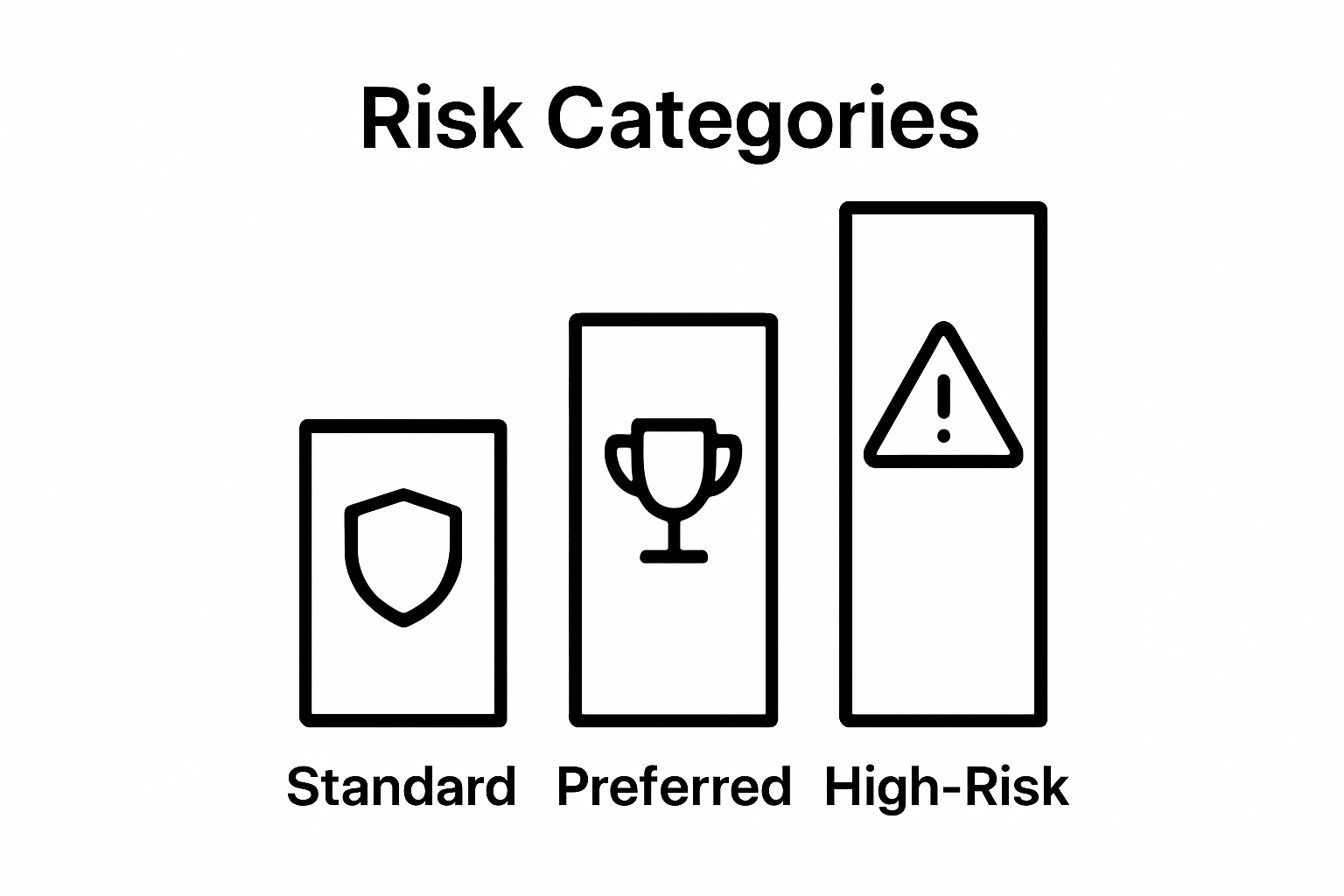 Discover strategies for potentially reducing your insurance costs in our comprehensive guide.
Understanding the underwriting process demystifies how insurers transform complex personal and financial information into structured, fair, and financially sustainable insurance coverage.
Trends and Changes Affecting Premium Rates
The insurance landscape is dynamic, continuously evolving in response to technological advancements, societal shifts, and emerging risk profiles. Premium rates are not static figures but fluid calculations that reflect the complex interplay of multiple external and internal factors affecting the insurance ecosystem.
Technological Disruption and Data Analytics
Digital transformation has revolutionized how insurers assess and price risk. According to Fanews research on insurance pricing trends, technology is fundamentally reshaping premium calculations:
- Advanced machine learning algorithms
- Real-time data collection technologies
- Predictive risk modeling
- Telematics and usage-based insurance
- Artificial intelligence risk assessment
Insurers now leverage unprecedented volumes of data to create more personalized and precise risk profiles. For instance, telematics devices in vehicles can track driving behavior, allowing for more accurate and dynamic premium adjustments based on actual individual performance.
Emerging Risk Landscapes
Contemporary insurance environments are increasingly complex, with new risk categories emerging that significantly impact premium calculations:
- Climate change and environmental risks
- Cybersecurity threats
- Pandemic-related uncertainties
- Urbanization and demographic shifts
- Evolving regulatory frameworks
These emerging risks require insurers to continuously adapt their risk assessment models. Learn more about how changing demographics impact insurance pricing in our specialized guide.
Understanding these dynamic trends helps consumers appreciate the sophisticated mechanisms behind premium rate calculations and the continuous innovation driving the insurance industry.
Here is a table outlining the key technological and environmental trends currently shaping insurance premium calculations, to help you see how ongoing changes may affect your policy pricing.
| Trend or Change | Description | Example Impact on Premiums |
|---|---|---|
| Machine learning algorithms | Use pattern recognition to assess risk profiles | More personalised, dynamic pricing |
| Real-time data collection | Gathers risk data instantly from insured assets | Immediate premium adjustments |
| Telematics | Tracks individual behaviours (eg. driving habits) | Safer behaviour can lower costs |
| Climate change risks | Increased severity/frequency of natural disasters | Higher home/vehicle insurance rates |
| Cybersecurity threats | Increased risk exposure for digital assets | New premium categories and rises |
| Pandemic uncertainties | Health and business risk models need frequent updating | Fluctuating or higher premiums |
Take Control of Your Premiums with Solutions That Really Work
Confused about how your insurance premiums are calculated in South Africa? You are not alone. Many people struggle with unpredictable premium increases and uncertainty about what truly drives their costs. The article explains how risk assessment, underwriting and personal factors shape what you pay each month. But understanding the process only gets you halfway. Finding insurance partners who care about transparency and fair pricing is the real breakthrough.
Get ready to change the way you approach your insurance. Explore car, home or cellphone cover that values your unique profile. At King Price Insurance, you will find straight answers and tips to actively manage your risk and premiums. Discover the advantage of cover that gets cheaper monthly for your vehicle or build a package to suit your needs. If you want real peace of mind in a world of changing risks, get a personalised insurance quote today and put the power of informed choices in your hands. Do not wait for your next renewal surprise. Take action now for better value and clarity.
Frequently Asked Questions
What factors influence the calculation of insurance premiums?
Insurance premiums are influenced by various factors, including your personal risk profile, historical claim statistics, asset value, geographic location, and current market conditions.
How does my personal risk profile affect my insurance premium?
Your personal risk profile includes factors such as age, occupation, health history, and driving record. Insurers evaluate these attributes to determine the likelihood of you filing a claim and set premiums accordingly.
What role does underwriting play in the determination of premium costs?
Underwriting is the process where insurers assess and classify individual risks. Underwriters evaluate personal characteristics and financial stability to determine appropriate premium rates that reflect the specific risk profile.
How do emerging risks impact insurance premium rates?
Emerging risks, such as climate change, cybersecurity threats, and urbanization, affect premium calculations as insurers adapt their models to account for new challenges and uncertainties in the risk landscape.