Understanding Tips When Renewing Policies for Insurance
Insurance policies seem simple enough. You pay your premium and you get peace of mind, right? Yet, over 60 percent of South Africans admit they do not fully understand their own policy terms, which leaves them at risk of nasty surprises when life throws a curveball. Most people think renewal is just paperwork, but it actually decides whether your financial safety net works when you truly need it.
Table of Contents
- What Are Insurance Policies And Why Renew Them?
- Importance Of Review Before Renewal
- Key Factors To Consider When Renewing Policies
- Understanding Policy Terms And Conditions
- How Changes In Circumstances Affect Renewals
Quick Summary
| Takeaway | Explanation |
|---|---|
| Evaluate coverage before renewal | Review your policy to ensure it matches your current risk profile and financial needs. |
| Communicate life changes to insurers | Inform your provider of any significant life changes that might affect your coverage or rates. |
| Understand policy terms clearly | Familiarise yourself with the terms, conditions, exclusions, and rights in your policy documentation. |
| Look for potential savings during review | Regularly reviewing your policy can lead to cost savings and more suitable coverage options. |
| Assess new risks and assets | Consider any new assets or risks in your life that need to be covered for optimal protection. |
What Are Insurance Policies and Why Renew Them?
Insurance policies are financial protection agreements between individuals and insurance providers that help manage potential risks and unexpected financial losses. By paying a regular premium, policyholders transfer specific risks to the insurance company, which agrees to provide compensation if certain predefined events occur.
Understanding the Basics of Insurance Policies
At its core, an insurance policy serves as a safety net for your personal and financial well-being. When you purchase an insurance policy, you enter into a legal contract that outlines the terms of protection, coverage limits, and conditions under which the insurer will provide financial compensation. The policy essentially acts as a shield against potential financial devastation from accidents, damages, or unforeseen circumstances.
Below is a table breaking down the key components of an insurance policy, providing concise definitions to help you better understand what you are reviewing at renewal time:
| Component | Definition |
|---|---|
| Premiums | Regular payments you make to keep your insurance coverage active. |
| Coverage Limits | The maximum sum the insurer will pay out for a covered claim. |
| Deductibles | The amount you must pay out of pocket before your insurer covers the remaining costs. |
| Terms and Conditions | The specific rules, exclusions, and legal criteria that define what your insurance covers and excludes. |
| Exclusions | Situations or events not covered by your policy, meaning the insurer will not pay for these claims. |
| Claim Procedures | The steps and processes you need to follow when lodging a claim with your insurer. |
| Premium Payment Terms | Details about how and when premiums are to be paid and any penalties for late payments. |
Key components of an insurance policy typically include:
- Premiums: The regular payments you make to maintain active coverage
- Coverage Limits: The maximum amount the insurer will pay for a specific claim
- Deductibles: The amount you must pay out of pocket before insurance coverage kicks in
- Terms and Conditions: Specific rules and exclusions that define the scope of protection
Why Renewal Matters
Policy renewal is crucial because insurance needs change over time. Learn more about annual insurance reviews to understand how your coverage should adapt to your evolving life circumstances. Renewing your policy allows you to:
- Reassess your current risk profile
- Update coverage to match new assets or lifestyle changes
- Potentially negotiate better rates
- Maintain continuous protection without gaps
According to the Policyholder Protection Rules, insurers are required to provide clear information during policy renewals, ensuring transparency and fair treatment of policyholders. This regulatory framework helps protect consumers and promotes responsible insurance practices.
Importance of Review Before Renewal
Before renewing an insurance policy, conducting a comprehensive review is essential to ensure your coverage remains aligned with your current life circumstances, financial situation, and risk profile. This proactive approach helps you make informed decisions that can potentially save money and provide more effective protection.
Assessing Your Current Risk Landscape
Evaluating your insurance needs requires a detailed examination of your personal and financial environment. This means critically analyzing changes in your life that might impact your insurance requirements. Check out our comprehensive car insurance renewal checklist to understand the key factors to consider during your review.
Key areas to assess during your insurance review include:
- Personal Life Changes: Marriage, divorce, new children, or changes in household composition
- Financial Shifts: Income changes, new assets, or significant investments
- Property Modifications: Home renovations, new vehicle purchases, or changes in property value
- Risk Environment: Relocations, changes in neighborhood safety, or professional risk factors
Understanding the Financial Implications
A thorough policy review can reveal significant financial opportunities. According to research from the Actuarial Society of South Africa, regularly reviewing your insurance can lead to potential cost savings and more tailored coverage.
Insurers frequently adjust their pricing models and risk assessments, which means your current policy might not represent the most competitive or appropriate option. By conducting a detailed review, you can:
- Identify potential coverage gaps
- Negotiate better premium rates
- Eliminate unnecessary or redundant coverages
- Ensure your assets are accurately valued and protected
The goal of a pre-renewal review is not just about cutting costs, but about creating a comprehensive insurance strategy that provides robust protection while maintaining financial efficiency.
Key Factors to Consider When Renewing Policies
Renewing an insurance policy is more than a routine administrative task. It represents a critical opportunity to reassess your financial protection strategy and ensure your coverage remains comprehensive, relevant, and cost-effective. Understanding the key factors involved can help you make informed decisions that protect your assets and financial well-being.
Evaluating Coverage and Risk Profile
Your insurance needs are dynamic and constantly evolving with changes in your personal and professional life. Learn about switching insurers if your current policy no longer meets your needs, but first, carefully evaluate your current coverage.
Critical aspects to examine during policy renewal include:
- Asset Valuation: Confirm that your property, vehicles, and valuable items are insured at their current replacement value
- Lifestyle Changes: Consider recent life events that might impact your insurance requirements
- Risk Exposure: Assess any new potential risks in your personal or professional environment
- Coverage Gaps: Identify areas where your current policy might leave you vulnerable
Understanding Policy Terms and Pricing Dynamics
According to the South African National Treasury and SAIA guidelines, insurers must provide clear and transparent information during policy renewals. This means you have the right to understand exactly what you’re paying for.
Key pricing and policy considerations include:
- Comparing premium rates across different providers
- Examining deductible levels and their impact on overall costs
- Understanding exclusions and limitations in your current policy
- Exploring potential discounts for bundled coverage or risk mitigation
Remember, the cheapest policy is not always the most comprehensive. Your goal should be finding a balance between adequate protection and reasonable cost, tailored specifically to your unique circumstances.

Understanding Policy Terms and Conditions
Insurance policies are complex legal documents filled with technical language that can often seem overwhelming. Understanding these terms and conditions is crucial to ensuring you have the right coverage and know exactly what protection you are purchasing.
Decoding Policy Language
Learn more about deciphering complex car insurance terminology to help you navigate the intricacies of your insurance contract. Policy terms and conditions represent a legally binding agreement between you and the insurance provider, outlining the specific circumstances under which financial protection will be provided.
Key components typically found in policy documents include:
- Coverage Definitions: Precise descriptions of what is and is not included in your insurance protection
- Exclusions: Specific scenarios or circumstances where your insurance will not provide compensation
- Claim Procedures: Detailed steps for reporting and processing insurance claims
- Premium Payment Terms: Conditions related to payment schedules, grace periods, and potential penalties
Legal Framework and Policyholder Rights
According to the Insurance Act 18 of 2017, insurance providers must maintain transparency and fairness in their policy documentation. This legal framework ensures that policyholders are protected and have clear understanding of their contractual obligations.
Important considerations when reviewing policy terms include:
- Identifying potential ambiguous or complex clauses
- Understanding the precise scope of your coverage
- Recognizing your rights and responsibilities as a policyholder
- Knowing the conditions that might invalidate your insurance protection
Remember, taking time to thoroughly understand your policy’s terms and conditions can prevent unexpected surprises during critical moments when you need to make a claim. If certain sections seem unclear, do not hesitate to request clarification directly from your insurance provider.
How Changes in Circumstances Affect Renewals
Life is dynamic, and your insurance policy must adapt accordingly. Changes in personal circumstances can significantly impact your insurance coverage, premium rates, and overall risk profile. Understanding how these shifts influence your policy renewal is crucial for maintaining appropriate and cost-effective protection.
Identifying Material Changes
Learn about insurance considerations when relocating as location can dramatically affect your insurance requirements. Material changes are significant life events that potentially alter your insurance risk assessment and coverage needs.
Critical life changes that can impact insurance renewals include:
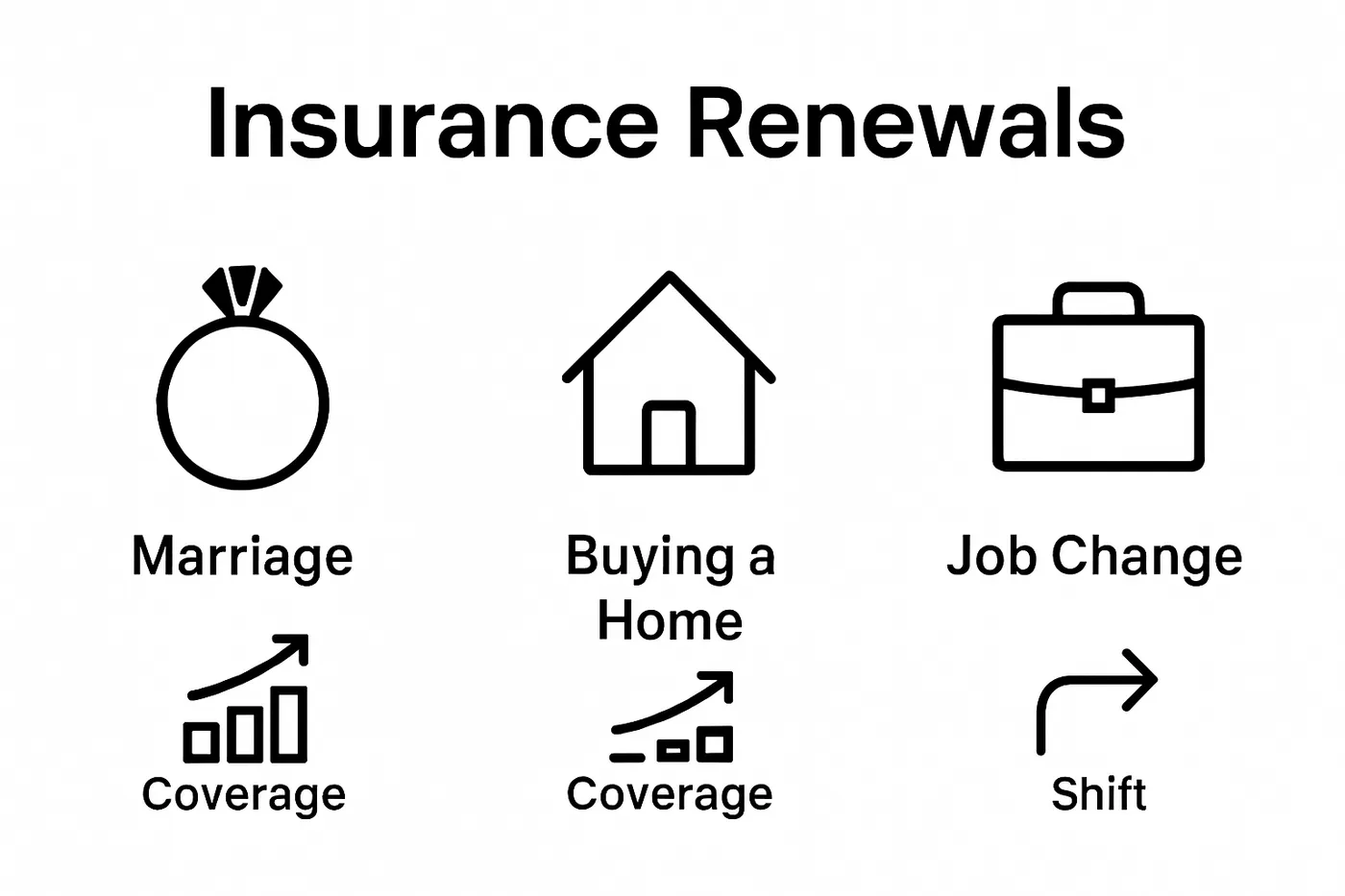
- Personal Status: Marriage, divorce, or having children
- Professional Changes: Job transitions, income modifications, or career shifts
- Property Modifications: Home renovations, vehicle upgrades, or purchasing new assets
- Geographical Movements: Relocating to a different neighborhood or city
Risk Reassessment and Premium Adjustments
According to the Policyholder Protection Rules, insurers must consider ‘material changes’ when evaluating policy renewals. These changes can lead to substantial modifications in your insurance coverage and associated costs.
Key implications of life changes on insurance policies include:
- Potential recalculation of risk profile
- Adjustments to premium rates
- Modifications to coverage limits
- Possible inclusion or exclusion of specific protections
Proactively communicating these changes to your insurance provider ensures that your policy remains accurate, relevant, and aligned with your current life circumstances.
The following table summarises how different types of life changes can impact your insurance renewal and what those changes usually mean for your policy:
| Change Type | Example | Impact on Insurance Policy |
|---|---|---|
| Personal Status | Marriage, divorce, having children | May change risk profile and adjust coverage needs |
| Professional Changes | New job, change in income, career shift | Could affect premium rates and coverage requirements |
| Property Modifications | Renovations, new car or home purchase | Necessitates recalculating asset values |
| Geographical Movement | Moving to a new city or suburb | May increase or decrease risk, impacting premiums |
| Financial Shifts | Significant investments, income fluctuations | Influences coverage decisions and policy adjustments |
Reassess and Renew Your Cover with Total Peace of Mind
Are you feeling uncertain as you approach your next policy renewal? This article highlights how life changes, risk reassessment and complex policy terms can cause confusion or even leave gaps in your coverage. These challenges can create real stress if your insurance no longer matches your needs or leaves your valuables exposed.
It’s time to make sure your protection keeps up with your lifestyle. At Savvy Insurance, we help South Africans simplify policy reviews whether you are revaluing your car, updating your building’s insurance or looking for more flexible cover. Rethink your renewal with support that takes the hassle out of policy jargon and puts your needs first. Ready to make insurance work for you? Visit Savvy Insurance today and see how easy it is to align your cover with your real risks. Secure your peace of mind before your next renewal arrives.
Frequently Asked Questions
What are the key components of an insurance policy I should review before renewal?
Understanding key components such as premiums, coverage limits, deductibles, and terms and conditions is crucial when reviewing your insurance policy prior to renewal. This ensures you have adequate protection and are aware of any gaps in coverage.
Why is it important to reassess my risk profile before renewing an insurance policy?
Reassessing your risk profile is important because personal and financial circumstances change over time. These changes may affect your coverage needs and can help tailor your insurance to better fit your current situation, potentially saving you money.
How can my life changes impact my insurance renewal?
Life changes such as marriage, job changes, or purchasing new assets can significantly impact your insurance renewal. These changes might alter your coverage needs and risk profile, potentially leading to adjustments in premium rates or necessary coverage modifications.
What should I do if I find discrepancies in my insurance policy terms during renewal?
If you find discrepancies in your insurance policy terms, you should contact your insurer for clarification. It’s essential to ensure that the policy accurately reflects your coverage needs and to address any ambiguous or complex clauses before renewing.
Recommended
- Car Insurance Renewal Checklist 2025
- How to Switch Insurers in 2025
- Annual Insurance Review Tips for Car and Home Owners 2025
- Saving Money on Car Insurance
Ready to compare insurance? Get free, no-obligation quotes from South Africa's top insurers in a few minutes and see how much you could save.
Compare insurance quotes →Free · No obligation · POPIA compliant · We never sell your data